
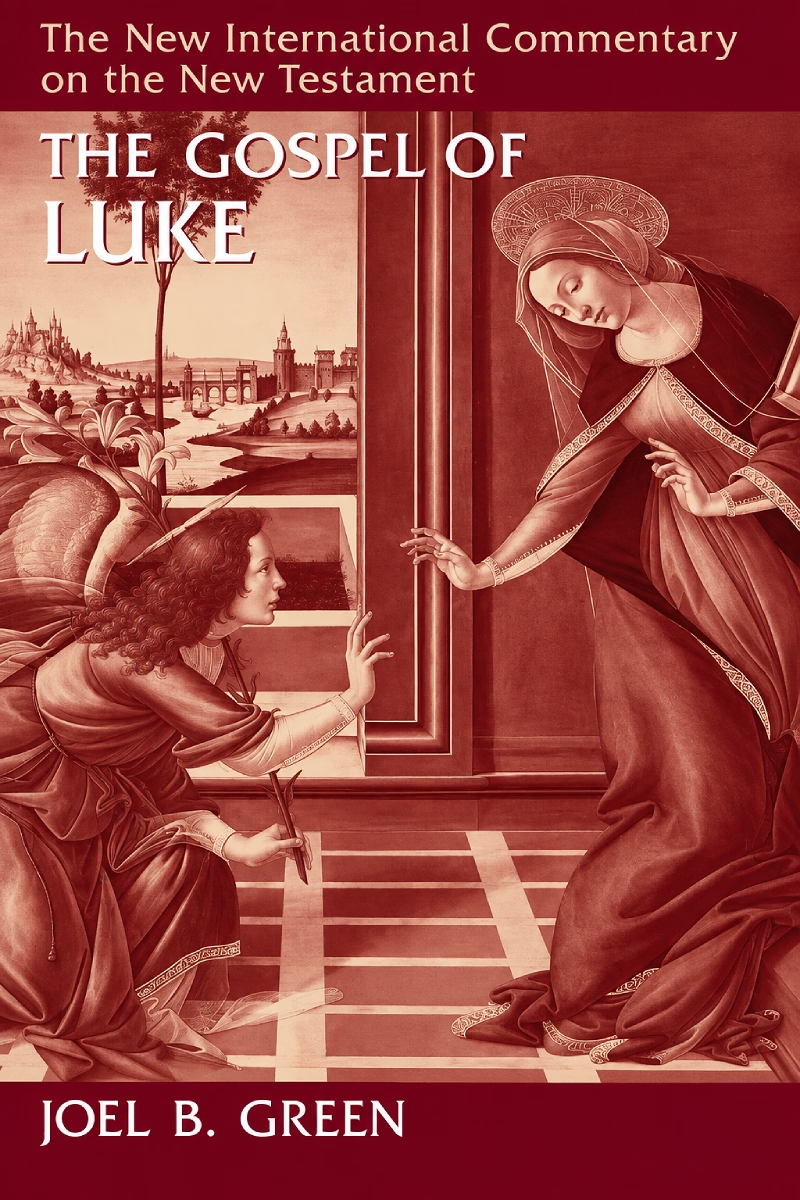
The Gospel of Luke
Joel B. Green reads Luke as a unified theological narrative shaped by its first-century social world. His commentary traces Jesus’ saving mission, the kingdom of God, the Holy Spirit, discipleship, prayer, wealth, and the reversal of social boundaries, showing how Luke’s story calls readers to understand salvation as God’s transforming work for whole persons and communities.
Available Instantly
About This Book
Joel B. Green’s The Gospel of Luke is a full-scale commentary on the Gospel of Luke that reads the book as a coherent theological narrative within the social and cultural world of the first-century Roman Empire. Rather than treating individual episodes as isolated units, Green repeatedly asks how each scene functions in Luke’s developing story, how Luke’s vocabulary and literary arrangement guide the reader, and how the Gospel’s narrative presents God’s saving purpose through Jesus.
Salvation is a governing theme. Green follows Luke’s presentation of Jesus as the one through whom God brings release, restoration, forgiveness, healing, inclusion, and renewed participation in the people of God. Luke 4:16–30, where Jesus announces good news to the poor and release to the oppressed from Isaiah, functions as a major programmatic passage for understanding Jesus’ mission. Green stresses that Luke’s language of the poor and excluded belongs to the concrete social world of honor, status, purity, economic vulnerability, gender, illness, and community boundaries. Salvation therefore cannot be reduced to an abstract or merely private idea; Luke’s story repeatedly shows God’s redemptive work changing a person’s relation to God and to others.
The commentary gives sustained attention to Jesus Christ, the kingdom of God, the Holy Spirit, discipleship, prayer, possessions, meals, hospitality, and the inclusion of people regarded as outsiders. Green’s social-scientific sensitivity is especially important for readers asking why Luke gives so much attention to the poor, women, sinners, tax collectors, Samaritans, the sick, and others of diminished social standing. He explains how Jesus challenges accepted systems of status and belonging and how table fellowship, mercy, generosity, and welcome embody the good news rather than merely illustrating it.
Green also traces the Holy Spirit as God’s empowering presence in the birth narratives and in Jesus’ mission, with Luke 3–4 providing an important transition into Jesus’ public ministry. Prayer recurs at decisive moments in Luke’s narrative and helps define dependence on God. Wealth and possessions receive substantial treatment through sayings, encounters, and parables, including Luke’s repeated warnings about riches and his concern for generosity toward the poor.
Discipleship becomes increasingly prominent as Jesus sets his face toward Jerusalem. Green treats Luke 9:51–19:27 as a major narrative movement in which Jesus’ journey toward Jerusalem becomes the setting for instruction about following him, hearing God’s word, prayer, possessions, mercy, perseverance, hospitality, and the cost of discipleship. The commentary helps readers connect formal questions about Lukan theology with practical questions such as what it means to follow Jesus, why discipleship involves reordered loyalties, how believers should view social outsiders, and how the kingdom reshapes the use of money and status.
The final movement into Jerusalem, the passion, resurrection, and commissioning of the disciples is treated as the culmination of Luke’s story. Green reads these events in continuity with the Gospel’s earlier presentation of Jesus’ identity and mission and with Luke’s larger narrative horizon in Acts. The commentary therefore serves readers seeking close exposition of Luke, theological interpretation of its narrative, explanation of its first-century social world, and a deeper understanding of how Luke relates salvation, the Spirit, the kingdom, discipleship, social reversal, the cross, resurrection, and mission.
Book Details

Reading Fit
STUDY LEVEL
Advanced, Intermediate
STUDY SCOPE
Individual Book, New Testament
BOOKS INCLUDED

Edition & Format
PUBLISHED
October 2, 1997
AVAILABLE FORMATS
paperback, hardcover, kindle
LENGTH
955 pages

Topics Covered
You Might Also Like