
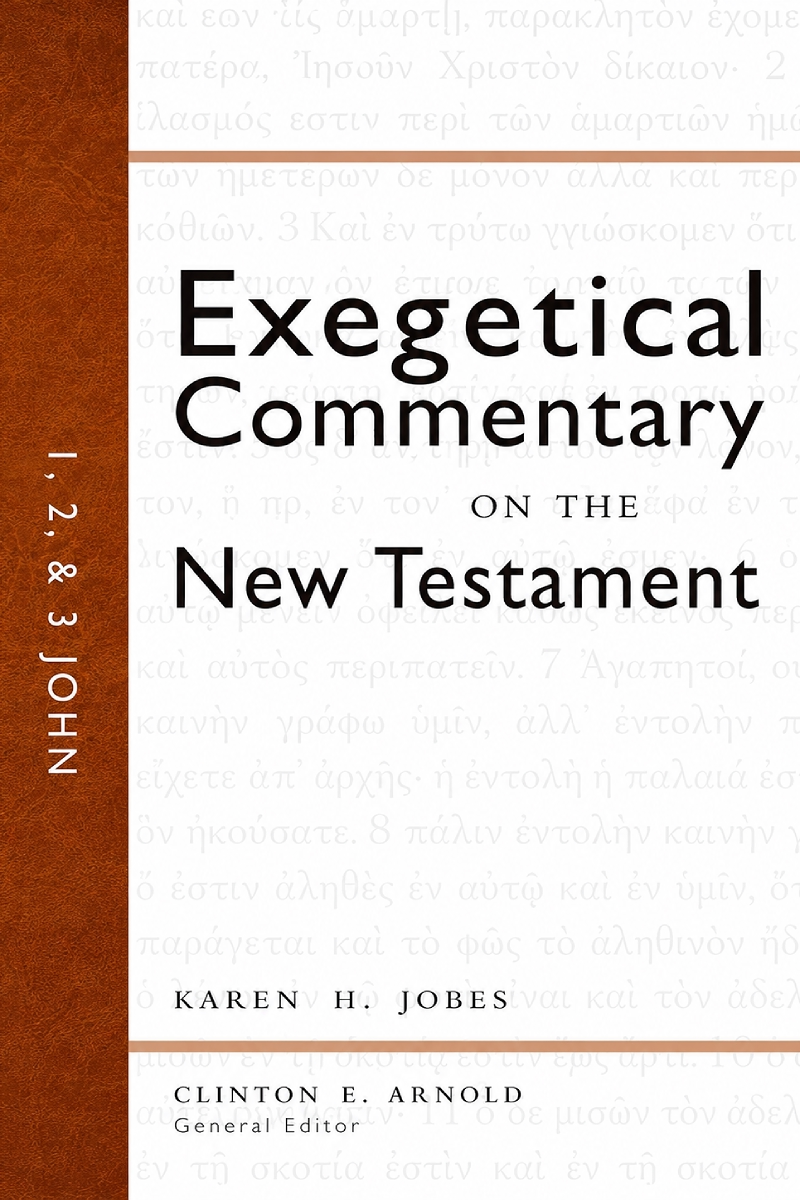
1, 2, and 3 John
Karen H. Jobes explains 1, 2, and 3 John as letters for believers facing spiritual confusion and competing claims about Jesus. Her verse-by-verse study traces truth, apostolic authority, love, obedience, eternal life, abiding in Christ, testing the spirits, antichrist teaching, and the difficult balance between Christian hospitality and refusing support to false teachers.
Available Instantly
About This Book
Karen H. Jobes’s 1, 2, and 3 John is an exegetical commentary on all three Johannine letters that combines close attention to the Greek text, literary flow, theology, and application. Jobes approaches the letters as part of the same Johannine world as the Gospel of John and reads them against a setting of spiritual confusion in which competing voices claimed authority to define the truth about God and Jesus Christ. A governing question throughout the volume is therefore who has the right to interpret the true significance of Jesus and how Christians can recognize truth amid rival religious claims.
First John receives the largest share of the commentary. Jobes treats the letter as pastoral instruction for believers shaken by division and false teaching. The opening proclamation about the Word of life grounds Christian fellowship in the historical revelation of Jesus Christ. In 1 John 1:5–2:2, the statement that God is light becomes a framework for understanding truth and falsehood, walking in the light, confession of sin, forgiveness, and Christ’s advocacy. Jobes traces John’s characteristic contrasts—light and darkness, truth and falsehood, love and hatred, righteousness and sin—as theological distinctions that help the church discern whether a claim or way of life is consistent with God.
The commentary gives special attention to 1 John 2:18–28, where Jobes identifies the crisis over antichrists, anointing, truth, and remaining in Christ as central to the letter’s pastoral concern. The believers are urged to continue in the apostolic teaching about Jesus rather than follow those who have departed from it. This concern returns in 1 John 4:1–6, where Christians are told to test the spirits. Jobes explains spiritual discernment as the responsibility to evaluate claims to revelation and teaching by their confession of Jesus Christ and their consistency with the apostolic witness. False teaching is therefore not merely an intellectual mistake; it can become spiritual deception that fractures fellowship and redirects allegiance.
Love and obedience are equally important. Jobes follows John’s teaching that knowledge of God is expressed in keeping his commands, loving fellow believers, and abiding in Christ. First John 4:7–16 develops the confession that God is love and relates divine love to the sending of the Son and to Christian love for one another. The commentary also treats assurance and eternal life as major pastoral aims. First John 5:13 states the purpose of writing so believers may know that they have eternal life, and Jobes connects assurance with right belief about Jesus, a life shaped by obedience, and love within the Christian community.
Second and Third John extend these issues into the practical question of hospitality and authority. Second John warns against receiving and materially assisting teachers who deny the truth about Christ, while Third John commends hospitality toward faithful Christian workers and exposes Diotrephes’s abusive refusal to receive them. Jobes shows why Christian love does not require indiscriminate support for every religious teacher and why doctrinal caution must not become an excuse for withholding support from true gospel ministry.
This commentary is especially useful for readers asking how to recognize false teaching, what it means to test the spirits, how Christians can have assurance of eternal life, what “abiding in Christ” means, how love and truth belong together, and when hospitality becomes participation in another teacher’s work. Its sustained treatment of 1, 2, and 3 John provides a strong biblical framework for spiritual discernment in a pluralistic environment without reducing Christian truth to mere argument: truth is confessed about Jesus, received from the apostolic witness, embodied in obedience, and expressed in love.
Book Details

Reading Fit
STUDY LEVEL
Advanced, Intermediate
STUDY SCOPE
Individual Book, New Testament
BOOKS INCLUDED

Edition & Format
PUBLISHED
February 11, 2014
AVAILABLE FORMATS
hardcover, kindle
LENGTH
370 pages

Topics Covered
You Might Also Like