
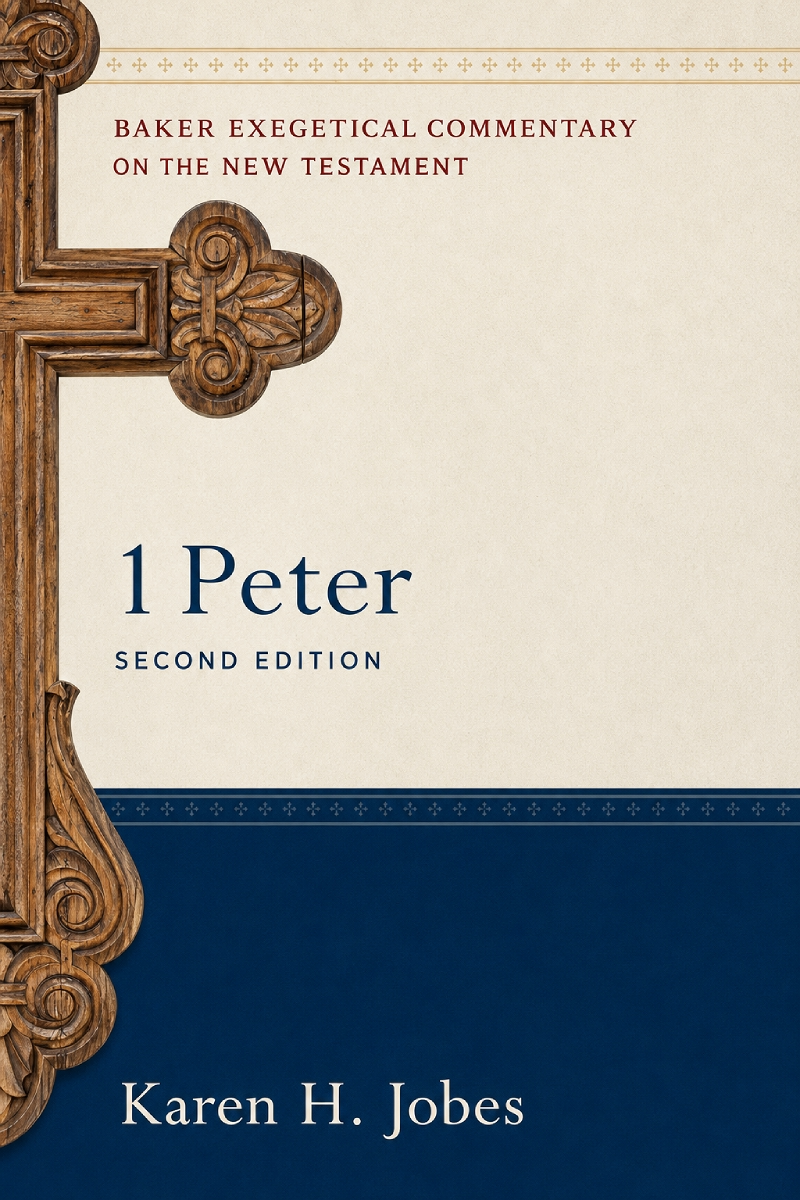
1 Peter
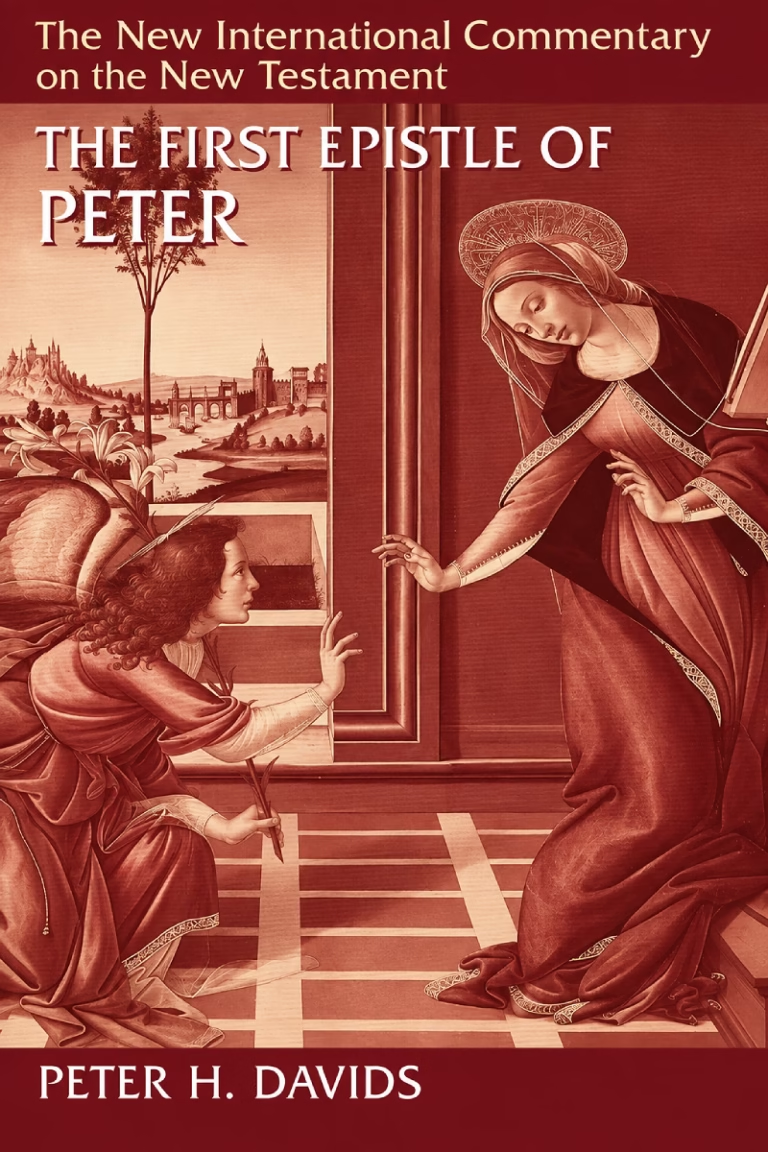
Karen H. Jobes presents 1 Peter as a letter for Christians learning to live as God’s people in a society that may misunderstand or reject them. Her detailed exegesis connects new birth, Christian identity, holy conduct, unjust suffering, Christ’s example, and hope, showing why Peter calls believers to suffer faithfully rather than escape obedience through sin.
Available Instantly
About This Book
Karen H. Jobes’s second-edition commentary offers a detailed historical-grammatical exposition of 1 Peter with close attention to the Greek text, the letter’s social setting, and the Old Testament contexts that shape Peter’s language. A distinctive feature of her approach is the possibility that the recipients were actual displaced people who had been converted elsewhere and were now living in Asia Minor. Whether understood socially or spiritually, the language of foreigners, resident aliens, and diaspora becomes a powerful framework for Christian identity: believers belong to God and therefore live in the surrounding culture with loyalties and values that can make them strangers within it.
Jobes identifies the relationship between Christians and society as an overarching concern of 1 Peter. The letter does not teach simple withdrawal or simple accommodation. Instead, believers are to respect the society in which they live while refusing values and practices that conflict with allegiance to Christ. This differentiated engagement is worked out through good conduct, submission to governing authorities, household relationships, honorable behavior, and a visible way of life that may answer hostility without surrendering Christian distinctiveness.
The opening section, 1 Peter 1:3–2:10, grounds Christian life in God’s mercy, new birth through the resurrection of Jesus Christ, a living hope, an imperishable inheritance, and the identity of believers as God’s people. Jobes explains how this new identity reaches into conduct: Christians are called to live as those who have been made new, to leave former desires behind, and to understand themselves in terms drawn from Israel’s Scriptures. Her second edition gives particular attention to the Greek Old Testament as the scriptural context Peter assumes, arguing that Peter draws on the larger contexts of the passages he cites rather than using isolated proof texts.
Suffering is one of the commentary’s strongest governing themes. Jobes explains that Peter’s readers experienced social alienation and loss because their faith gave them different priorities and allegiances. Christ’s own rejection and suffering provide the pattern for understanding their experience. The central practical principle is that it is better to suffer than to sin. In 1 Peter 2:11–4:11, and again in 4:12–5:11, Jobes follows Peter’s teaching on unjust suffering, righteous conduct, self-denial, endurance, and trust in God. Suffering is not sought for its own sake, but believers must be prepared to bear the consequences of obedience rather than avoid pain by compromising with sin.
The commentary also gives careful attention to difficult and pastorally important passages: Christ’s suffering as an example in 1 Peter 2:21–25, relationships within the household in 2:18–3:7, the call to answer hostility with blessing, the defense of Christian hope in 3:13–17, Christ’s proclamation to the spirits in 3:18–22, and the exhortations surrounding suffering and judgment in chapter 4. The closing chapters address elders, humility, anxiety, resistance to the devil, and steadfastness under suffering.
Jobes therefore helps readers answer questions such as: How should Christians live when their culture’s values conflict with the gospel? What does it mean to be a spiritual exile or resident alien? Why can suffering be part of faithful Christian life? How does Christ’s own suffering shape the believer’s response to injustice? What does Peter mean by new birth, living hope, holy conduct, and being God’s people? How can Christians honor others without surrendering obedience to God? The volume is especially useful for serious study of Christian identity, cultural engagement, suffering for Christ, perseverance, ethical conduct, and the way 1 Peter rereads the Old Testament to form a faithful people in a hostile or indifferent world.
Book Details

Reading Fit
STUDY LEVEL
Advanced, Intermediate
STUDY SCOPE
Individual Book, New Testament
BOOKS INCLUDED

Edition & Format
PUBLISHED
October 18, 2022
AVAILABLE FORMATS
hardcover, kindle
LENGTH
389 pages

Topics Covered
You Might Also Like