
Colossians and Philemon (Exegetical Guide to the Greek NT)
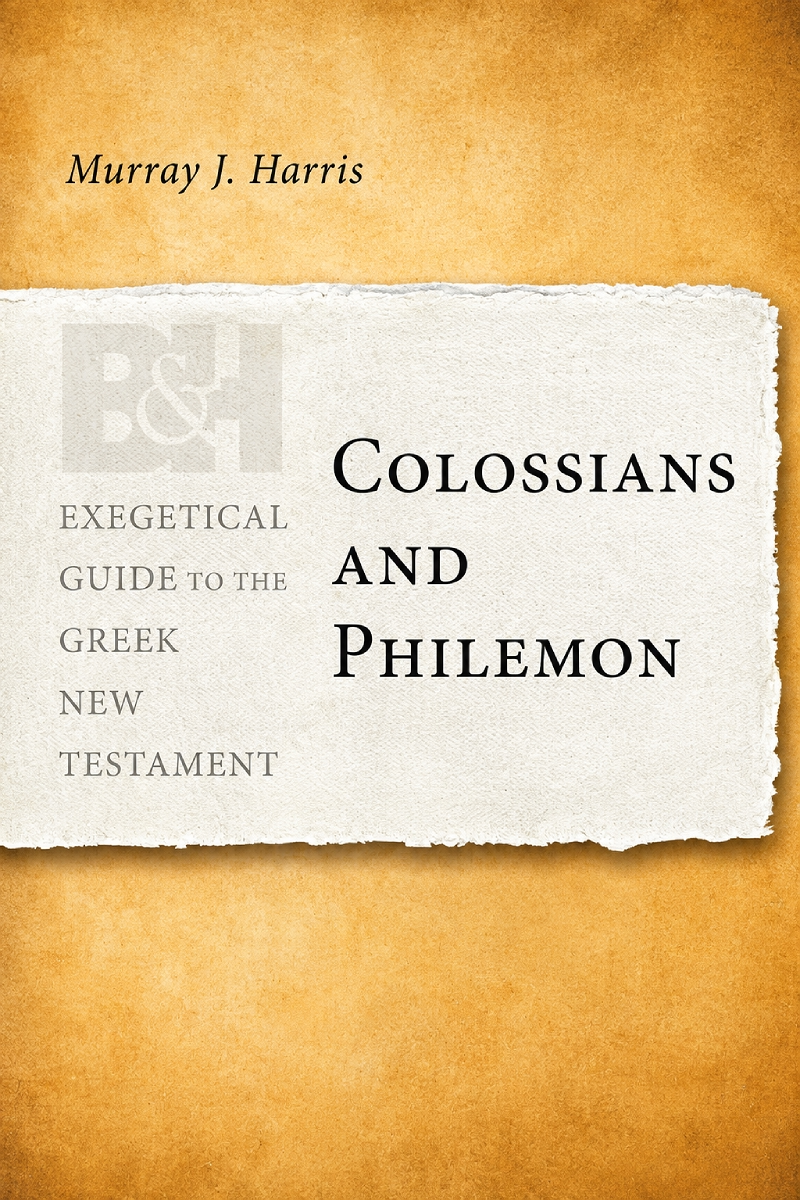
Murray J. Harris guides readers through the Greek text of Colossians and Philemon with grammatical analysis, structural study, translation, paraphrase, exegetical outlines, and preaching helps. The volume clarifies Paul’s teaching on Christ, life in him, false philosophy, Christian conduct, and the appeal for Onesimus while training readers in rigorous Greek exegesis.
Available Instantly
About This Book
Murray J. Harris’s Colossians and Philemon in the Exegetical Guide to the Greek New Testament is an advanced, text-centered guide designed to move readers from grammatical analysis of the Greek New Testament to responsible exegesis and exposition. Rather than offering only a running English commentary, Harris works paragraph by paragraph through both letters with the Greek text, structural analysis, grammatical discussion, exegetical notes, topics for further study, and homiletical suggestions. The volume also provides introductions, translations, expanded paraphrases, and comprehensive exegetical outlines for Colossians and Philemon.
The governing purpose is therefore twofold: to explain these two Pauline letters in depth and to teach the reader how careful attention to Greek grammar, syntax, structure, and rhetoric contributes to interpretation. Harris regularly examines the function of clauses, participles, prepositions, verbal forms, modifiers, and discourse relationships. Technical terminology is not treated as an end in itself; the aim is to show how linguistic decisions affect the meaning of the text and then how that meaning can be organized for teaching or preaching. Readers asking how to exegete Colossians or Philemon from the Greek text, how grammatical alternatives change interpretation, or how to move from syntax to sermon structure are directly served by the book.
In Colossians, Harris gives detailed treatment to the letter’s major Christological passages and their grammatical and theological implications. Colossians 1:15–20 receives close analysis as Paul describes Christ in relation to creation, the church, and reconciliation. The guide follows Paul’s movement from thanksgiving and prayer through the supremacy of Christ, Paul’s ministry, the believer’s life in Christ, warnings against deceptive philosophy and religious regulations, and the ethical exhortations of chapters 3–4. Christology, the fullness found in Christ, and the implications of being united with him are therefore recurring subjects within the exegesis.
The warning against specious philosophy in Colossians 2:4–8 and the surrounding argument receive substantial attention. Harris examines the language by which Paul contrasts deceptive claims with the reality believers possess in Christ. The subsequent sections on circumcision, baptism, forgiveness, hostile powers, food and festival regulations, ascetic practices, and the believer’s death and resurrection with Christ are handled as connected exegetical problems. This makes the volume useful for readers studying the relationship between union with Christ, spiritual sufficiency, false teaching, and Christian freedom.
Colossians 3–4 brings the exegetical method to questions of Christian conduct. Harris treats the movement from seeking the things above to putting off sinful patterns and putting on the qualities of the new life. Household instructions, prayer, wise speech, and relationships within the Christian community are analyzed in their grammatical and literary context. These subjects are not presented as a separate devotional system, but the detailed exegesis supplies the foundation for application and preaching.
Philemon is also treated as a complete letter. Harris provides its own introduction, translation, detailed notes, expanded paraphrase, and exegetical outline. Paul’s appeal to Philemon regarding Onesimus raises questions of Christian fellowship, authority, service, slavery, brotherhood, and reconciliation. Harris’s structural and grammatical analysis helps readers see how Paul frames his requests and how the argument of the letter develops.
Because the book assumes sustained engagement with Greek, it is best suited to readers prepared for technical study. Its value lies in combining language study with interpretation and exposition, enabling advanced students, teachers, and pastors to test exegetical judgments carefully while gaining a fuller grasp of the theology and practical force of Colossians and Philemon.
Book Details

Reading Fit
STUDY LEVEL
Advanced
STUDY SCOPE
Individual Book, New Testament
BOOKS INCLUDED

Edition & Format
PUBLISHED
June 1, 2010
AVAILABLE FORMATS
paperback, kindle
LENGTH
304 pages

Topics Covered
You Might Also Like