
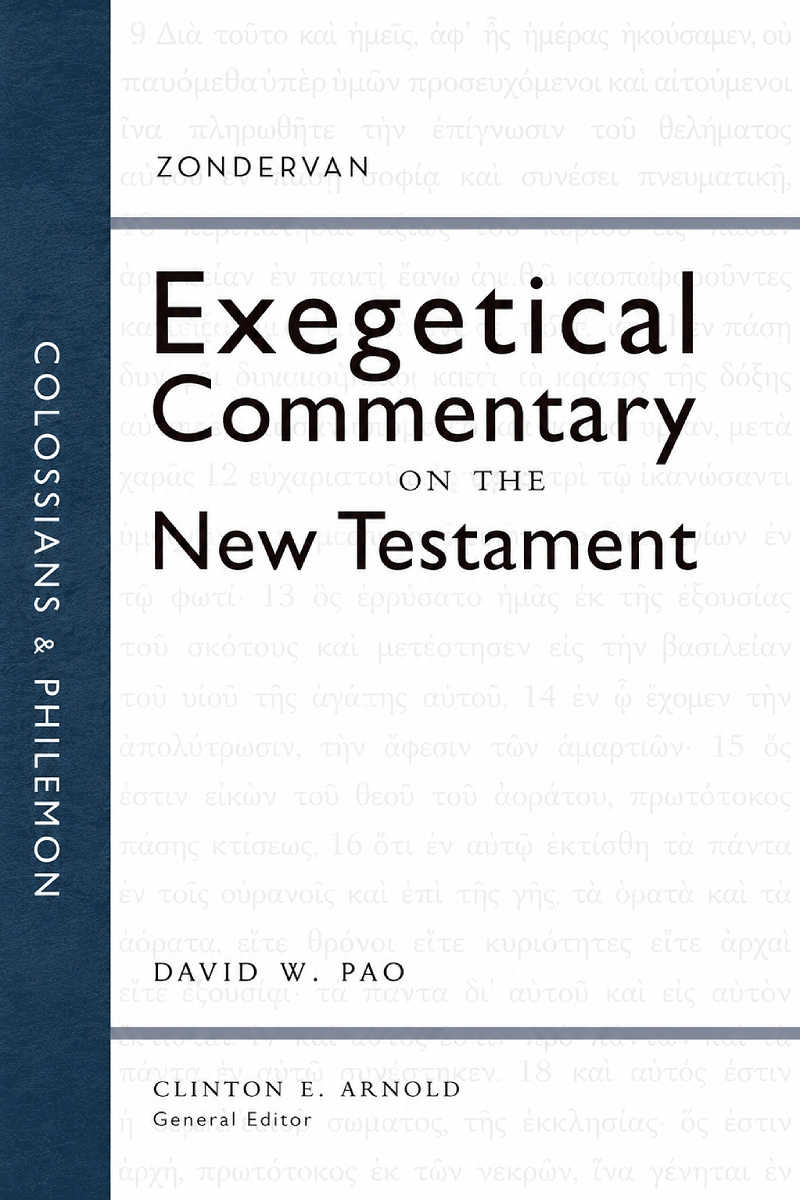
Colossians and Philemon
David W. Pao offers a close exegetical study of Colossians and Philemon that follows each letter’s Greek text, literary flow, theology, and application. He highlights the supremacy of Christ, life in Christ, prayer and thanksgiving, resistance to false teaching, transformed relationships, and Paul’s gospel-shaped appeal concerning Onesimus.
Available Instantly
About This Book
David W. Pao’s Colossians and Philemon in the Zondervan Exegetical Commentary on the New Testament provides sustained exposition of both Pauline letters with close attention to literary structure, the Greek text, theology, and contemporary application. Each passage is treated through its literary context, main idea, translation, structure, verse-by-verse explanation, and theology in application. The volume is designed for pastors and serious students, especially readers with some knowledge of Greek, but its central concern is the message of the letters rather than technical detail for its own sake.
In Colossians, the supremacy and sufficiency of Jesus Christ form a governing center. Pao gives major attention to Colossians 1:15–20, where Christ is presented in relation to creation, the church, reconciliation, and the new creation. His treatment integrates Wisdom, Adamic, and messianic dimensions and shows how this passage helps structure the remainder of the letter. Christ is not simply one doctrine among many: Paul’s confession of Jesus as Lord governs the church’s understanding of salvation, worship, wisdom, spiritual security, and daily conduct.
That Christ-centered framework continues through the warnings of Colossians 2. Pao explains the danger of persuasive or specious teaching and Paul’s insistence that believers possess what they need in Christ. Colossians 2:6–15 receives substantial attention as Paul calls believers to walk in the Lord they received, rooted and built up in him, while grounding their standing in Christ’s fullness, the removal of their debt, and his triumph over hostile powers. The commentary therefore speaks directly to questions about spiritual sufficiency, deceptive teaching, religious regulations, and how believers should respond to claims that something beyond Christ is required for spiritual fullness.
Union with Christ and transformed Christian living are developed especially in Colossians 3–4. Being raised with Christ reorients the believer’s life; the old practices are to be put away and the new humanity is to be expressed in compassion, forgiveness, love, peace, worship, and thankful obedience. Pao gives careful attention to household relationships, stressing the lordship of Christ over wives and husbands, children and parents, slaves and masters. Christian ethics are thus rooted in identity and allegiance to Christ rather than detached moral rules.
Prayer and thanksgiving receive recurring emphasis. Pao treats Colossians 1:9–14 as a powerful model of prayer, and his broader work on Pauline thanksgiving informs his sensitivity to the repeated calls to gratitude in the letter. Thanksgiving links confession of Christ’s lordship with the way believers live, worship, and anticipate God’s work. The closing exhortations to persevering prayer and wise conduct toward outsiders further connect theology with mission and everyday faithfulness.
Philemon receives genuine book-level treatment rather than functioning as an appendix. Pao examines Paul’s appeal concerning Onesimus, Christian fellowship, authority, reconciliation, and the transformation of social relationships by the gospel. A distinctive feature of his reading is Paul’s voluntary relinquishment of power: instead of coercing Philemon, Paul appeals in a manner that encourages him also to surrender rights over Onesimus. The commentary therefore explores how Christian brotherhood challenges ordinary structures of status and power.
Taken together, the volume helps readers understand how the exalted Christ shapes doctrine, spiritual security, prayer, worship, ethical renewal, church relationships, and reconciliation. It is especially useful for those asking what it means to live “in Christ,” how to resist spiritually impressive but inadequate teaching, how theology becomes practice, and how the gospel transforms relationships marked by power, obligation, and social difference.
Book Details

Reading Fit
STUDY LEVEL
Advanced, Intermediate
STUDY SCOPE
Individual Book, New Testament
BOOKS INCLUDED

Edition & Format
PUBLISHED
May 24, 2016
AVAILABLE FORMATS
hardcover, kindle
LENGTH
845 pages

Topics Covered
You Might Also Like