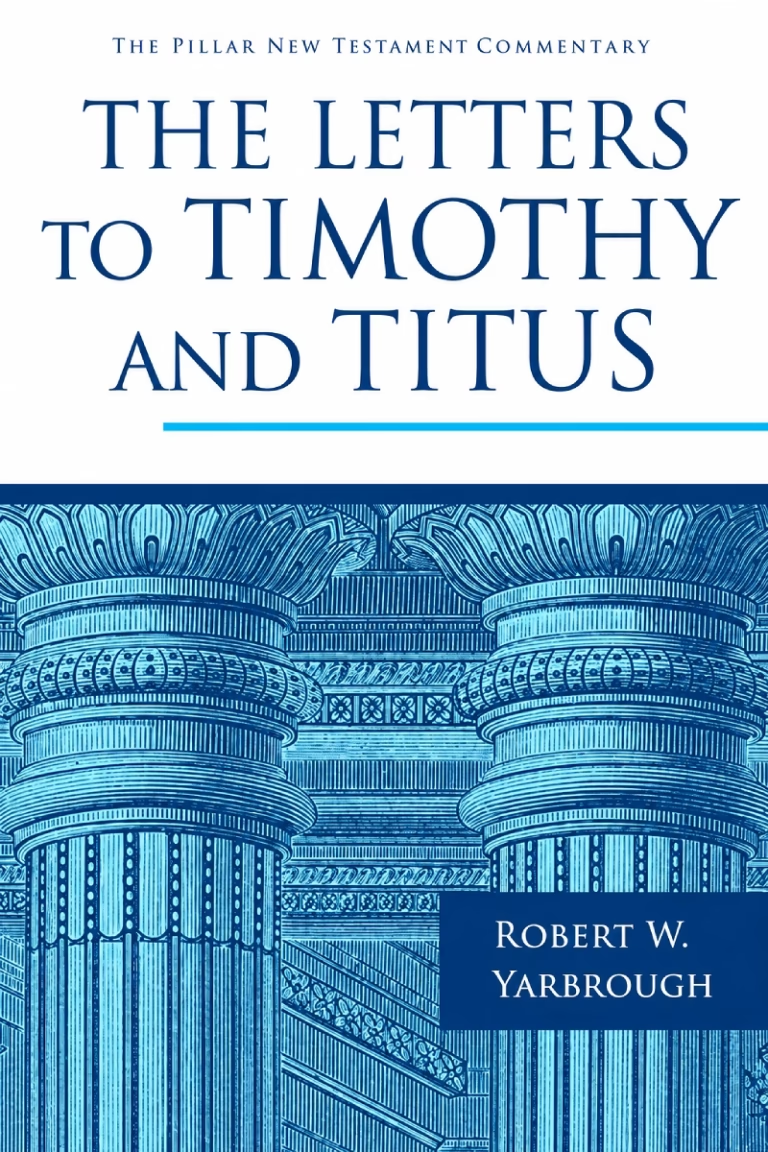

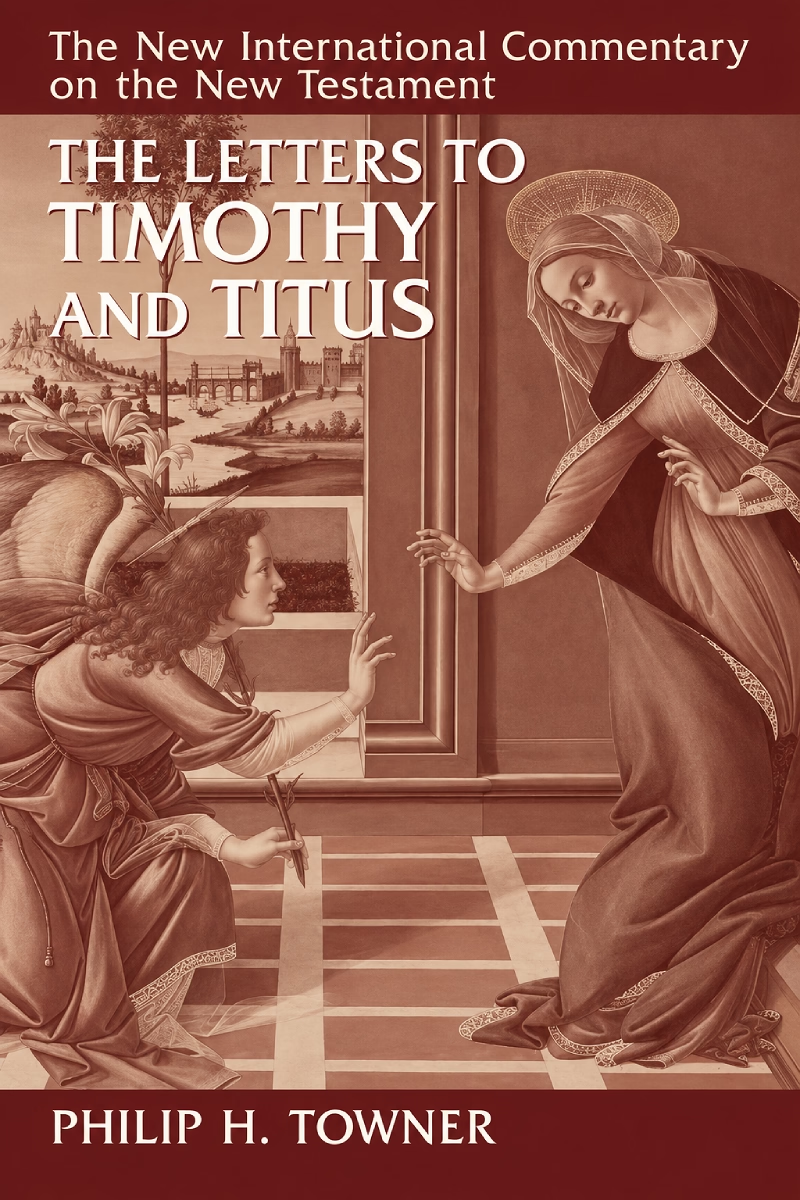
The Letters to Timothy and Titus
Philip H. Towner’s major commentary studies 1 Timothy, 2 Timothy, and Titus as distinct letters to Paul’s coworkers carrying out mission in difficult churches. It examines false teaching, sound doctrine, church order, leadership, godliness, suffering, ministry succession, salvation, Scripture, the Spirit, and the shape of faithful Christian life.
Available Instantly
About This Book
Philip H. Towner’s New International Commentary on the New Testament volume provides a detailed historical, exegetical, and theological study of 1 Timothy, 2 Timothy, and Titus. Rather than flattening the three writings into a generic handbook for pastors, Towner treats them as distinct letters sent to Paul’s trusted coworkers as they carried out specific assignments within the Pauline mission. This historical approach allows the commentary to show both the shared concerns of the letters and the different pastoral situations of Ephesus and Crete.
A major portion of 1 Timothy is interpreted through the need to order and organize God’s household while confronting false teachers. Towner traces the relationship between false doctrine, unhealthy speculation, distorted use of the law, greed, and ungodly behavior. In contrast, sound teaching is expected to produce godliness, good works, self-control, responsible relationships, and a church life that commends the gospel. The commentary gives extensive attention to public prayer, the conduct of men and women in the gathered church, qualifications for overseers and deacons in 1 Timothy 3, the care of widows, the recognition and discipline of elders, slavery, wealth, and Timothy’s responsibility as a faithful teacher.
Church leadership is therefore treated not merely as an institutional topic but as part of the church’s response to error and part of its witness in the world. Towner’s detailed treatment of 1 Timothy 3:1–13 and Titus 1:5–9 examines the character and teaching responsibilities of overseers, elders, and deacons. He also explores the church as the household of God and the way leadership, doctrine, worship, and Christian conduct belong together.
Second Timothy is read under the themes of suffering and succession. Paul’s own ministry becomes a model for Timothy, who is called to courage, endurance, faithful teaching, and the transmission of the apostolic message to trustworthy people who will teach others. Towner gives substantial attention to suffering for the gospel, confronting opposition with patience, avoiding destructive controversies, following Paul’s example, and carrying out ministry in view of final accountability before Christ. His discussion of 2 Timothy 3:14–17 places the God-given Scriptures at the center of teaching, correction, formation, and preparedness for every good work.
Titus is treated in its Cretan setting, where false teaching and culturally destructive behavior must be answered by church order, sound doctrine, and a distinctively Christian way of life. Towner highlights the repeated emphasis on good works and explains how Christian conduct flows from God’s saving action. Titus 2:11–14 and 3:3–7 receive sustained treatment of grace, redemption, salvation, renewal by the Holy Spirit, justification, hope, and the transformed life that follows. The commentary thus connects doctrine and ethics rather than treating them as separate concerns.
Across the three letters, Towner develops shared theological themes including salvation in Jesus Christ, the Pauline gospel and mission, the Holy Spirit, Christian life, church and leadership, and the authority and use of Scripture. He also explores the letters’ Christology through the language of Savior and appearing, and he examines how ministry takes shape amid opposition, suffering, cultural pressure, and the need for faithful succession.
This volume is particularly useful for readers asking how churches should confront false teaching, what qualifies a person for church leadership, how sound doctrine should shape behavior, what pastoral faithfulness looks like under pressure, how ministry is entrusted to the next generation, how Scripture functions in teaching and formation, and how grace produces a life devoted to good works.
Book Details

Reading Fit
STUDY LEVEL
Advanced
STUDY SCOPE
Individual Book, New Testament
BOOKS INCLUDED

Edition & Format
PUBLISHED
July 12, 2006
AVAILABLE FORMATS
hardcover, kindle
LENGTH
934 pages

Topics Covered
You Might Also Like