
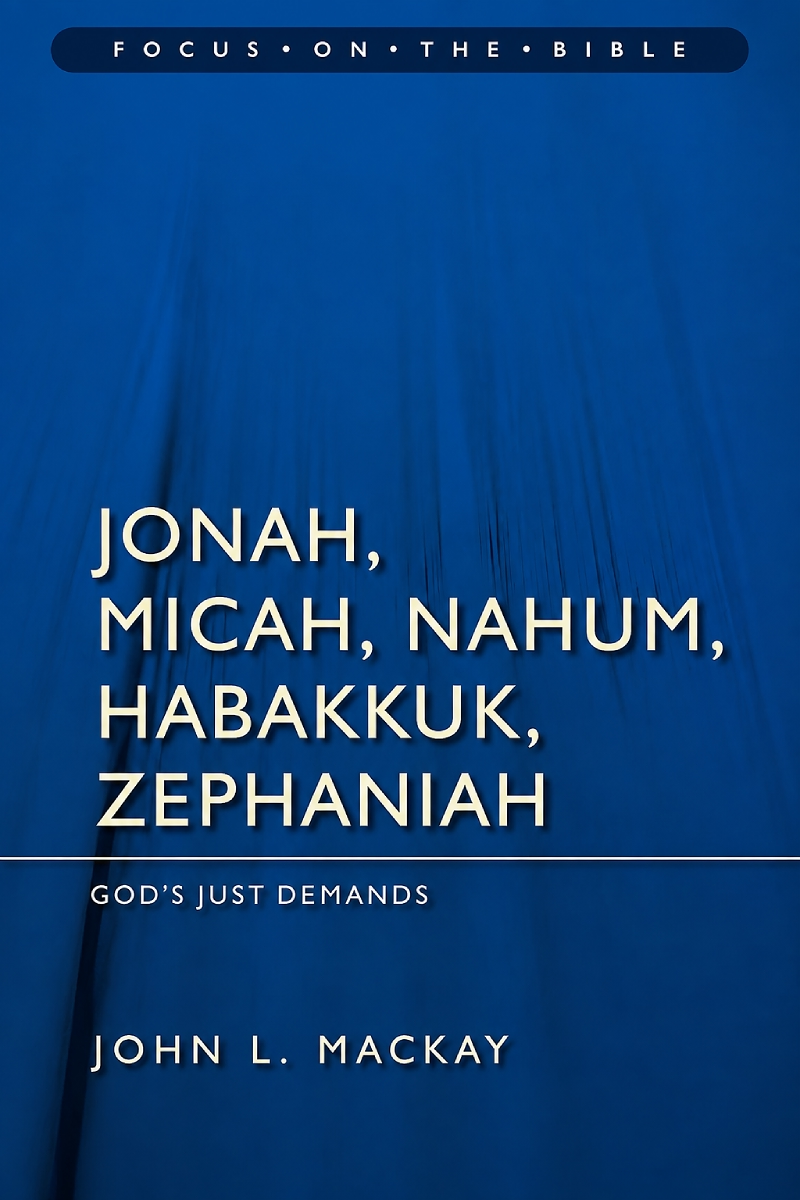
Jonah, Micah, Nahum, Habakkuk & Zephaniah
John L. Mackay opens Jonah, Micah, Nahum, Habakkuk, and Zephaniah as a connected window into God’s just rule in a turbulent age. He traces judgment on sin and hostile nations, calls to repentance and faith, the hope of restoration and peace, and messianic promises including the coming Davidic King.
Available Instantly
About This Book
John L. Mackay’s Jonah, Micah, Nahum, Habakkuk & Zephaniah: God’s Just Demands provides sustained, book-level exposition of five Minor Prophets from the eighth and seventh centuries BC. Rather than treating them as a single undifferentiated block, Mackay explains each prophecy in its historical setting and follows its own message while also drawing out major themes shared across the collection. The volume is written as an accessible commentary for pastors, Bible-study leaders, and ordinary readers, with practical application and reflection alongside interpretation.
A dominant theme is the justice and judgment of God. These prophets address both the nations and God’s own people. Jonah centers on Nineveh and the surprising extension of divine mercy to a wicked city. Micah exposes covenant rebellion in Samaria and Jerusalem while also looking beyond judgment to restoration and the rule of a coming Davidic king. Nahum announces the downfall of Nineveh and the destruction of an oppressive enemy. Habakkuk wrestles with the apparent triumph of violence and injustice and with God’s use of a powerful nation as an instrument of judgment. Zephaniah warns Judah and Jerusalem of the Day of the Lord while also extending the horizon to the nations and to eventual restoration.
Because the volume studies these books together, it gives readers a broad prophetic picture of God’s moral government. Sin, idolatry, pride, violence, social wrong, covenant disloyalty, and hostility toward God’s people do not escape divine notice. Yet judgment is not the only word. The prophets also call for humble response, repentance, trust, and renewed harmony with God. Mackay repeatedly places destruction and hope side by side, showing that divine judgment clears the way for vindication, peace, blessing, and future restoration.
Jonah contributes strongly to questions about God’s mercy, mission beyond Israel, prophetic obedience, repentance, and the difficulty believers may have with God’s compassion toward enemies. Micah develops judgment and hope in relation to Samaria and Jerusalem and includes major messianic expectation, especially the promise of a ruler from Bethlehem and the enduring reign of a king from David’s line. Nahum presents the certainty that brutal imperial power will fall under God’s judgment, offering comfort to those oppressed by violent enemies. Habakkuk addresses one of the Bible’s classic faith questions: how can a righteous God tolerate evil, and how should believers live when his providence is difficult to understand? The prophet’s movement toward trust, worship, and joy in God gives the volume substantial relevance to faith in times of crisis. Zephaniah intensifies the Day-of-the-Lord theme, the judgment of Jerusalem and the nations, the call to seek the Lord, and the hope of a purified and restored people.
Messianic and future prophetic themes form an important secondary thread. Mackay highlights the expectation of the Davidic king in Micah and the future-oriented judgment and restoration found especially in Micah and Zephaniah. These themes connect the prophets’ immediate historical settings with a larger biblical hope in which God defeats evil, restores his people, and establishes righteous rule and peace.
The commentary is therefore relevant not only to direct searches for Jonah, Micah, Nahum, Habakkuk, or Zephaniah but also to readers asking how God judges nations, why evil appears to prosper, how believers should respond when God’s ways are perplexing, whether God shows mercy to enemies, what the Day of the Lord means, how prophetic judgment relates to restoration, and where the Minor Prophets point toward the Messiah and God’s future reign. Its practical exposition makes the five books useful for preaching, personal study, and Christian growth as well as for understanding Old Testament prophecy.
Book Details

Reading Fit
STUDY LEVEL
Intermediate
STUDY SCOPE
Individual Book, Old Testament
BOOKS INCLUDED

Edition & Format
PUBLISHED
March 20, 2008
AVAILABLE FORMATS
paperback
LENGTH
424 pages

Topics Covered
You Might Also Like