
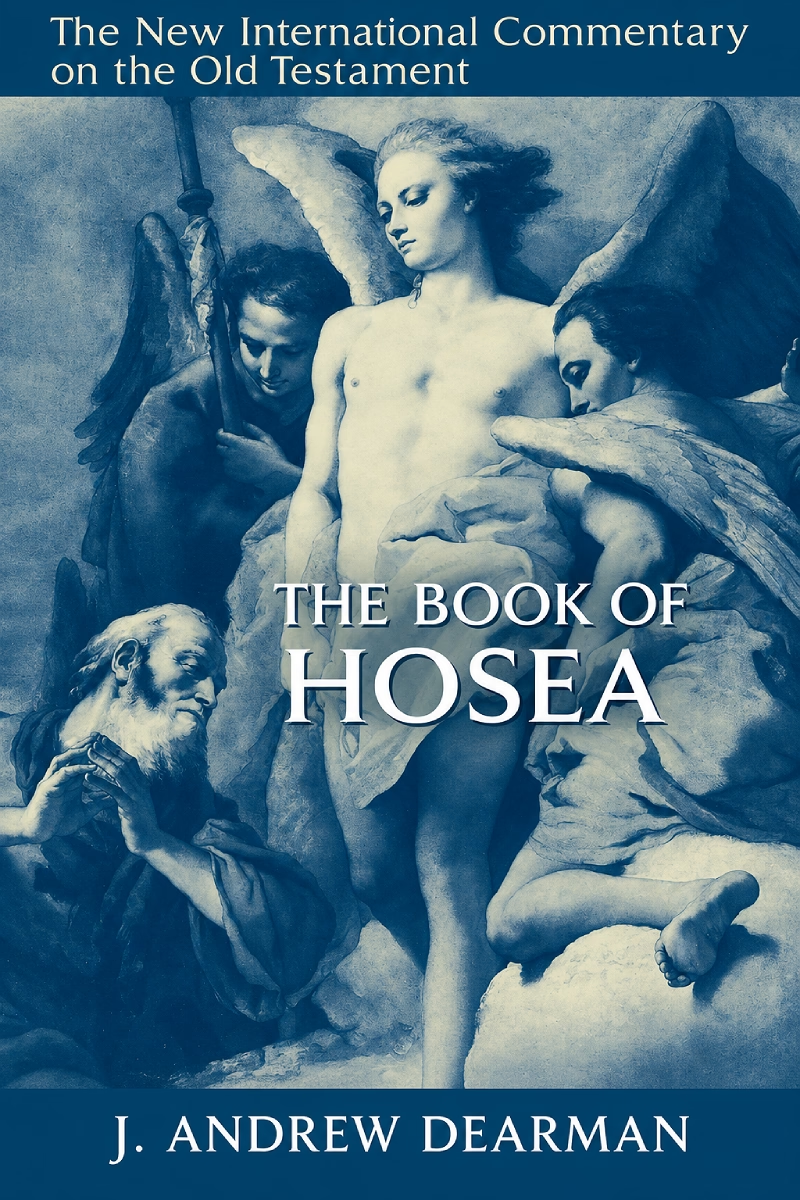
The Book of Hosea
J. Andrew Dearman’s commentary on Hosea explores the prophet’s marriage and family imagery as a window into Israel’s covenant betrayal and YHWH’s persistent love. It traces judgment, idolatry, failed repentance, and political unfaithfulness alongside God’s repeated purpose to restore, heal, and renew his people in covenant relationship.
Available Instantly
About This Book
J. Andrew Dearman’s The Book of Hosea is a full exegetical and theological commentary on the prophetic book of Hosea. Dearman places the prophet in the historical world of the northern kingdom, examines the origins and transmission of the text, and gives particular attention to Hosea’s poetry, metaphors, covenant traditions, household imagery, and theological argument. The commentary is organized around the relationship between YHWH and his people and the way Hosea uses marriage and family life to portray covenant loyalty, betrayal, judgment, and reconciliation.
Hosea 1–3 receives sustained treatment as the interpretive doorway into the book. Dearman examines Hosea’s marriage, the naming of the children, the announcement of judgment, the reversal of that judgment, and the command to love again. He shows how the prophet’s family becomes a metaphorical vehicle for understanding Israel as YHWH’s household. Marriage and covenant language are tightly intertwined: Israel’s spiritual unfaithfulness is portrayed as marital betrayal, while YHWH’s continuing love opens the possibility of renewed relationship. Readers asking why Hosea uses marriage, adultery, prostitution, and family imagery to describe Israel’s relationship with God receive substantial historical, literary, and theological explanation.
The central chapters, Hosea 4–11, develop YHWH’s case against Israel. Dearman follows accusations concerning the people, priests, rulers, cult, political leadership, foreign alliances, and idolatry. Baal worship and the shattered calf become concrete expressions of covenant disloyalty. The commentary gives careful attention to Israel’s appeal to Egypt and Assyria, failed repentance, moral corruption, and the repeated claim that the people’s deeds expose the brokenness of their relationship with God. Yet judgment is not the only note. Hosea’s images of wilderness, parenthood, household, love, and return keep the possibility of restoration before the reader.
Hosea 11 is especially important for the portrayal of YHWH’s love for Israel as a child who has turned away. The final movement of the book continues the covenant lawsuit, recalls Israel’s history and Jacob traditions, announces judgment, and then ends with a call to repentance and YHWH’s promise to heal and restore. Hosea 14 presents return to the Lord, forgiveness, renewed fruitfulness, and healed relationship as the proper conclusion to the book’s long conflict between covenant infidelity and divine love.
Dearman’s theological introduction strengthens these themes by treating community identity, Israel as YHWH’s household, and the relationship between covenant and marriage. His appendices further explore Baal in Hosea, the Song of Moses, Psalm 106, love in Hosea, and other literary and theological connections. He also notes relationships between Hosea and later biblical usage, helping readers see how the prophet participates in broader biblical theology without reducing the book to isolated proof texts.
This commentary therefore speaks directly to questions such as: What does covenant unfaithfulness look like? Why is idolatry treated as betrayal of a relationship? How can judgment and divine love coexist? What does genuine repentance and return to God require? Why does Hosea continue to promise restoration after repeated failure? Dearman answers these questions by showing how Hosea’s metaphors, history, and theology converge on the passionate covenant relationship between YHWH and his people.
Book Details

Reading Fit
STUDY LEVEL
Advanced, Intermediate
STUDY SCOPE
Individual Book, Old Testament
BOOKS INCLUDED

Edition & Format
PUBLISHED
August 3, 2010
AVAILABLE FORMATS
hardcover, kindle
LENGTH
424 pages

Topics Covered
You Might Also Like