
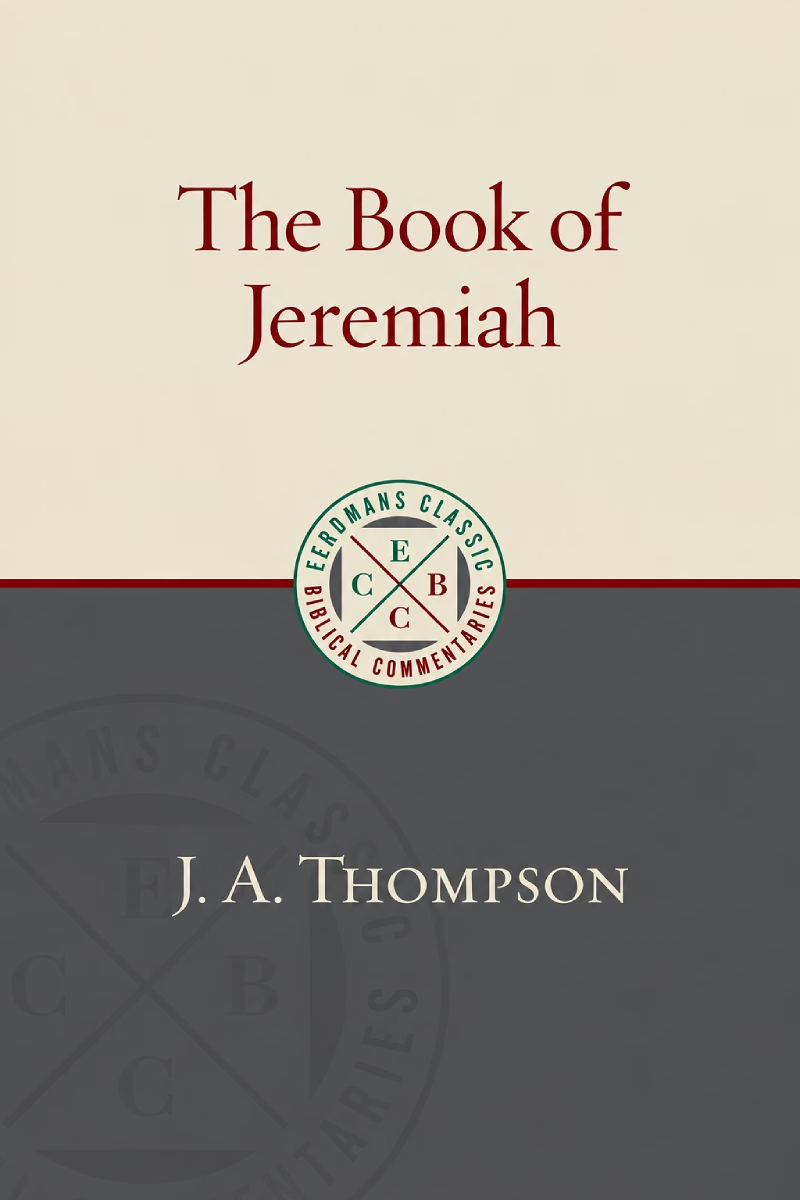
The Book of Jeremiah
J. A. Thompson’s major commentary reads Jeremiah through the prophet’s covenant message: Judah is called back to loyalty to the Lord, warned of judgment for persistent rebellion, and given hope beyond disaster. It combines historical background, Jeremiah’s life and symbolic ministry, false-prophet conflicts, restoration, and the new covenant.
Available Instantly
About This Book
J. A. Thompson’s The Book of Jeremiah is an extensive commentary on the entire prophetic book, written for serious students, pastors, and readers who need both historical orientation and detailed exegesis. Thompson’s governing emphasis is Jeremiah’s covenant message: the people of Judah belong to Yahweh and are therefore called to live in loyalty to their covenant Lord. Their persistent refusal to do so explains the prophet’s warnings, the coming judgment on Jerusalem and Judah, and the exile that follows. At the same time, Jeremiah also announces restoration beyond judgment.
Thompson devotes a substantial introduction to Jeremiah among the prophets, the historical setting of the late seventh and early sixth centuries B.C., the structure and composition of the book, major exegetical issues, the prophet’s life, the message of Jeremiah, the Hebrew text, and the book’s poetic forms. This background makes the commentary particularly useful for understanding Jeremiah as a historical prophetic figure rather than reading isolated sayings without their political, covenantal, and religious setting.
The commentary’s largest early section covers Jeremiah 2–25 and the divine judgment on Judah and Jerusalem. Thompson traces the people’s apostasy, idolatry, covenant breach, resistance to God’s word, and false security. The temple, national institutions, and outward religion cannot protect a people who reject the covenant’s moral and spiritual demands. Jeremiah’s call to return to the Lord therefore belongs to the same theological framework as his announcement of disaster. Judgment is not arbitrary; it is the covenant consequence of sustained rebellion.
Jeremiah himself is also a major subject. Thompson examines the prophet’s call, his personal struggles, symbolic actions, preaching, suffering, and place within Israel’s prophetic tradition. The book gives close attention to Jeremiah’s conflict with false prophets in chapters 26–29. These chapters raise enduring questions about how God’s people distinguish a true prophetic word from confident religious assurances that contradict what God has actually said. Thompson also considers Jeremiah’s relationship to Hosea and the ways covenant language shapes the prophet’s message.
The Book of Consolation in Jeremiah 30–33 receives significant treatment. Here the commentary turns from threatened and realized judgment to restoration, return, rebuilding, renewed relationship with God, and the new covenant. Jeremiah 31:31–34 is especially important because it presents God’s law written on the heart, intimate knowledge of the Lord, forgiveness, and a renewed covenant relationship. Thompson’s treatment makes clear that hope is not an escape from the book’s theology of judgment but God’s answer beyond it.
The later narratives follow Jeremiah through the reigns of Jehoiakim and Zedekiah, the fall of Jerusalem, the aftermath of catastrophe, and the prophet’s experiences with the remnant that eventually goes to Egypt. Jeremiah 46–51 then expands the horizon to God’s judgment on foreign nations, demonstrating that Yahweh’s rule is not confined to Judah. Chapter 52 closes by recounting Jerusalem’s fall while leaving a modest sign that judgment does not eliminate the possibility of future hope.
This commentary is especially valuable for readers asking why Judah fell, how covenant unfaithfulness leads to judgment, what Jeremiah teaches about true and false prophecy, how the prophet’s personal life relates to his message, what the new covenant means within Jeremiah, and how restoration can follow exile. Thompson’s historical and exegetical depth allows the reader to study Jeremiah as a unified theological witness to covenant obligation, prophetic truth, judgment, repentance, exile, restoration, and the faithfulness of God.
Book Details

Reading Fit
STUDY LEVEL
Advanced
STUDY SCOPE
Individual Book, Old Testament
BOOKS INCLUDED

Edition & Format
PUBLISHED
January 18, 2022
AVAILABLE FORMATS
paperback, hardcover, kindle
LENGTH
1072 pages

Topics Covered
You Might Also Like