
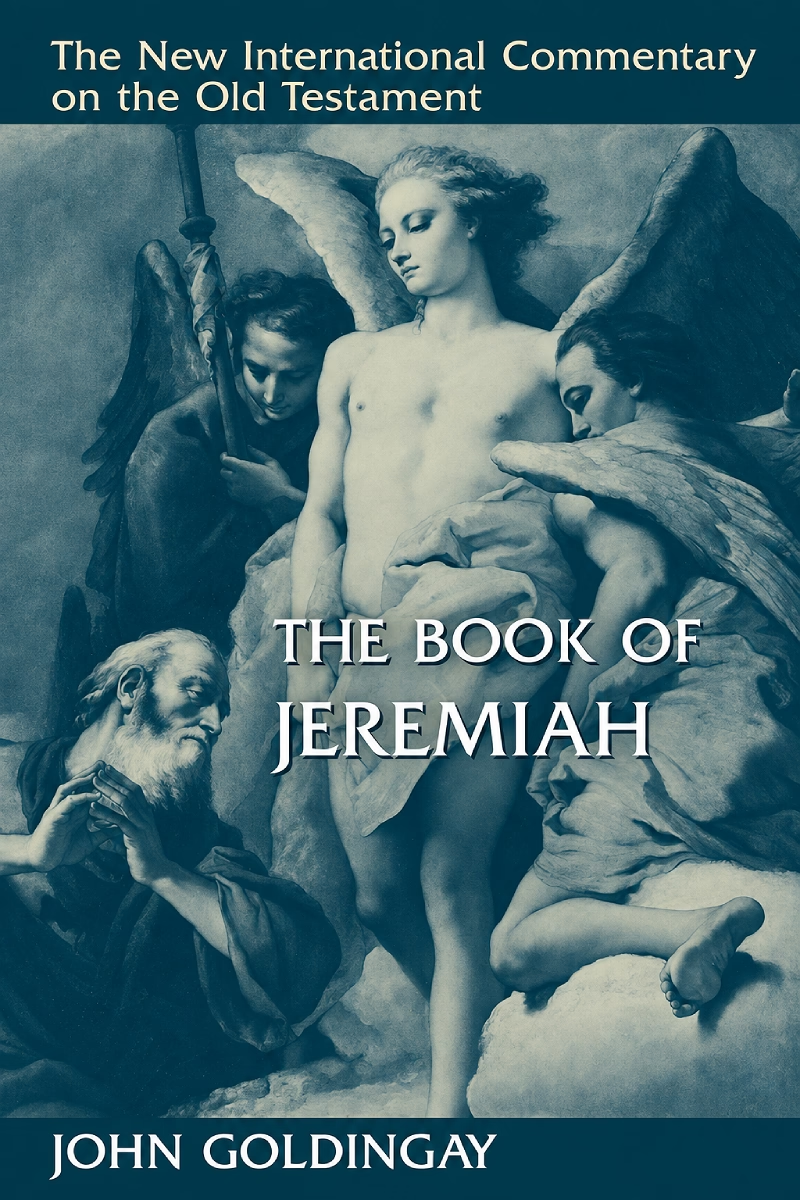
The Book of Jeremiah
John Goldingay’s full-scale commentary guides readers through all fifty-two chapters of Jeremiah, showing how the prophet’s warnings of judgment, calls to return, conflicts over true prophecy, and promises of restoration reveal the character of God, the vocation of Jeremiah, and the hope that survives Jerusalem’s fall and exile.
Available Instantly
About This Book
John Goldingay’s The Book of Jeremiah is a full commentary on all fifty-two chapters of Jeremiah, combining close exegesis, attention to the book’s literary forms and composition, historical context, theological interpretation, and Christian use of the Old Testament. Goldingay treats Jeremiah as a complex scroll made up of prophetic messages, stories about the prophet, exchanges between Jeremiah and Yahweh, poetry, and prose. His approach helps readers understand not only individual passages but also how warning, judgment, lament, hope, and restoration work together across the whole book.
The first major movement of Jeremiah confronts Judah with its abandonment of Yahweh. Goldingay follows the prophet’s accusations concerning idolatry, covenant disloyalty, false confidence in the temple, social and political failure, and refusal to listen to the word of God. Jeremiah 2–6 recalls the exodus and Israel’s broken relationship with God; Jeremiah 7–10 challenges misplaced trust in the temple; Jeremiah 11–13 develops covenant themes; and Jeremiah 14–20 brings prayer, complaint, prophetic suffering, and God’s sovereignty into view. The commentary therefore helps readers ask why religious privilege cannot substitute for obedience, why divine warning is an expression of God’s covenant claim, and how persistent rebellion leads to judgment.
Jeremiah’s prophetic vocation receives sustained attention. Goldingay explains the call of Jeremiah in chapter 1, the prophet’s difficult commission, his vulnerability, his prayers and protests, his symbolic actions, and his repeated conflict with leaders and reassuring or false prophets. The book clarifies what it means for a prophet to speak God’s word when the message is unwelcome and when competing religious voices promise peace. Jeremiah 26–29 is especially important for the conflict over true and false prophecy and for the instruction given to the exiles in Babylon.
Judgment is not Jeremiah’s final word. Goldingay gives substantial attention to restoration, return, and renewed relationship with God, especially in Jeremiah 30–33. These chapters include promises of rebuilding, renewed joy, the return of Israel and Judah, and the new covenant of Jeremiah 31:31–34. The commentary shows how Jeremiah can hold catastrophe and hope together: Jerusalem’s fall is not denied or minimized, yet God’s faithfulness is not exhausted by judgment. The Babylonian exile becomes both the consequence of Judah’s wrongdoing and the setting in which future restoration must be understood.
Goldingay also treats the historical narratives surrounding Jerusalem’s fall, Jeremiah’s experiences after the catastrophe, the flight to Egypt, and the large collection of oracles against the nations in Jeremiah 46–51. These sections broaden the book’s theology beyond Judah. Babylon and the other nations are not outside Yahweh’s rule; God can use empires as instruments and also hold them accountable. Jeremiah therefore addresses the sovereignty of God over nations as well as the fate of God’s own people.
The commentary is especially useful for readers asking how to make sense of Jeremiah’s severe language, how divine anger relates to divine love, why Judah was exiled, how true prophecy differs from reassuring religious speech, what the new covenant promises, and how hope can remain after national and spiritual collapse. Goldingay consistently reads Jeremiah in its ancient setting while also considering its continuing significance as Christian Scripture. The result is a semantically rich study of God, the people of God, prophetic ministry, covenant, judgment, repentance, exile, restoration, the nations, and the enduring authority of the prophetic word.
Book Details

Reading Fit
STUDY LEVEL
Advanced
STUDY SCOPE
Individual Book, Old Testament
BOOKS INCLUDED

Edition & Format
PUBLISHED
December 7, 2021
AVAILABLE FORMATS
hardcover, kindle
LENGTH
1512 pages

Topics Covered
You Might Also Like