
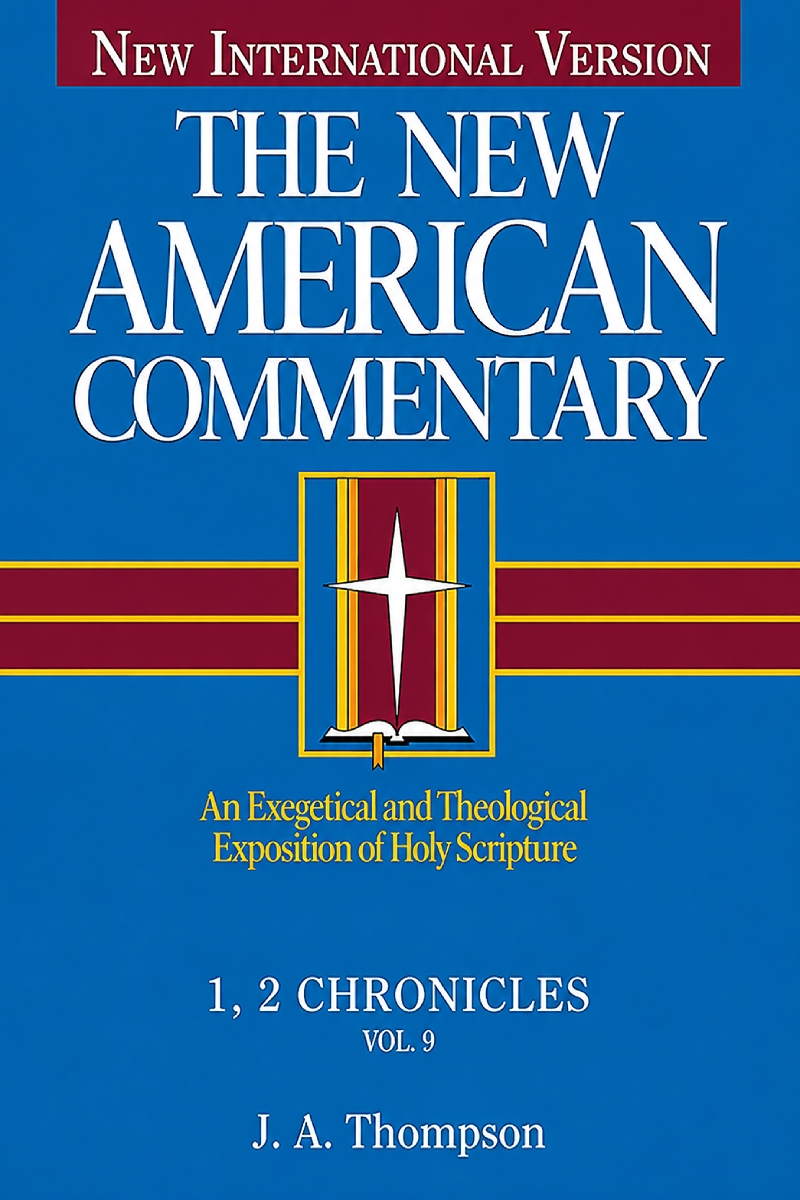
1, 2 Chronicles
J. A. Thompson’s commentary traces 1–2 Chronicles from Israel’s genealogies through David, Solomon, the temple, Judah’s kings, exile, and restoration hope. It highlights the Davidic covenant, true worship, priesthood, prayer, seeking the Lord, reform, and God’s faithfulness—showing why temple and kingship mattered so deeply to the postexilic community.
Available Instantly
About This Book
J. A. Thompson’s commentary offers sustained exposition of 1 Chronicles and 2 Chronicles, treating the Chronicler’s history as a theological interpretation of Israel’s past for a community living after exile. The volume follows the text from the opening genealogies through David and Solomon, the building and dedication of the temple, the reigns of Judah’s kings, the Babylonian exile, and the closing decree of Cyrus. Throughout, Thompson emphasizes the Chronicler’s concern to show continuity between God’s earlier promises and the worship, identity, and hope of the restored people.
The genealogies of 1 Chronicles 1–9 are not treated as disposable preliminaries. They connect the postexilic community with Adam, the patriarchs, the tribes of Israel, the house of David, the priesthood, and the people associated with Jerusalem and temple service. Thompson explains how these lists establish identity, inheritance, continuity, and the place of Judah and Levi within the Chronicler’s theological purpose. The effect is to place the restored community inside the long history of God’s dealings with Israel rather than treating it as a disconnected remnant after catastrophe.
David dominates 1 Chronicles 10–29. Thompson gives particular weight to the Davidic covenant in 1 Chronicles 17, where God promises to establish David’s house and kingdom. David’s desire to build a house for God is answered by God’s promise to build a lasting house for David, linking dynasty, temple, and divine promise. The commentary follows David’s victories, his organization of Levites, priests, musicians, gatekeepers, and other temple personnel, and his extensive preparations for the temple that Solomon will build. Worship, ordered ministry, giving, prayer, and the proper service of God therefore form substantial parts of the exposition.
Second Chronicles begins with Solomon and the temple. Thompson treats the construction, dedication, and divine acceptance of the temple as central to the Chronicler’s understanding of Israel’s life with God. Solomon’s prayer in 2 Chronicles 6 and God’s response in 2 Chronicles 7 connect the temple with covenant, repentance, prayer, forgiveness, and restoration. The commentary gives close attention to the way worship at the temple expresses dependence on God and to the Chronicler’s recurring language of seeking or forsaking the Lord.
The reigns of Judah’s kings provide repeated examples of covenant faithfulness, apostasy, judgment, repentance, and reform. Thompson traces the evaluations of rulers such as Asa, Jehoshaphat, Joash, Hezekiah, Manasseh, and Josiah, showing how their treatment of worship, the temple, God’s word, and prophetic warning reveals the spiritual condition of the nation. Periods of reform restore proper worship and renew covenant loyalty; periods of idolatry and stubbornness bring discipline. Prayer and humble seeking of God frequently appear in moments of national danger, while prophetic messages interpret events and call kings and people back to faithfulness.
The priesthood and Levites receive unusually prominent treatment in Chronicles, and Thompson explains their roles in sacrifice, worship, music, teaching, temple service, and preservation of ordered religious life. The temple is therefore more than an architectural subject. It functions as a visible center of worship, covenant memory, prayer, and the presence of God among his people. The Davidic line and the temple remain closely connected as signs of promises that survived the exile.
The commentary also addresses the Chronicler’s use of earlier biblical history, especially parallels with Samuel and Kings. Differences in selection and emphasis help reveal the Chronicler’s pastoral purpose for the postexilic community: to remember God’s faithfulness, learn from earlier rebellion, restore true worship, and live in hope grounded in God’s promises.
This volume answers questions such as: Why does Chronicles retell Israel’s history? Why are the Davidic covenant and temple so central? What does it mean to seek the Lord? How do prayer, repentance, reform, and worship relate to restoration? Why are priests and Levites emphasized? How should the exile be understood in relation to covenant failure and continuing promise? Thompson’s exposition makes 1–2 Chronicles a sustained study of covenant identity, worship, kingship, and hope after judgment.
Book Details

Reading Fit
STUDY LEVEL
Advanced, Intermediate
STUDY SCOPE
Individual Book, Old Testament
BOOKS INCLUDED

Edition & Format
PUBLISHED
December 2, 1994
AVAILABLE FORMATS
hardcover, kindle
LENGTH
494 pages

Topics Covered
You Might Also Like