
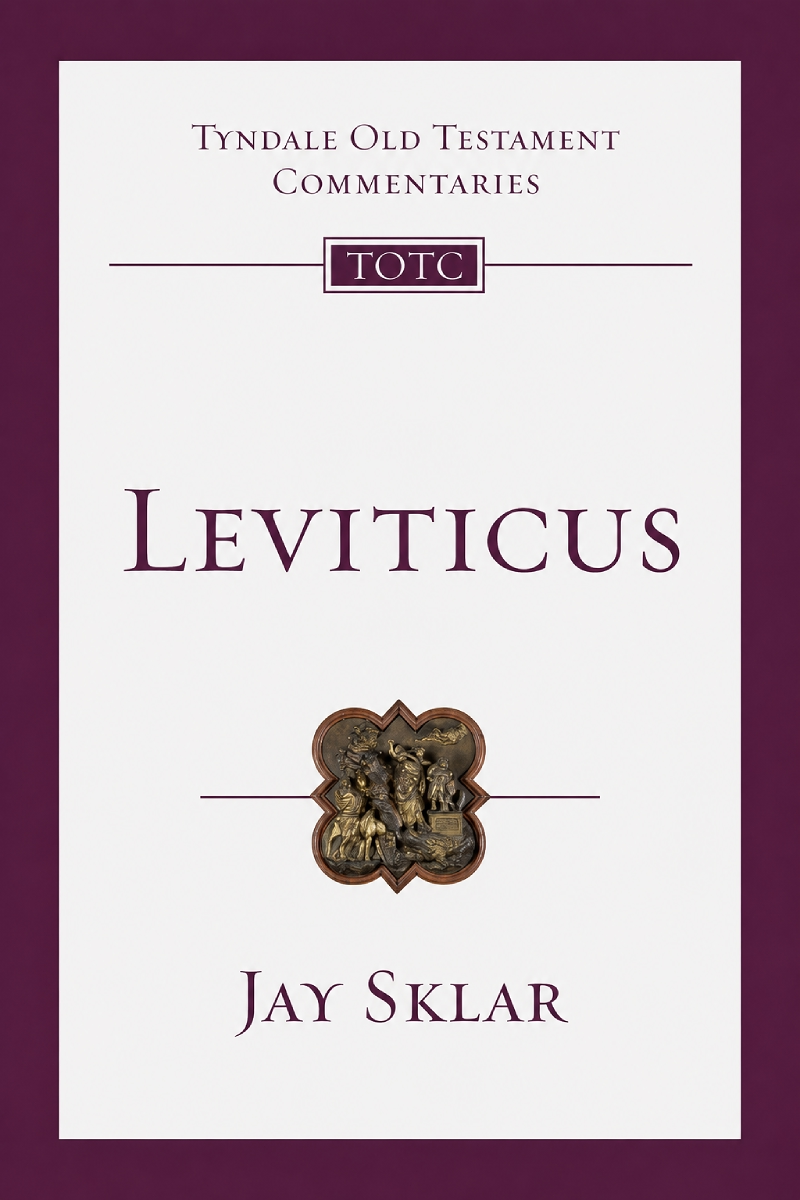
Leviticus: An Introduction and Commentary
A clear, theologically rich commentary on Leviticus that explains how a holy God graciously dwells among his people and teaches them to worship and live in his presence. Sklar connects sacrifice, atonement, purity, priesthood, holiness, sacred times, and life in the land with the larger biblical story and the greater fulfillment found in Jesus.
Available Instantly
About This Book
Jay Sklar’s Leviticus: An Introduction and Commentary is a full exposition of Leviticus designed to explain both what the text meant in Israel’s world and what its theological message means for readers today. Sklar presents the book as instruction for life in the presence of the covenant King. God has come to dwell among Israel; Leviticus therefore addresses the central problem of how sinful and impure people can remain near a holy God, worship him rightly, and become a community whose life reflects his character.
The opening sacrifices in Leviticus 1–7 receive detailed explanation. Sklar distinguishes the burnt, grain, fellowship, purification, and reparation offerings and explains their different functions in worship, covenant fellowship, thanksgiving, atonement, purification, and restitution. Atonement is especially important. Drawing on the priestly use of kipper, Sklar explains atonement in terms of both ransom and purification: sin and impurity endanger and defile, and the lifeblood of the sacrificial animal provides the God-appointed means by which the worshiper is ransomed from judgment and purified. This framework gives Leviticus 17:11 particular theological significance.
Leviticus 8–10 establishes public worship at the tabernacle and the priesthood of Aaron and his sons. Sklar explains priestly mediation, consecration, the first sacrifices, and the deaths of Nadab and Abihu as part of the larger question of how God may be approached. Leviticus 11–15 then addresses ritual purity and impurity through food laws, childbirth, skin conditions, contaminated objects and houses, and bodily emissions. Sklar carefully distinguishes ritual impurity from moral guilt while also showing how the purity system teaches Israel about the holiness of God and the importance of moral purity.
The Day of Atonement in Leviticus 16 gathers the preceding themes together in an annual rite that purifies the sanctuary and people from the accumulated effects of sin and impurity. Leviticus 17 emphasizes the sacred character of blood and life. Leviticus 18–20 turns explicitly to holy living, including sexual ethics, justice, care for the vulnerable, neighbor love, worship, family life, and separation from practices that contradict Israel’s calling. Leviticus 21–24 treats priestly holiness, holy things, sacred times, festivals, and reverence for God. Leviticus 25–27 looks toward life in the promised land through Sabbath years, Jubilee, redemption of property and persons, covenant blessings and curses, vows, and dedicated gifts.
A major feature of Sklar’s commentary is the relation of Leviticus to the New Testament. His introduction explicitly develops “the ‘how much more’ of Jesus,” and the commentary repeatedly shows how Levitical institutions provide indispensable background for understanding Christ. Sacrificial atonement, priesthood, cleansing, holiness, and access to God find a greater fulfillment in Jesus, especially in the New Testament’s presentation of Christ as the sinless high priest and final sacrifice who cleanses his people and opens confident access to God. Sklar therefore does not treat the laws as a ladder by which Israel earned grace; they are instructions given to a people already brought into covenant relationship with God.
The commentary is especially useful for readers asking why Christians should study Leviticus, what sacrifice and atonement mean, why purity laws mattered, how holiness applies beyond ritual, what the Day of Atonement teaches, and how Leviticus helps make sense of Jesus’ priesthood and sacrificial work. By relating worship, ethics, holiness, grace, and divine presence, Sklar shows Leviticus as a coherent vision of a people learning to flourish before their holy covenant King.
Book Details

Reading Fit
STUDY LEVEL
Intermediate
STUDY SCOPE
Individual Book, Old Testament
BOOKS INCLUDED

Edition & Format
PUBLISHED
January 30, 2014
AVAILABLE FORMATS
paperback, kindle
LENGTH
329 pages

Topics Covered
You Might Also Like