
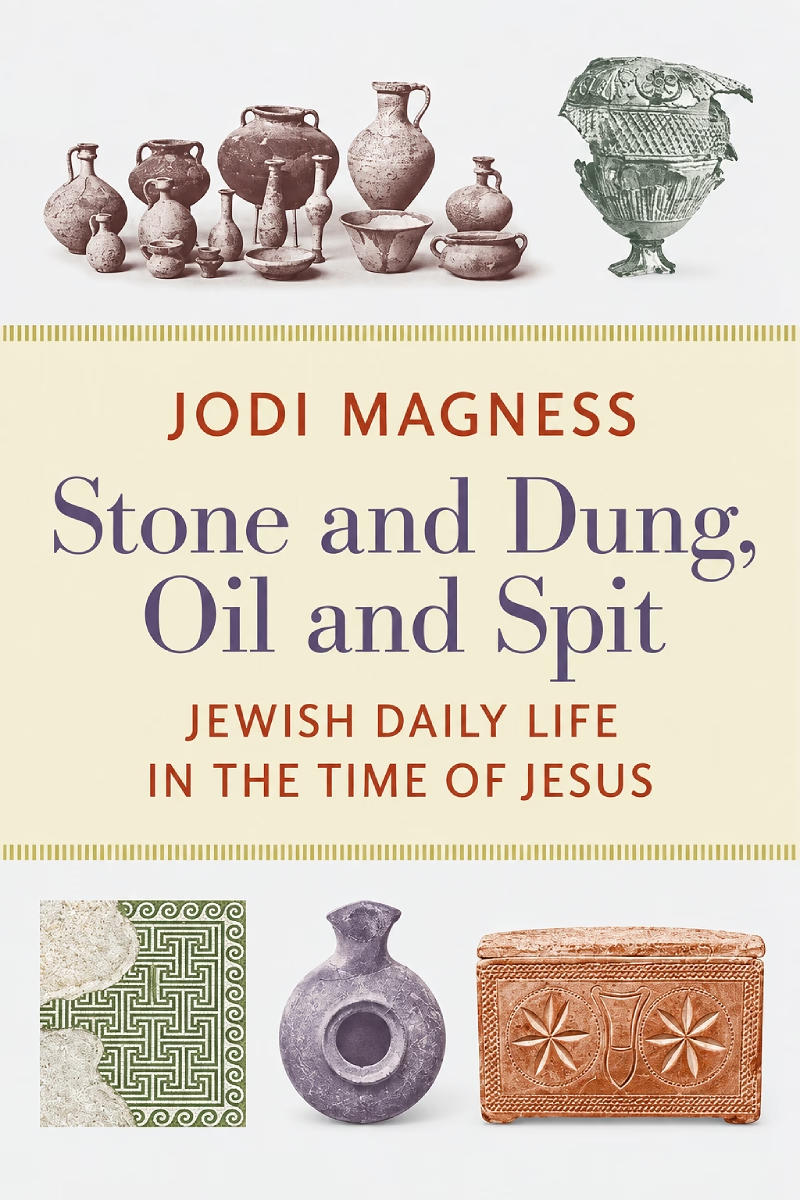
Stone and Dung, Oil and Spit
Jodi Magness reconstructs Jewish daily life in Palestine around the time of Jesus by bringing archaeology into conversation with biblical and Second Temple texts. Ritual purity threads through studies of washing, food, vessels, meals, Sabbath, fasting, coins, clothing, oil, saliva, toilets, and first-century burial customs, illuminating the Jewish world of the Gospels.
Available Instantly
About This Book
Stone and Dung, Oil and Spit: Jewish Daily Life in the Time of Jesus is Jodi Magness’s archaeological and textual reconstruction of selected areas of Jewish life in Palestine from roughly the mid-first century BCE to the destruction of Jerusalem in 70 CE. The book’s governing historical question is how ordinary Jewish practices can be recovered by correlating material remains with literary evidence. Archaeology is central to the method, while the Hebrew Bible, Gospels, Dead Sea Scrolls, Josephus, and rabbinic literature supply complementary evidence for how Jewish law and custom were understood and practiced.
Ritual purity is the strongest recurring subject. Magness explains that the book began as a study of the archaeology of purity, and purity remains close to the surface in most chapters. Biblical laws concerning impurity, purification, food, bodily processes, and sacred space are compared with late Second Temple practice. Leviticus contributes especially to discussions of clean and unclean creatures and bodily impurity; Numbers 19 appears in purification practice; Exodus 35:3 helps frame competing interpretations of Sabbath observance; and Deuteronomy 23:12–14 provides an important background for sectarian toilet practice. These laws did not produce one uniform Jewish lifestyle. Pharisees, Sadducees, Essenes, other Jewish groups, and the movement associated with Jesus could share Scripture while disagreeing over how particular commands should be applied.
Purifying the body and hands receives direct treatment through ritual washing and miqva’ot, the stepped immersion pools found throughout late Second Temple Palestine and in especially large numbers at Qumran. Archaeological evidence is used to show how purity practice left physical traces. The chapter on food examines creatures allowed or prohibited by biblical law and connects diet with Jewish identity. Household vessels then extends the purity question into pottery, lamps, glass, stone, and dung. Stone vessels are especially important because they were associated with the belief that stone did not contract ritual impurity, a practice that also illuminates the stone water jars of John 2.
Dining customs and communal meals show how food, poverty, table practice, and sectarian identity intersected. Sabbath observance and fasting are treated as lived practices whose details could be disputed among Jewish groups. Coins open a different window on daily life through commerce, taxation, images, and the use of money. Clothing and tzitzit combine archaeological textiles with biblical commands and Gospel episodes, including traditions that portray Jesus wearing fringes or tassels.
Magness also examines subjects rarely covered in conventional Bible backgrounds. Oil and saliva are treated separately in relation to purity, bodily practice, healing, and ancient custom. Toilets and toilet habits bring together archaeology, Deuteronomy’s wilderness-camp legislation, Josephus, and sectarian texts to show how ideas of impurity and sacred space affected ordinary bodily functions. The final major chapter gives substantial attention to Jewish tombs and burial customs, including rock-cut tombs, ossuaries, secondary burial, Jerusalem archaeology, and questions surrounding the burial of Jesus and modern claims about tombs associated with him.
Qumran recurs throughout because it preserves an unusually rich combination of archaeological remains and sectarian texts. The Dead Sea Scrolls, miqva’ot, vessels, communal meals, clothing, purity rules, and toilet practice make the site an important comparator for wider Jewish life, while Masada supplies additional archaeological evidence. The Gospels are repeatedly read against this first-century Jewish setting. Mark 7, for example, becomes more intelligible against disputes over purity and washing; Gospel references to tzitzit, food, vessels, saliva, and burial are similarly illuminated by the material and textual evidence.
The book therefore serves readers asking what daily life was actually like for Jews in the time of Jesus, how ritual purity worked, why miqva’ot and stone vessels mattered, what Jews ate, how Sabbath and fasting were practiced, what clothing and tzitzit looked like, how toilets and burial customs functioned, and how archaeology clarifies the Jewish context of Jesus and the Gospels without treating either texts or artifacts as a complete picture by themselves.
Book Details

Reading Fit
STUDY LEVEL
Advanced, Intermediate
STUDY SCOPE
Topical
BOOKS INCLUDED

Edition & Format
PUBLISHED
August 12, 2011
AVAILABLE FORMATS
paperback, hardcover, kindle
LENGTH
377 pages

Topics Covered
You Might Also Like