
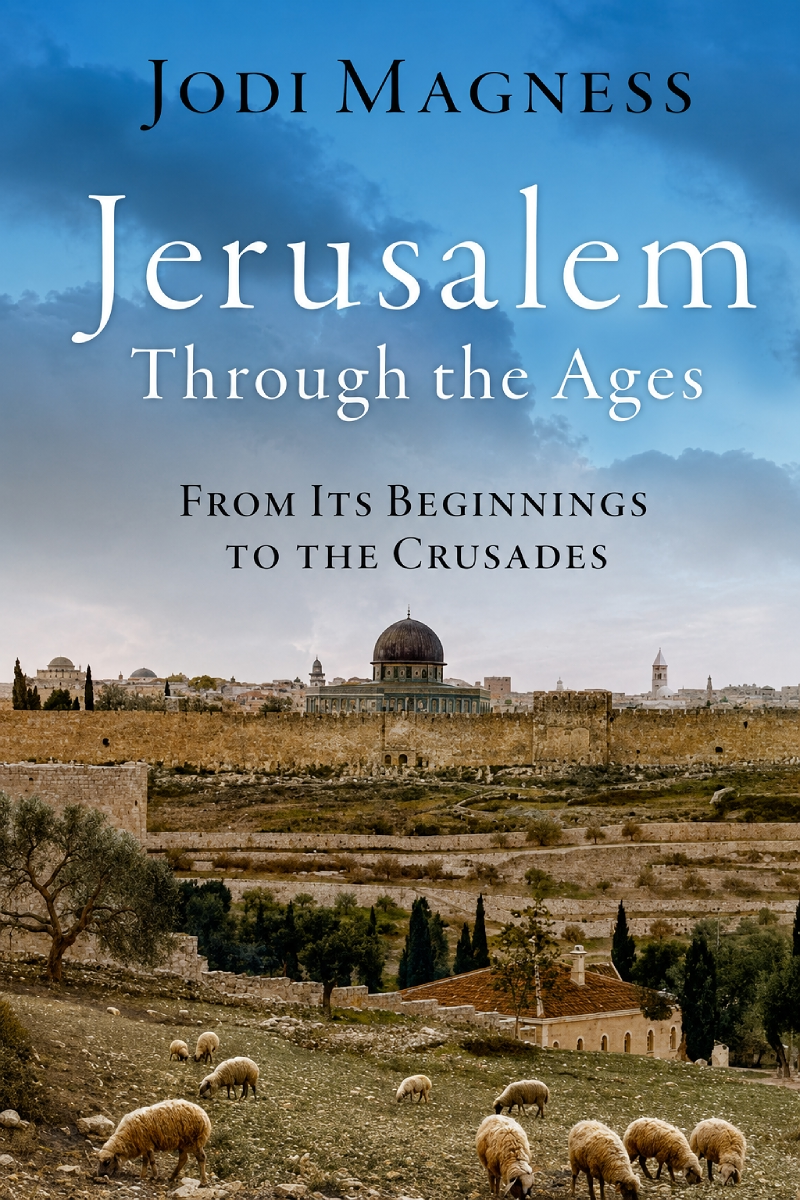
Jerusalem through the Ages
Magness tells Jerusalem’s story through its archaeological layers, from Jebusite settlement and David and Solomon to the Persian, Hasmonean, Herodian, Roman, Byzantine, Islamic, and Crusader cities. The Temple Mount, City of David, Second Temple, Jesus’ Jerusalem, destruction in 70 CE, and later holy sites reveal how the city repeatedly changed while retaining sacred importance.
Available Instantly
About This Book
Jerusalem through the Ages: From Its Beginnings to the Crusades is Jodi Magness’s archaeological history of Jerusalem from its earliest settlement through the city’s capture by Saladin in 1187. The book follows Jerusalem through a series of decisive historical transitions and uses archaeology alongside the Bible, Josephus, inscriptions, architecture, coins, and later historical sources to explain how the city changed physically, politically, and religiously. Its governing focus is Jerusalem itself: its topography, walls, water systems, temples, streets, neighborhoods, monuments, destruction layers, and holy places across more than two thousand years.
The opening chapters establish the city’s physical setting and sources. Magness introduces Jerusalem’s topography around the southeastern hill, the Gihon Spring, and the Temple Mount and explains how archaeological evidence is compared with literary traditions. Jebusite Jerusalem is reconstructed as a fortified settlement south of the later Temple Mount, including its water systems and the remains associated with the ancient citadel. This provides the setting for the biblical tradition of David’s conquest of Jerusalem.
Israelite Jerusalem then develops the city under David and Solomon. David’s transfer of the Ark of the Covenant and his establishment of Jerusalem as political and religious capital are followed by Solomon’s construction of the First Temple and royal palace. The book examines the City of David, the stepped and large stone structures, the Ophel, fortifications, and the archaeological debate surrounding the scale and character of Jerusalem in the United Monarchy. Judahite Jerusalem continues the story through the divided kingdoms, Assyrian pressure, Hezekiah’s preparations and water system, population expansion, and the Babylonian destruction of Jerusalem and Solomon’s Temple in 586 BCE.
Postexilic Persian Jerusalem follows the return of Judahites, the building of the Second Temple, and the restoration of the city under the Persian Empire. Ezra and Nehemiah provide important literary settings for the implementation of Torah and the rebuilding of Jerusalem’s walls. The Hasmonean chapter traces the city after the Maccabean revolt, when Jerusalem again became the capital of an independent Jewish kingdom and expanded within the Hellenistic world.
Herodian Jerusalem receives the book’s longest sustained treatment. Magness reconstructs the city largely created by Herod the Great and his successors, including the massive enlargement of the Temple Mount, the Second Temple complex, palaces, fortifications, streets, wealthy residential areas, ritual installations, and the urban setting familiar from the Gospels and Josephus. This is the Jerusalem of Jesus’ final days, crucifixion, and burial. The chapter culminates in the First Jewish Revolt and the Roman destruction of Jerusalem and the Second Temple in 70 CE.
The following chapters trace Jerusalem after that catastrophe. Hadrian rebuilt the city as the Roman colony Aelia Capitolina, reshaping its streets, gates, and religious landscape. Byzantine Jerusalem then became a major Christian pilgrimage center marked by churches and shrines, including the Church of the Holy Sepulcher and other sites connected with Christian memory. The early Islamic period transformed the Temple Mount again through major Muslim monuments, including the Dome of the Rock and al-Aqsa Mosque, while retaining the city’s importance to Jews and Christians. Crusader Jerusalem forms the final major period, as Western Christians conquered and reorganized the city before Saladin’s victory in 1187.
The Temple Mount is a recurring thread across the entire book. It moves from the traditional site of Solomon’s Temple to the Second Temple, Herod’s monumental platform, the Roman and Byzantine periods, and the Islamic sanctuary. The City of David, city walls, gates, water systems, and major sacred sites likewise allow readers to follow physical continuity and change across different rulers and populations.
The book addresses readers asking what archaeology can establish about David and Solomon’s Jerusalem, where the First and Second Temples stood, what Hezekiah changed before the Assyrian threat, how Jerusalem looked in Jesus’ time, what happened in 70 CE, how Aelia Capitolina differed from Jewish Jerusalem, how Christian and Islamic rulers reshaped the city, and why the Temple Mount remained central through every major period.
Book Details

Reading Fit
STUDY LEVEL
Advanced, Intermediate
STUDY SCOPE
New Testament, Old Testament, Topical
BOOKS INCLUDED

Edition & Format
PUBLISHED
February 27, 2024
AVAILABLE FORMATS
paperback, hardcover, kindle
LENGTH
624 pages

Topics Covered
You Might Also Like