

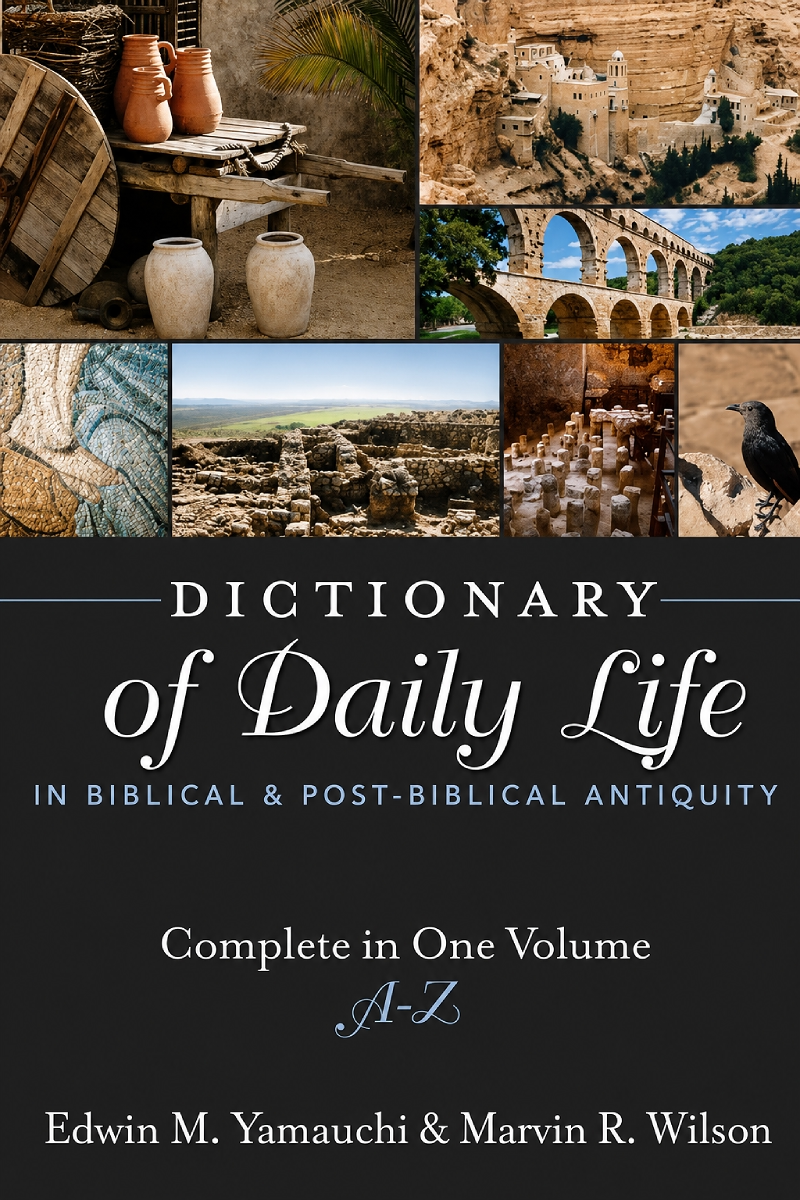
Dictionary of Daily Life in Biblical and Post-Biblical Antiquity
See everyday life behind the biblical text through 115 substantial A–Z studies of family, work, food, law, technology, medicine, religion, warfare, sexuality, trade, and more. Each subject is traced through the Hebrew Bible, New Testament, ancient Near East, Greco-Roman world, and early Jewish and Christian settings to illuminate Scripture’s cultural world.
Available Instantly
About This Book
Dictionary of Daily Life in Biblical and Post-Biblical Antiquity: Complete in One Volume, A-Z is a large biblical-background reference work organized around 115 substantial studies of ordinary life, social institutions, technology, law, religion, work, family, health, food, material culture, and public life. Edited by Edwin M. Yamauchi and Marvin R. Wilson, it approaches the Bible through cultural questions that conventional word-based Bible dictionaries may leave unexplained. Its governing purpose is to reconstruct the world assumed by Scripture so that readers can understand what ancient practices, objects, institutions, customs, and social expectations meant in their own settings.
Each major subject is treated comparatively. The articles move through the Hebrew Bible, the New Testament, the ancient Near East, the Greco-Roman world, and post-biblical Jewish and Christian communities, extending the historical frame from the biblical period into late antiquity. Archaeological evidence, ancient texts, historical sources, and biblical exegesis are brought together to show both continuity and change. This structure makes the work useful for questions such as what people ate and wore, how they married and raised children, how agriculture and trade worked, what homes and cities were like, how armies fought, what medicine could do, how laws were enforced, what purity meant, and how religious and magical practices functioned in the cultures surrounding the Bible.
The range is unusually broad. Domestic and family life includes childbirth, children, marriage, divorce, inheritance, clothing, furniture, food, sanitation, nursing, and household materials. Economic and occupational subjects include agriculture, animal husbandry, banking, loans, mining, metallurgy, taxation, textiles, trade, tools, viticulture, and wealth and poverty. Social and legal topics include citizenship, slavery, bribery, police and prisons, rape, prostitution, adultery, same-sex relations, widows and orphans, and laws and crimes. Material culture includes pottery, glass, leather, ivory, jewelry, weapons, boats, buildings, aqueducts, heating and lighting, and writing materials. Health-related studies address diseases, plagues, dentistry, medicine, menstruation, childbirth, bathing, and food production and consumption.
Religious and spiritual practices also receive dedicated treatment. Separate articles examine astrology, divination and sortition, dreams, demons, magic, human sacrifice, incense, oaths and vows, purity and impurity, celibacy, mourning, and burial-related questions surrounding death and the afterlife. These studies do not isolate biblical references from their historical setting; they compare them with evidence from neighboring cultures and then trace related Jewish and Christian developments after the New Testament. The result gives readers context for distinguishing what a biblical passage shares with its surrounding world and what is distinctive within the biblical record.
Because the work repeatedly studies life in both Testaments, it draws meaningfully across major portions of Scripture rather than depending on isolated proof texts. Legal, ritual, and material-culture articles regularly use Genesis through Deuteronomy; kingship, warfare, cities, trade, and public institutions draw heavily on the historical books and prophets; wisdom and daily-life subjects make recurring use of Job, Psalms, Proverbs, and Ecclesiastes. New Testament discussions repeatedly use the Gospels and Acts for social life and material settings, and the Pauline letters, Hebrews, James, and Revelation for household, civic, ethical, religious, and communal practices.
The dictionary is especially suited to readers asking background questions that arise while reading Scripture: What did a particular object look like? How did an ancient custom actually work? What did marriage, slavery, taxation, medicine, warfare, clothing, or hospitality mean to the first audience? What cultural assumptions would an ancient reader have supplied automatically? By answering those questions across 115 focused subjects, the volume functions as a comprehensive topical guide to the cultural world of the Old and New Testaments and to the Jewish and Christian settings that followed them.
Book Details

Reading Fit
STUDY LEVEL
Advanced, Intermediate
STUDY SCOPE
Entire Bible, New Testament, Old Testament, Topical
BOOKS INCLUDED

Edition & Format
PUBLISHED
October 5, 2021
AVAILABLE FORMATS
paperback, hardcover, kindle
LENGTH
1865 pages

Topics Covered
You Might Also Like