
The Archaeology of the Holy Land
Jodi Magness reconstructs the Holy Land from Jerusalem’s fall in 586 BCE to the Muslim conquest through archaeology, history, and material culture. Moving through Qumran, Herodian Jerusalem, Galilee, Masada, Jewish burial, synagogues, and Byzantine Palestine, she shows what excavated sites reveal about Second Temple Judaism and the world of Jesus.
Available Instantly
About This Book
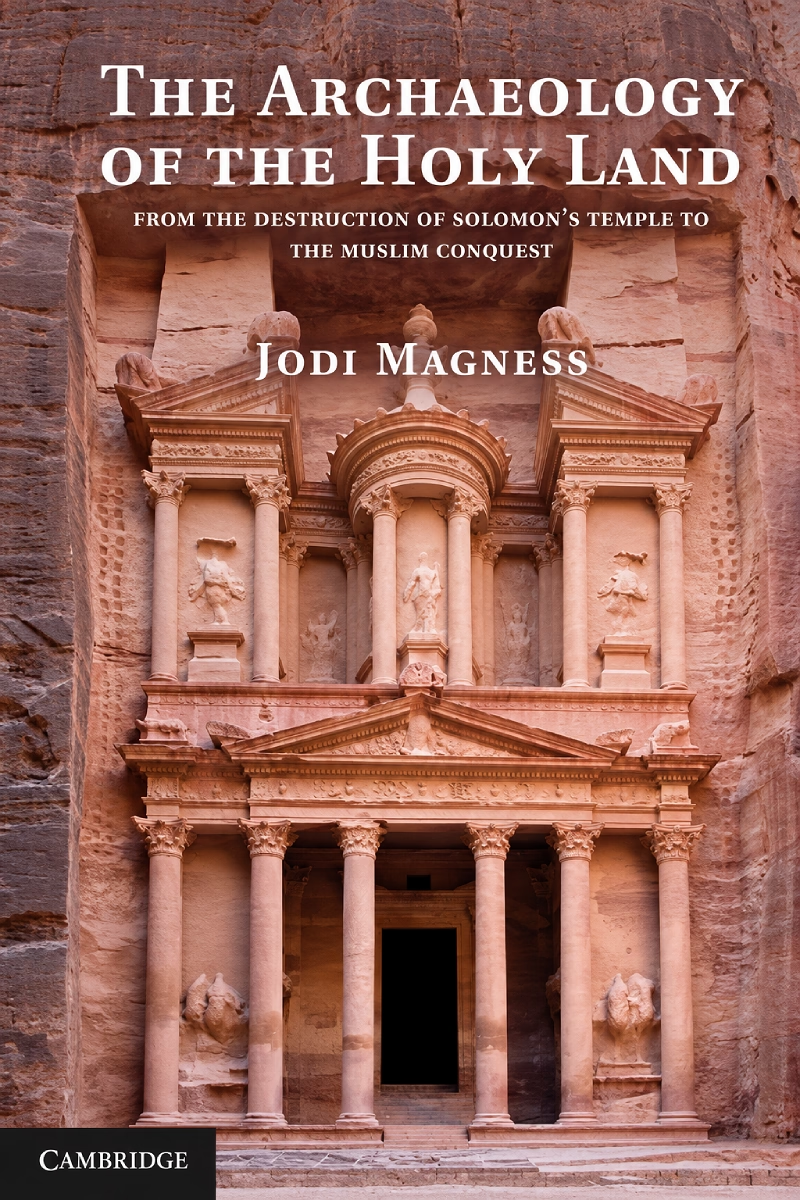
Jodi Magness’s The Archaeology of the Holy Land is a chronological introduction to the archaeology and history of ancient Palestine from the Babylonian destruction of Jerusalem in 586 BCE to the Muslim conquest in the seventh century CE. Its governing purpose is to show how excavated sites, architecture, artifacts, inscriptions, burial remains, and historical texts reconstruct the changing world of the Holy Land across the Babylonian, Persian, Hellenistic, Roman, Byzantine, and early Islamic periods. Jerusalem and the Second Temple era receive special attention, making the book especially useful for readers asking what archaeology can establish about the Jewish world into which Jesus was born and the societies that developed after the New Testament period.
The survey begins with Jerusalem’s topography and early history and then turns to the Babylonian and Persian periods. The destruction of the First Temple, exile, Persian rule, return, and rebuilding of Jerusalem provide the historical setting for the postexilic biblical world associated with Ezra and Nehemiah. The Hellenistic chapters trace the impact of Greek rule, the Maccabean crisis, the Hasmonean kingdom, and neighboring Nabataean culture, including Petra, preparing for the extensive treatment of Second Temple Judaism under Rome.
Qumran and the Dead Sea Scrolls receive a dedicated archaeological study. Magness considers the site, its occupation, installations, caves, artifacts, and relationship to the scrolls and the community associated with them. The early Roman or Herodian period then becomes a major center of the book. Jerusalem under Herod the Great is reconstructed through the Temple Mount, the Second Temple, fortifications, residences, ritual installations, and other remains. Caesarea Maritima, Samaria-Sebaste, Herodian Jericho, Herodium, and Masada show the scale of Herodian building, royal power, Roman influence, and the material setting of first-century Judea.
The book also asks what archaeology contributes to the historical setting of Jesus. Bethlehem and especially Galilee are considered within the settlement patterns, economy, architecture, and material culture of the early Roman period. The Gospel accounts function as ancient literary evidence alongside archaeological data rather than as isolated devotional texts. A substantial study of Jewish tombs and burial customs before 70 CE explains rock-cut tombs, ossuaries, and burial practice and provides historical context for questions about Jesus’ burial, the Talpiot tomb, and the James ossuary.
Magness follows the land beyond the destruction of Jerusalem in 70 CE through the period of the Bar-Kokhba Revolt and Hadrian’s refounding of Jerusalem as Aelia Capitolina. Roman and late antique synagogues receive extended treatment through their architecture, decoration, inscriptions, and dating. The Byzantine chapters examine Christian Jerusalem and Palestine through churches, pilgrimage, settlement, and public religious life, while the epilogue carries the archaeological story into early Islamic Jerusalem.
Throughout the book, pottery, coins, glass, stone vessels, architecture, inscriptions, roads, fortifications, tombs, synagogues, churches, and other physical remains are used to establish chronology and interpret daily and public life. The book therefore serves readers asking what biblical archaeology actually does, what the Second Temple and Herodian worlds looked like, what Qumran and Masada reveal about Jewish life, what Galilee was like in the time of Jesus, how ancient Jews buried their dead, what changed after the Jewish revolts, and how the Holy Land developed from biblical antiquity into the Byzantine and early Islamic eras.
Book Details

Reading Fit
STUDY LEVEL
Advanced, Intermediate
STUDY SCOPE
New Testament, Old Testament, Topical
BOOKS INCLUDED

Edition & Format
PUBLISHED
August 27, 2012
AVAILABLE FORMATS
paperback, kindle
LENGTH
401 pages

Topics Covered
You Might Also Like