

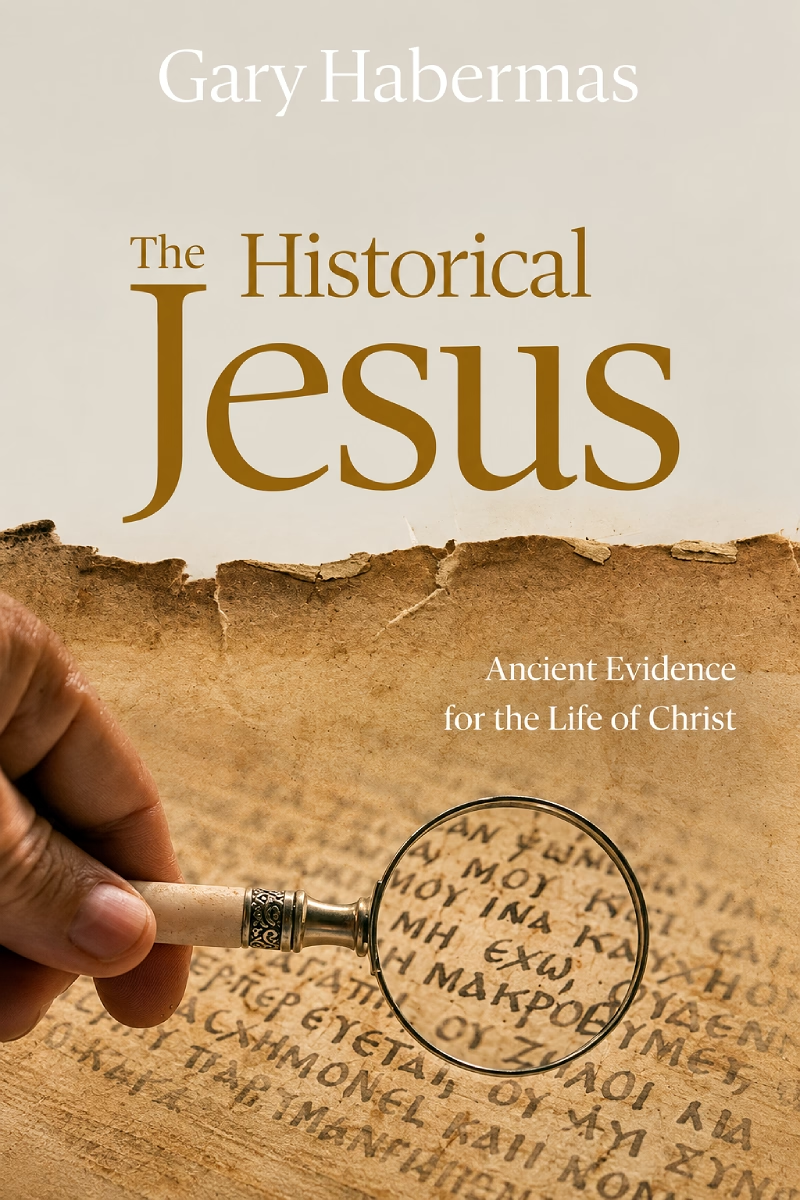
The Historical Jesus
Gary R. Habermas investigates what can be known historically about Jesus through early Christian creeds, New Testament data, archaeology, non-Christian writers, and early Christian sources outside the New Testament. He also tests mythicist claims, alternative lives of Jesus, new Gnostic approaches, and the Jesus Seminar against historical method and surviving ancient evidence.
Available Instantly
About This Book
The Historical Jesus: Ancient Evidence for the Life of Christ is Gary R. Habermas’s historical and apologetic investigation of what can be known about Jesus of Nazareth from ancient evidence. The work surveys modern challenges to the historical Jesus and then examines early Christian creeds, critically accepted New Testament facts, archaeology, ancient non-Christian witnesses, and early Christian writings outside the New Testament. Its governing method is significant: Habermas argues historically without requiring the investigation to begin by assuming the inspiration or complete reliability of the New Testament.
The first major section places the discussion within the modern quest for the historical Jesus. Habermas reviews approaches that radically limit what can be known about Jesus and addresses the claim that Jesus never existed. He distinguishes serious historical investigation from mythicist proposals and popular reconstructions that have gained attention despite weak evidence. The question is not merely whether a particular portrait of Jesus is attractive, but whether it can survive normal historical testing.
Separate chapters examine reinterpretations of Jesus and newer movements. Habermas discusses the swoon theory and modern versions of the claim that Jesus survived crucifixion, proposals connecting Jesus closely with Qumran, speculative accounts of His unrecorded years, and claims that later followers substantially changed His message. He also evaluates new Gnostic interpretations and the Jesus Seminar. These sections help readers asking how alternative portraits of Jesus arose, what evidence they use, and whether their historical conclusions are warranted.
The second half turns to the positive historical data. Early Christian creeds embedded in the New Testament receive major attention because they preserve traditions that predate the documents in which they appear. First Corinthians 15:3–8 is especially important. Habermas examines its testimony to Jesus’ death, burial, resurrection, and appearances and treats it as exceptionally early evidence connected with eyewitness testimony. Early material in Acts and other New Testament passages contributes to the reconstruction of what the first Christians proclaimed about Jesus before later theological development could plausibly account for the core claims.
The resurrection of Jesus is therefore a substantial historical subject, not merely an appended doctrine. Habermas combines the early creed in 1 Corinthians 15 with facts recognized across a wide range of critical scholarship and with corroborating material from other sources. The resulting question is historical: how early can belief in Jesus’ resurrection be documented, what experiences did the disciples report, and how well do naturalistic alternatives account for the evidence?
Archaeology supplies a different kind of evidence. Habermas considers finds relevant to the political, social, and material world of the Gospels, including evidence connected with Roman administration and crucifixion. He also discusses the Shroud of Turin. Archaeology is not used as a shortcut to prove every Gospel event; its value is to illuminate historical background and test claims about the setting in which the New Testament places Jesus.
A major chapter gathers ancient non-Christian testimony. Josephus, Tacitus, Suetonius, Pliny the Younger, Lucian, Thallus, Mara Bar-Serapion, and other sources are examined for what they can independently contribute concerning Jesus and the earliest Christians. Habermas asks what can be established about Jesus’ existence, execution, reputation, followers, and the rapid spread of beliefs about Him without relying solely on Christian Scripture. He then turns to ancient Christian sources outside the New Testament, including early post-apostolic writers, to trace additional historical testimony.
The book concludes by synthesizing these lines of evidence and including appendices on historiography and apologetic method. It therefore serves readers asking whether Jesus really existed, what sources outside the Bible say about Him, how early the central Christian claims can be documented, what archaeology contributes to historical-Jesus research, what evidence supports the resurrection, and how modern skeptical or alternative reconstructions compare with ancient data. Its strongest retrieval value lies in the convergence of historical method, apologetics, early creedal evidence, archaeology, non-Christian testimony, and extra-New-Testament Christian sources in one sustained investigation.
Book Details

Reading Fit
STUDY LEVEL
Intermediate
STUDY SCOPE
New Testament, Topical
BOOKS INCLUDED

Edition & Format
PUBLISHED
August 30, 2023
AVAILABLE FORMATS
paperback, hardcover, kindle
LENGTH
305 pages

Topics Covered
You Might Also Like