
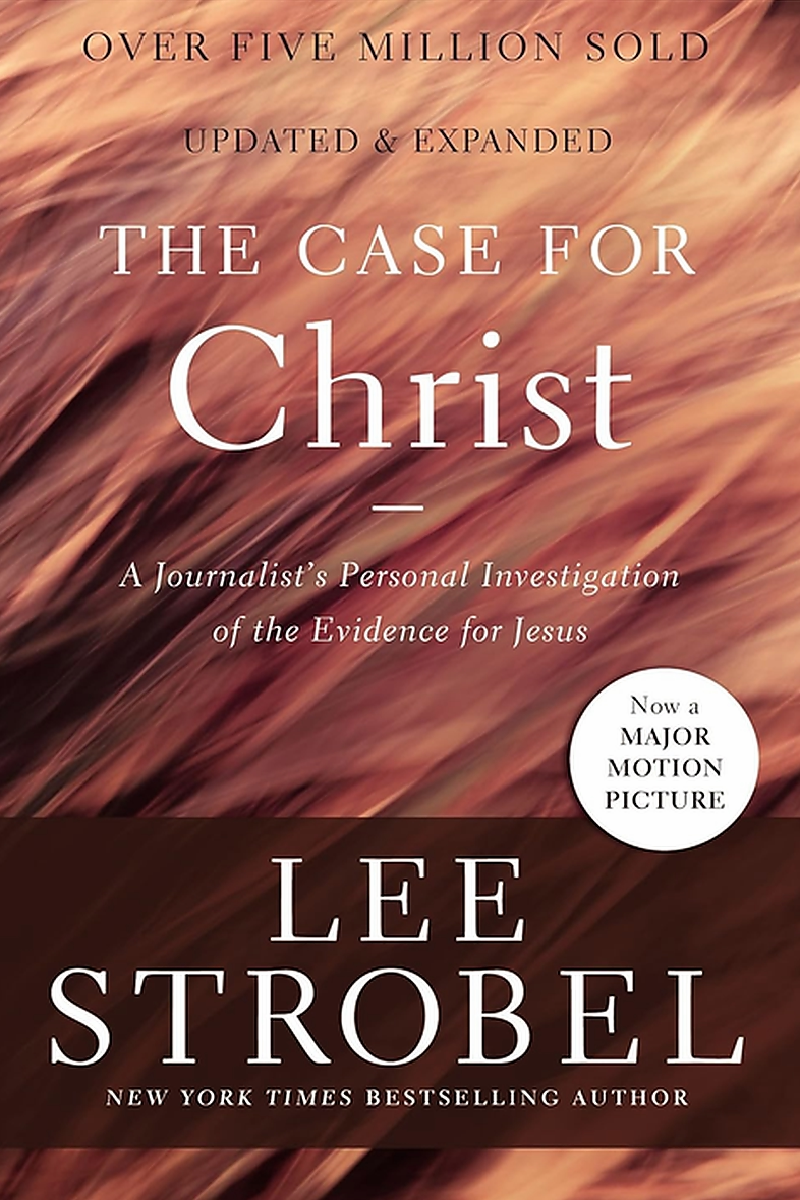
The Case for Christ
Lee Strobel investigates the historical case for Jesus through expert interviews on Gospel eyewitness testimony, manuscript preservation, archaeology, outside corroboration, Jesus’ divine identity, Messianic prophecy, crucifixion, the empty tomb, resurrection appearances, and the cumulative historical evidence surrounding the rise of resurrection faith.
Available Instantly
About This Book
The Case for Christ approaches the identity, death, and resurrection of Jesus through the methods of investigative journalism. Lee Strobel structures the book as a cumulative historical case and interviews specialists about the kinds of evidence normally examined when assessing events and testimony: eyewitness reliability, documentary preservation, outside corroboration, archaeology, identity claims, prophecy, medical evidence, the empty tomb, reported appearances, and circumstantial evidence surrounding belief in the resurrection.
The first major section examines the historical record of Jesus. Matthew, Mark, Luke, and John provide the primary biblical framework because the book repeatedly asks whether the Gospel accounts preserve credible testimony about what Jesus said and did. Strobel investigates authorship, eyewitness connection, early dating, intention, internal consistency, and the kinds of differences among accounts that appear when multiple witnesses describe the same events.
Documentary evidence receives its own sustained treatment. The book considers the manuscript evidence for the New Testament, the time between the original writings and surviving copies, textual variants, and the ability of textual criticism to recover the wording of the early documents. This makes preservation of the Gospel record a substantial search subject rather than an assumed background claim.
The investigation then moves outside the New Testament. Ancient non-Christian and extra-biblical references to Jesus and early Christianity are considered as independent corroboration. Biblical archaeology receives a separate examination, especially where discoveries illuminate people, places, customs, political settings, or physical details named in the Gospels. John receives notable attention because archaeological findings intersect with locations such as the pools, Jacob’s well, the pavement associated with Jesus’ trial, and historical figures including Pontius Pilate.
The second major section asks who Jesus claimed to be. Strobel examines sayings and actions associated with divine identity and asks whether the Gospel portrait supports the conclusion that Jesus understood Himself in extraordinary relation to God. Psychological objections are considered, followed by a broader examination of attributes and actions associated with deity.
Messianic prophecy then connects the historical Jesus with Old Testament expectation. Isaiah 53 receives sustained attention in the discussion of the suffering Messiah, while other prophetic texts contribute to questions of ancestry, birthplace, suffering, death, kingship, and historical appearance. The aim is to ask whether the pattern attributed to Jesus corresponds meaningfully with earlier Messianic expectation.
The final major section concentrates on the death and resurrection of Jesus. Medical evidence concerning Roman crucifixion addresses whether Jesus actually died on the Cross. The book then examines the empty tomb, possible explanations for the missing body, reported appearances of the risen Jesus, and the circumstances surrounding the rapid emergence of resurrection proclamation.
First Corinthians 15 becomes important because it preserves early testimony concerning Christ’s death, burial, resurrection, and appearances. Strobel uses this material alongside the Gospel narratives to ask how early the resurrection claim arose and whether legendary development adequately explains it. The closing circumstantial case considers changed lives, the disciples’ willingness to suffer, the transformation of skeptics, and the growth of the early Christian movement.
The Case for Christ addresses readers asking whether the Gospels are historically reliable, whether the New Testament text has been preserved, whether archaeology and outside sources corroborate Jesus, whether Jesus claimed divine identity, whether He fits Messianic prophecy, whether He actually died by crucifixion, whether the tomb was empty, and what historical evidence supports the claim that He rose from the dead.
Book Details

Reading Fit
STUDY LEVEL
Fundamental, Intermediate
STUDY SCOPE
Topical
BOOKS INCLUDED

Edition & Format
PUBLISHED
September 6, 2016
AVAILABLE FORMATS
paperback, hardcover, kindle, audiobook
LENGTH
295 pages
· 10h 49m audio

Topics Covered
You Might Also Like