
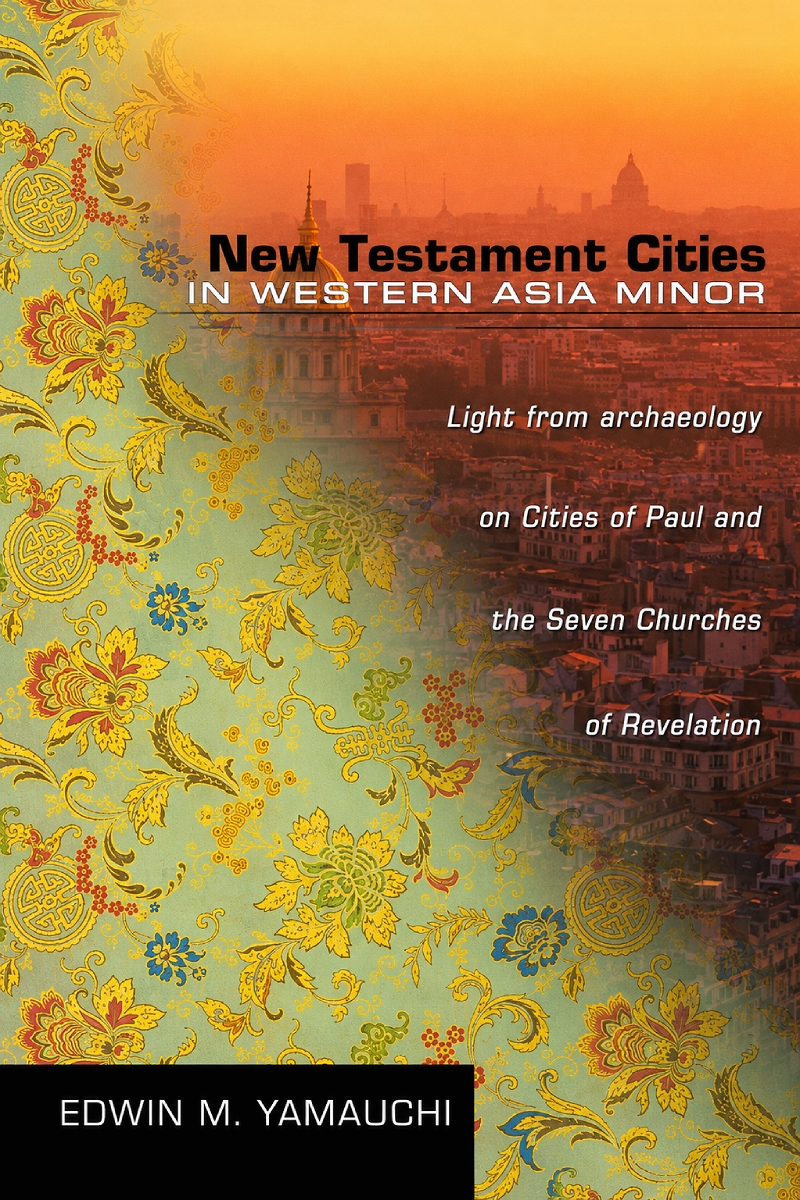
New Testament Cities in Western Asia Minor: Light from Archaeology
Yamauchi reconstructs the New Testament cities of western Asia Minor through archaeology, inscriptions, history, and urban culture. From Ephesus, Pergamum, Sardis, and Laodicea to Assos, Miletus, Colossae, and Hierapolis, he supplies the setting behind Paul’s ministry and the seven churches of Revelation, including civic life, imperial rule, and local religious culture.
Available Instantly
About This Book
New Testament Cities in Western Asia Minor: Light from Archaeology examines the archaeological and historical setting of twelve cities in the Roman province of Asia and neighboring western Anatolia that illuminate the world of the New Testament. Originally published as The Archaeology of New Testament Cities in Western Asia Minor, the book focuses on Assos, Pergamum, Thyateira, Smyrna, Sardis, Philadelphia, Ephesus, Miletus, Didyma, Laodicea, Hierapolis, and Colossae. Its governing purpose is to reconstruct these urban settings during the early Roman Empire so that references in Acts, the Pauline letters, and Revelation can be read against the physical, political, religious, and civic world in which the earliest Christian communities lived.
The seven churches addressed in Revelation 2–3 form a major part of the study. Pergamum, Thyateira, Smyrna, Sardis, Philadelphia, Ephesus, and Laodicea are each considered as real cities with distinctive histories, monuments, cults, political relationships, and local conditions. Archaeology therefore supplies background for the messages to the churches without turning the book into a verse-by-verse exposition of Revelation. The reader encounters the urban environments behind references to imperial power, civic prestige, local religion, wealth, decline, and competition among cities. Ephesus receives especially extensive treatment, while Pergamum, Sardis, and Laodicea also receive substantial chapters.
The cities associated with Paul and the Pauline mission provide the second major New Testament framework. Acts supplies important connections to the Roman province of Asia, including Paul’s ministry in Ephesus and travel through cities such as Assos and Miletus. Ephesus is treated not only as a major archaeological site but also as one of the principal urban centers of early Christianity. Miletus provides the setting for Paul’s meeting with the Ephesian elders in Acts 20. Colossae, Laodicea, and Hierapolis help reconstruct the Lycus Valley setting reflected in Colossians, while Ephesians is illuminated by the social and religious world of Ephesus.
The book also develops the broader Roman setting shared by these cities. Western Asia Minor was highly urbanized, and its cities competed for status, privileges, temples, festivals, and imperial favor. Local monuments, inscriptions, civic institutions, public buildings, and religious sites help explain how city identity worked under Roman rule. The imperial cult and the prominence of emperor worship belong to this wider environment, particularly in cities that competed for recognition within the province. A concluding discussion of rivalry among cities gathers this civic background into a regional perspective.
Individual chapters vary in length according to the archaeological evidence and the importance of the site. Ephesus, Pergamum, Sardis, Miletus, and Laodicea receive comparatively substantial treatment. Assos, Smyrna, Hierapolis, and Colossae also receive meaningful chapters, while Thyateira, Philadelphia, and Didyma are treated more briefly. Didyma is included for its importance to the religious and cultural environment of western Asia Minor even though it is not itself named in the New Testament.
The book addresses readers asking what the cities of Revelation were actually like, what archaeology reveals about Paul’s mission field, what the physical and religious setting of Ephesus was, how Roman civic life shaped the churches of Asia, and what local conditions stand behind New Testament place names that can otherwise remain abstract. Its search value lies in connecting specific New Testament cities and passages with the archaeological evidence, civic institutions, religious practices, and Roman provincial history of western Asia Minor.
Book Details

Reading Fit
STUDY LEVEL
Advanced, Intermediate
STUDY SCOPE
New Testament, Topical
BOOKS INCLUDED

Edition & Format
PUBLISHED
April 29, 2003
AVAILABLE FORMATS
paperback
LENGTH
180 pages

Topics Covered
You Might Also Like