
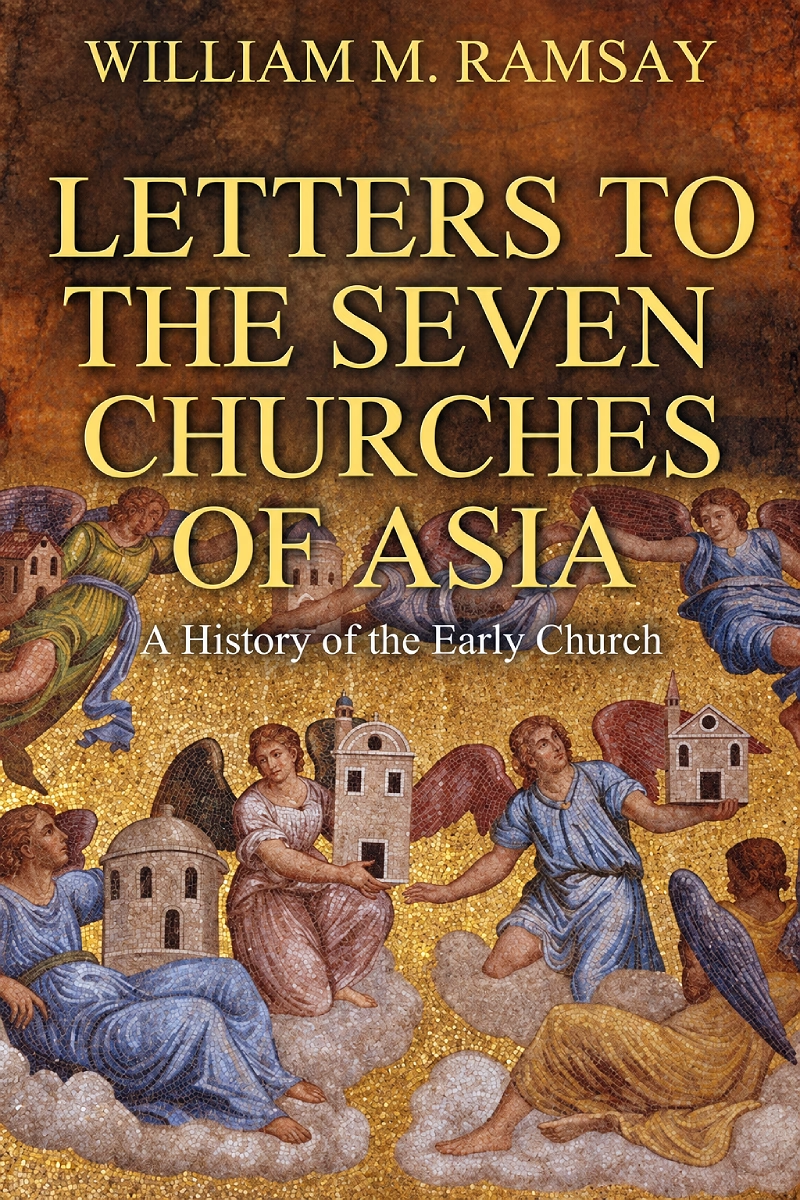
The Letters to the Seven Churches of Asia
Ramsay places Revelation’s seven letters inside the real cities of Roman Asia. He reconstructs Ephesus, Smyrna, Pergamum, Thyatira, Sardis, Philadelphia, and Laodicea through geography, civic history, imperial religion, Jewish and pagan life, persecution, travel, and letter transmission to show how each message would have sounded to its first-century hearers.
Available Instantly
About This Book
The Letters to the Seven Churches of Asia and Their Place in the Plan of the Apocalypse is William M. Ramsay’s historical, geographical, and archaeological study of Revelation 1–3 and the seven churches of Roman Asia. Ramsay’s governing purpose is to read the letters as first-century communications addressed to actual cities whose political institutions, religious life, roads, social structure, and local history shaped how the language of Revelation would have been heard. The book therefore combines interpretation of the biblical text with a reconstruction of the Roman province of Asia.
The first major portion develops the world in which the letters were written and transmitted. Ramsay studies writing, travel, messengers, and the circulation of letters among early Christians before turning to the seven messages themselves. He examines the relation of Christian books to contemporary literature, the symbolism and literary arrangement of the seven letters, the authority of their writer, and John’s setting on Patmos. These chapters make the book useful for readers asking how an early Christian letter moved between congregations, why seven churches were selected, and whether the order of the cities reflects an actual route through the province.
A substantial historical section reconstructs the political and religious environment of Asia around the time of Revelation. Ramsay studies the Flavian persecution, the provincial imperial cult, emperor worship, and the relationship between the Roman state and Christians who refused the required religious loyalty. He also examines the Greek and Anatolian character of the cities, Jewish communities in Asia, and pagan converts entering the church. Revelation’s imagery is repeatedly read against this setting, especially where imperial religion, persecution, civic identity, and public pressure help explain the language of conflict and faithfulness.
The seven cities then receive individual treatment. Ramsay first reconstructs each city and then interprets the corresponding letter. Ephesus is presented through its changing urban history and central position in the province; Smyrna through its civic vitality and local conditions; Pergamum through royal and administrative authority and the prominence of imperial religion; Thyatira through its more modest setting and social character; Sardis through its history of decline and lost vigilance; Philadelphia through its strategic and missionary position; and Laodicea through prosperity, self-sufficiency, and compromise. These historical studies are not detached city biographies: each is used to clarify the images, warnings, promises, and local allusions of Revelation 2–3.
Ramsay also investigates why these seven cities function as representative centers. He argues from roads and communication patterns that they formed an effective circuit through the principal part of the province and could serve wider districts of churches. The geographical order of Revelation is therefore treated as meaningful rather than accidental. This attention to routes, postal movement, civic centers, inscriptions, coins, religious institutions, and urban history gives the book substantial value for biblical archaeology and New Testament background study.
The book addresses readers asking what the seven churches were actually like, why Revelation names these particular cities, what emperor worship meant for Christians in Asia, how persecution affected the churches, what local conditions illuminate phrases in the letters, how Jewish and pagan populations shaped early congregations, and how the letters fit into the wider plan of Revelation. Its strongest search value lies in Revelation 1–3, the seven churches of Asia, and the historical and archaeological background necessary to understand those letters in their original setting.
Book Details

Reading Fit
STUDY LEVEL
Advanced, Intermediate
STUDY SCOPE
Individual Book, New Testament
BOOKS INCLUDED

Edition & Format
PUBLISHED
January 19, 2016
AVAILABLE FORMATS
paperback, hardcover, kindle, audiobook
LENGTH
396 pages
· 14h 27m audio

Topics Covered
You Might Also Like