
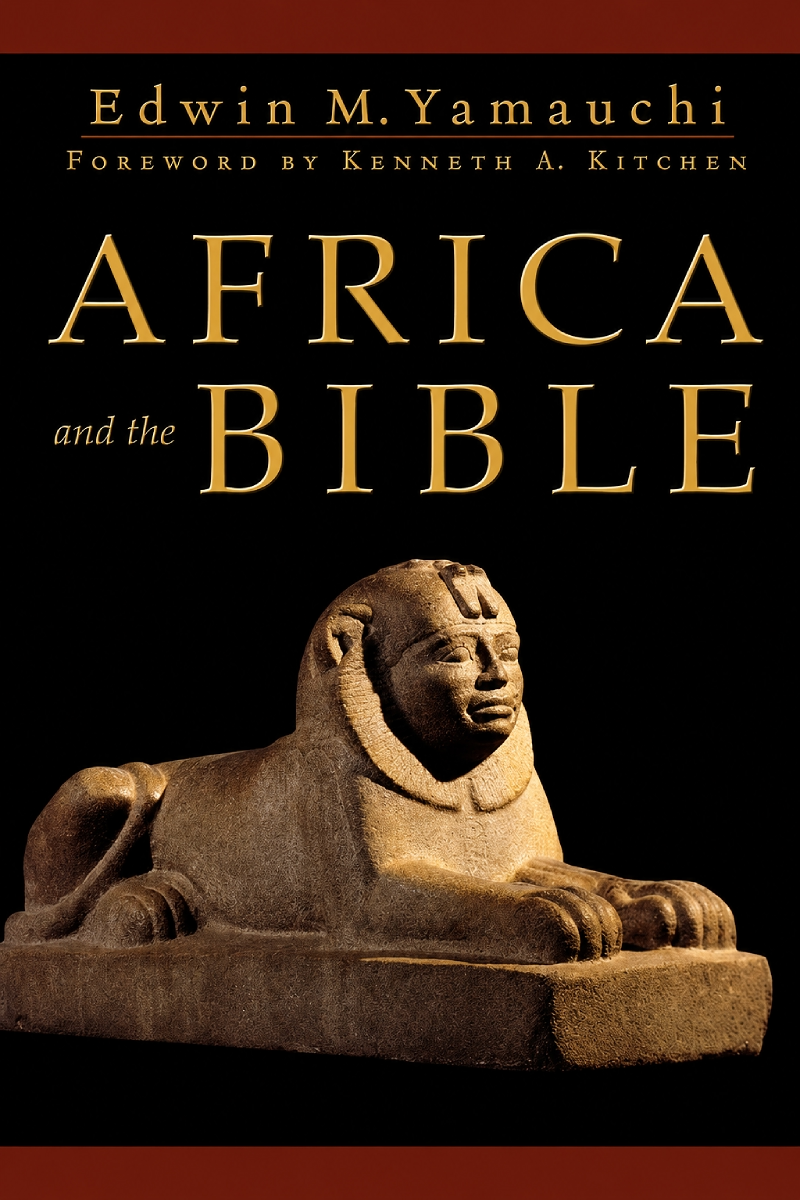
Africa and the Bible
Yamauchi traces Africa and Africans through key biblical texts using exegesis, archaeology, and ancient history. He examines the curse of Ham, Moses’ Cushite wife, Solomon and Africa, Tirhakah and the Cushites, Meroe, the Ethiopian eunuch, Cyrene, Simon of Cyrene, and later Afrocentric interpretations, showing the historical settings behind these biblical connections.
Available Instantly
About This Book
Africa and the Bible is Edwin M. Yamauchi’s historical, archaeological, and exegetical study of Africa and Africans in Scripture. The book concentrates on a series of biblical passages and historical questions where Africa is central, integrating the biblical text with archaeology, ancient geography, Egyptian and Nubian history, classical sources, and the later interpretation of these passages. Rather than surveying the whole continent abstractly, it develops focused case studies that show where African peoples, kingdoms, places, and identities intersect with biblical history.
The opening chapter examines the so-called curse of Ham, beginning with Genesis 9–10 and the fact that the curse in the text falls on Canaan rather than Ham. The chapter traces how the passage was later connected with Africans and how that interpretation acquired consequences far beyond the Genesis narrative. This makes the book directly relevant to readers asking what the curse of Ham actually says, whether it concerns African peoples, and how later racial interpretations developed.
A much larger chapter studies Moses’ Cushite wife in Numbers 12. Yamauchi investigates Cush, the geographical and ethnic background of the Cushites, and the historical settings needed to understand the woman identified in the biblical text. Africa then remains central in the chapter on Solomon, which examines Solomon’s connections with the south, trade, the Queen of Sheba, and the historical questions surrounding Sheba and African claims about the queen. First Kings 10 and its parallel in 2 Chronicles 9 form important biblical anchors for this discussion.
The book next gives substantial attention to Tirhakah and other Cushites. Here the Assyrian crisis in the days of Hezekiah is placed against the history of Egypt and Nubia and the rise of the Twenty-Fifth Dynasty. The biblical narratives in 2 Kings and Isaiah are read alongside ancient Near Eastern records and African historical evidence, giving context to Tirhakah, Cushite military involvement, and the political world behind the Assyrian invasion. A shorter chapter on Rome and Meroe carries the African historical narrative forward into the Greco-Roman period and examines the kingdom centered in Nubia south of Egypt.
The New Testament receives focused treatment through the Ethiopian eunuch and Cyrene. The chapter on Acts 8 explains why the official traditionally called the Ethiopian eunuch should be understood within the ancient geography and political world associated with Cush and Meroe rather than simply mapped onto the borders of the modern nation of Ethiopia. The study of Cyrene in Libya reconstructs the North African city and provides background for New Testament figures from Cyrene, including Simon of Cyrene in the passion narratives and Cyrenians appearing in Acts. These chapters make Acts and the Synoptic Gospels meaningful parts of the book’s Africa-related biblical study.
A final chapter addresses Afrocentric biblical interpretation, followed by an appendix engaging claims associated with Black Athena. Here Yamauchi examines how ancient evidence, biblical exegesis, and modern theories about African influence have been brought together or separated. The book therefore addresses not only ancient history but also the history of interpretation: how readers have identified biblical Africans, how racial assumptions have shaped readings of Scripture, and how archaeological and historical evidence bears on modern claims.
Readers can use the book to investigate who the Cushites were, whether Moses married an African woman, what Genesis actually says about Ham and Canaan, whether the Queen of Sheba was African, who Tirhakah was, where biblical Ethiopia was located, who the Ethiopian eunuch represented, what Cyrene contributed to the New Testament world, and how Africa fits into biblical history. Its central search subjects are Africa in the Bible, Cush and Nubia, biblical archaeology of Africa, and the historical settings of the specific Old and New Testament passages in which African peoples and places appear.
Book Details

Reading Fit
STUDY LEVEL
Advanced, Intermediate
STUDY SCOPE
New Testament, Old Testament, Topical
BOOKS INCLUDED

Edition & Format
PUBLISHED
March 1, 2004
AVAILABLE FORMATS
paperback, hardcover
LENGTH
304 pages

Topics Covered
You Might Also Like