
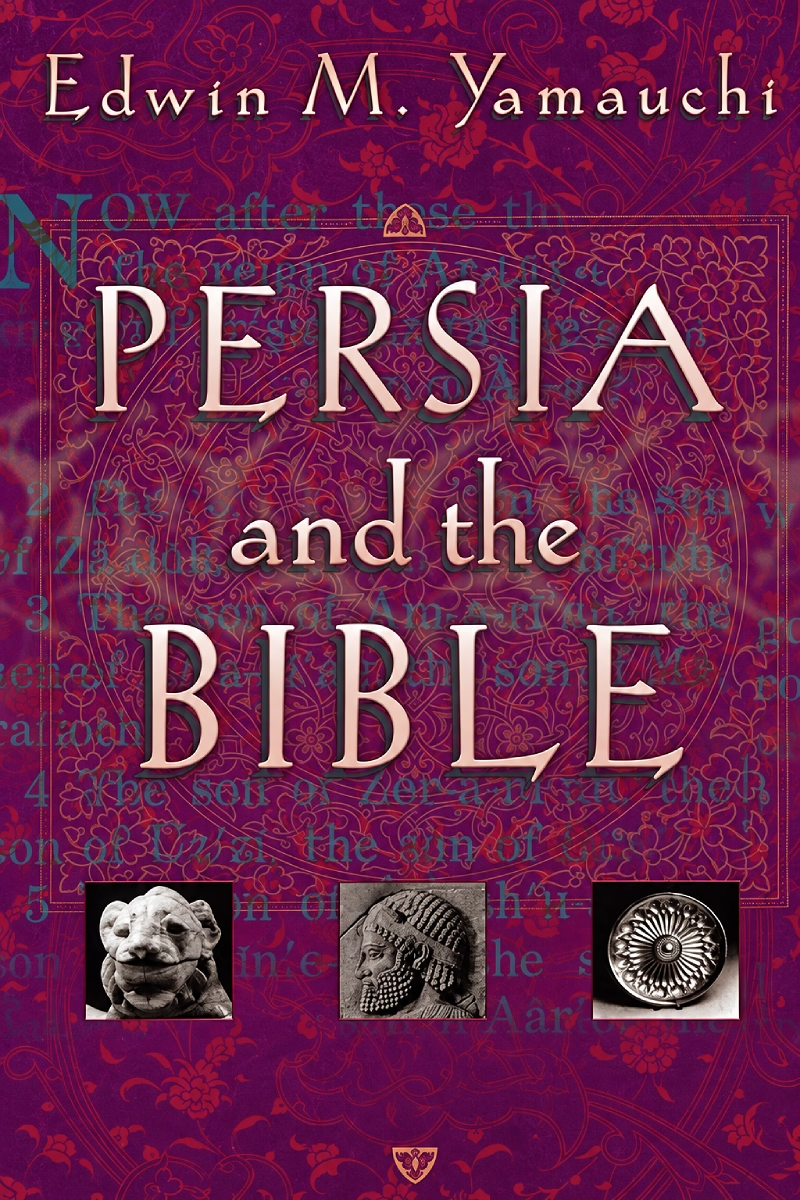
Persia and the Bible
A wide-ranging study of Persia’s role in Old Testament history, combining biblical texts, archaeology, inscriptions, classical sources, and Persian religion. Yamauchi examines the Medes, Cyrus, Darius, Xerxes, Artaxerxes, the imperial capitals, Zoroastrianism, the Magi, and the Persian background of Daniel, Esther, Ezra, and Nehemiah in detailed historical context.
Available Instantly
About This Book
Persia and the Bible is Edwin M. Yamauchi’s large historical and archaeological study of ancient Iran and its relationship to the Old Testament. The book reconstructs the Median and Achaemenid Persian world through biblical texts, archaeology, royal inscriptions, Iranian and Mesopotamian evidence, and Greek and Roman sources. Its governing purpose is to give readers the historical, political, geographical, linguistic, religious, and archaeological background needed to understand Persia’s major role in the exilic and postexilic biblical period.
The historical core follows the Medes and the major Achaemenid rulers. A substantial opening chapter examines the Medes, including their origins, Iranian languages and migrations, Assyrian evidence, Median rulers, archaeology, and the problem of Darius the Mede in Daniel. Separate major chapters then treat Cyrus, Cambyses, Darius, Xerxes, and Artaxerxes I. Cyrus is studied both as founder of the Persian Empire and as the ruler whose policies form the setting for the return from exile and the rebuilding described in the Old Testament. Darius receives extensive treatment in connection with imperial administration, inscriptions, Persian history, and the rebuilding of the Jerusalem temple. Xerxes is examined in relation to the Persian wars and the Ahasuerus of Esther, while Artaxerxes I provides the political setting for major events in Ezra and Nehemiah.
Four chapters are devoted to the imperial centers of Susa, Ecbatana, Pasargadae, and Persepolis. These sections use archaeological and historical evidence to reconstruct the capitals, palaces, inscriptions, art, and administrative world behind biblical references to the Persian court. Susa has particular relevance to Esther and Daniel, while the wider study of Persian capitals helps explain how the empire governed its vast territories. A further chapter on Persia and the Greeks examines contacts between the Aegean and Near East and includes the question of Greek vocabulary in Daniel, showing how linguistic evidence fits within a longer history of Persian-Greek interaction.
The final major section studies Persian religion. A long chapter on Zoroastrianism surveys its history, sources, the Avesta, Zarathustra, doctrines and practices, and the debated relationship between Zoroastrian ideas and Judaism. Additional chapters treat the Magi—their historical background, relationship to Zoroastrianism, association with magic and astrology, and later traditions—and Mithraism. These chapters make the book useful not only for Persian political history but also for questions about the religious environment of the Persian and later periods.
Several biblical books receive sustained attention because their historical settings are inseparable from Persia. Daniel is repeatedly discussed in relation to the Medes, Persian rulers, Persian-Greek contacts, language, and court settings. Esther receives detailed Persian background through Xerxes/Ahasuerus, Susa, court life, names, and imperial administration. Ezra and Nehemiah are developed in relation to Cyrus, Darius, Artaxerxes, decrees, temple rebuilding, provincial administration, and Persian-period archives. Isaiah is important to the study of Cyrus, while 2 Chronicles, Haggai, Zechariah, Jeremiah, Ezekiel, and Malachi contribute to the wider exilic and restoration setting.
The book addresses questions such as who Cyrus, Darius, Xerxes, and Artaxerxes were historically; what archaeology reveals about Susa and Persepolis; how Persian policy affected Judah and the Jerusalem temple; what historical world stands behind Esther, Ezra, Nehemiah, and Daniel; who the Medes were; what Zoroastrianism taught; who the Magi were; and how Persian religion and culture intersected with the biblical world. Its distinctive strength for search is the integration of Persia, the Bible, and archaeology across rulers, cities, inscriptions, religion, and the major Old Testament texts shaped by Persian imperial history.
Book Details

Reading Fit
STUDY LEVEL
Advanced, Intermediate
STUDY SCOPE
Old Testament, Topical
BOOKS INCLUDED

Edition & Format
PUBLISHED
January 1, 1990
AVAILABLE FORMATS
paperback, hardcover
LENGTH
578 pages

Topics Covered
You Might Also Like