
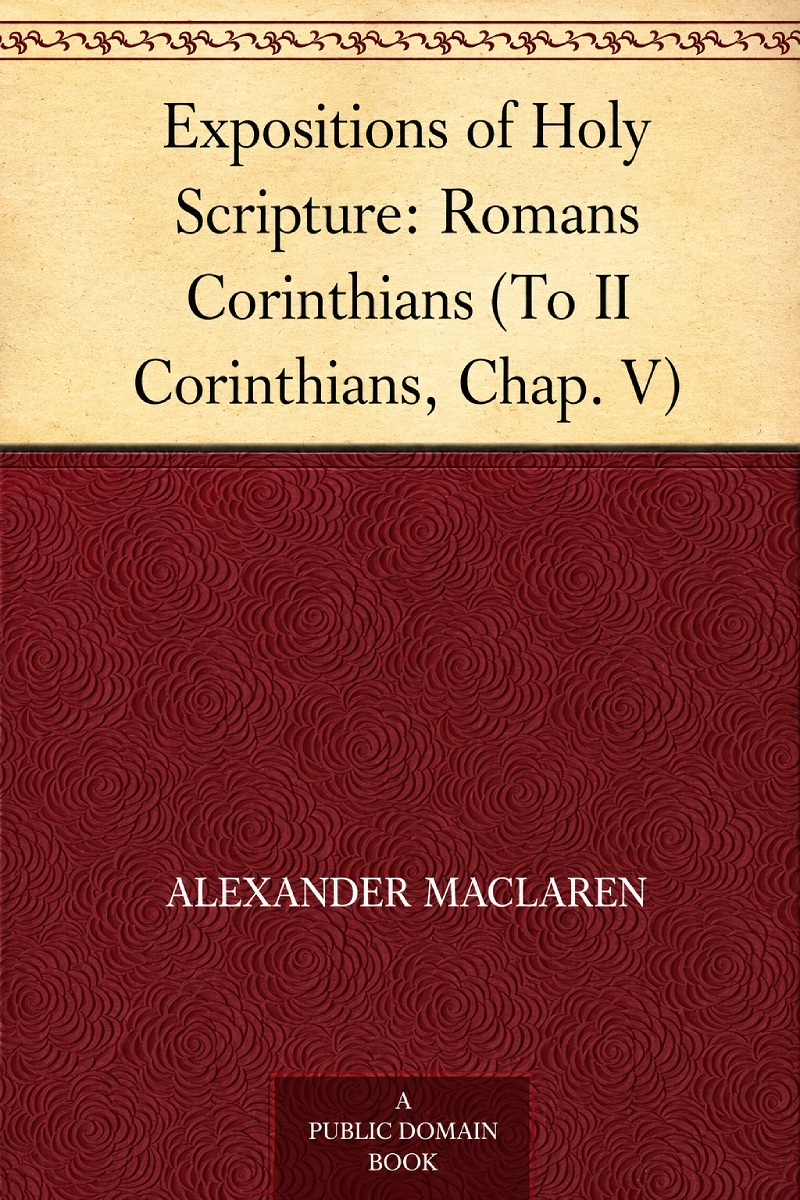
Expositions of Holy Scripture: Romans, I Corinthians to II Corinthians 5
Maclaren’s expositions of Romans, 1 Corinthians, and 2 Corinthians 1–5 unite gospel doctrine with Christian experience: redemption, grace, faith, the Cross, life in the Spirit, transformed character, the Church, love, resurrection, the future body, suffering, and reconciliation. Major concentrations include Romans 5, 8, 12 and 1 Corinthians 15.
Available Instantly
About This Book
Expositions of Holy Scripture: Romans, I Corinthians to II Corinthians 5 gathers Alexander Maclaren’s selected sermons through Romans, the whole of 1 Corinthians, and 2 Corinthians 1–5. The volume is broad enough to move from the foundations of the gospel into Christian character, Church life, spiritual gifts, love, resurrection, suffering, transformation, and reconciliation. Maclaren does not comment on every verse, but the passages he selects repeatedly connect doctrine with practical Christian experience.
Romans begins with Jesus Christ and the resurrection, the gospel, and the calling of believers. Maclaren then turns to the universal reality of sin and to the righteousness and redemption God provides in Christ. Romans 3 and 5 become important settings for grace, justification, peace with God, hope, and divine love. Faith is presented as the open hand that receives what God has accomplished rather than as human merit added to Christ’s work.
Romans 6–8 develops the changed life that follows the gospel. Maclaren treats obedience, freedom from sin’s mastery, the conflict of Christian experience, and especially life in the Holy Spirit. Romans 8 receives a sustained cluster of sermons on the Spirit, sonship, suffering, hope, the redemption of the body, the Spirit’s intercession, God’s purpose, and the believer’s security in divine love. The chapter therefore becomes one of the book’s most important concentrations of teaching on Christian life and future hope.
Romans 12 shifts into direct practical application. The living sacrifice, transformation by the renewing of the mind, humility, the diversity of the body, love, service, generosity, patience, prayer, and responses to enemies are all developed as the shape of a life surrendered to God. Later Romans passages address civil responsibility, love as the fulfillment of the law, Christian liberty, mutual acceptance, hope, service, and the ordinary people through whom the Church’s life is carried forward.
First Corinthians begins with Christ, the Cross, and the danger of human wisdom becoming a rival to the gospel. Maclaren develops Christ crucified as God’s power and wisdom, then moves into the Church as God’s building and temple, Christian responsibility, purity, liberty, service, marriage, and the Lord’s Supper. The varied problems of Corinth allow him to connect spiritual truth with difficult questions of conduct and community life.
Spiritual gifts and the unity of the Church receive substantial attention in 1 Corinthians 12, followed by the sustained exposition of Christian love in 1 Corinthians 13. Maclaren emphasizes that gifts, knowledge, and religious activity cannot replace the character formed by love. The chapter is treated not as sentimental poetry but as a practical description of the enduring quality of Christian life.
First Corinthians 15 forms another major center. Several sermons develop the resurrection of Jesus Christ, the resurrection of believers, the relationship between the present and future body, victory over death, and the transformation associated with resurrection. Maclaren treats resurrection as essential to the gospel and as the ground of hope rather than as a secondary doctrine.
Second Corinthians 1–5 continues with suffering, comfort, divine promises, the anointing and sealing of the Spirit, apostolic ministry, and transformation through beholding the Lord. Second Corinthians 3:18 becomes a concentrated treatment of spiritual transformation, while chapter 4 contrasts temporary visible affliction with eternal unseen realities. Chapter 5 develops the future dwelling from God, the believer’s longing for a transformed body, the constraining love of Christ, and the ministry of reconciliation.
The volume addresses readers seeking exposition of Romans, 1 Corinthians, or the opening chapters of 2 Corinthians; questions about salvation by grace, faith, the Holy Spirit, Romans 8, Christian transformation, Church life, the Cross, spiritual gifts, 1 Corinthians 13, resurrection in 1 Corinthians 15, the future body, suffering, and reconciliation through Christ.
Book Details

Reading Fit
STUDY LEVEL
Intermediate
STUDY SCOPE
Individual Book, New Testament
BOOKS INCLUDED

Edition & Format
PUBLISHED
March 24, 2011
AVAILABLE FORMATS
paperback, hardcover, kindle
LENGTH
664 pages

Topics Covered
You Might Also Like