
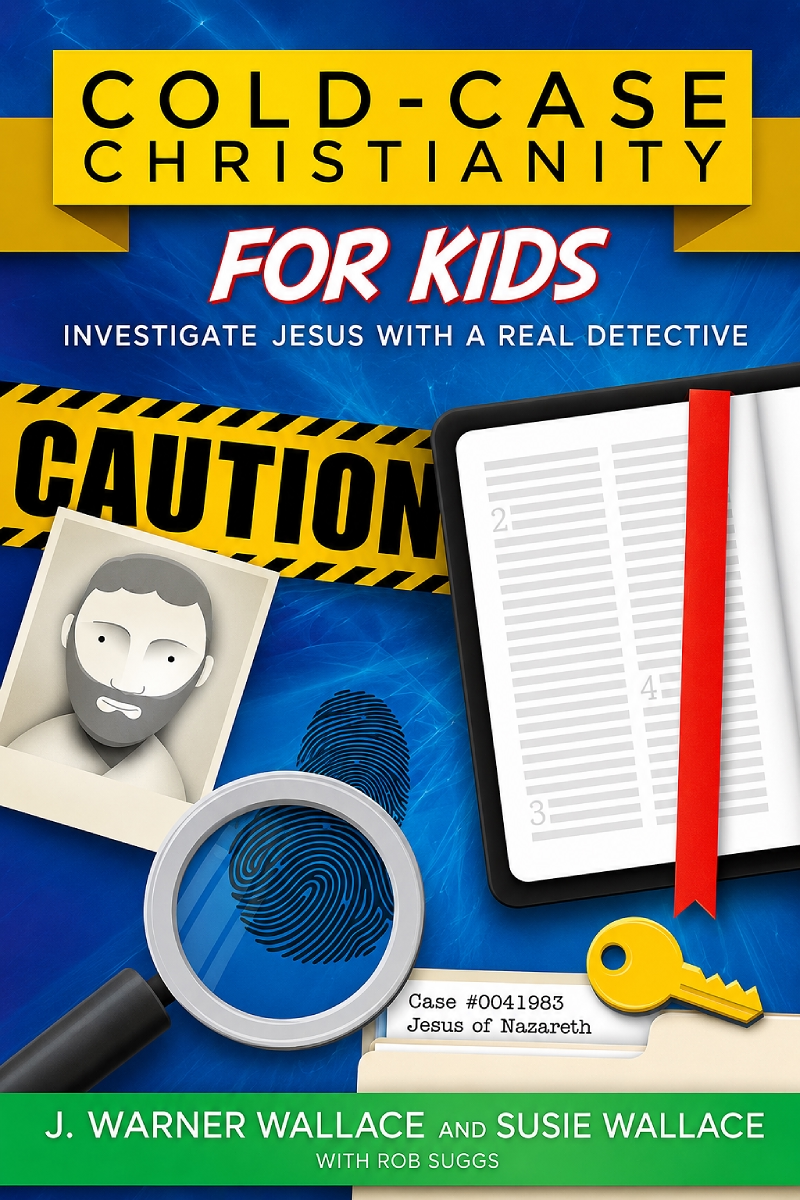
Cold-Case Christianity for Kids
J. Warner and Susie Wallace turn Christian apologetics into a detective academy for ages 8–12. Through a mysterious skateboard case, readers learn to question assumptions, infer from evidence, test witnesses, trace the Gospel chain of custody, examine Mark’s connection to Peter, understand textual criticism, and investigate the evidence for Jesus and His resurrection.
Available Instantly
About This Book
Cold-Case Christianity for Kids introduces children to Christian apologetics through a detective-training story. J. Warner Wallace and Susie Wallace place readers in a student cadet academy where a mysterious skateboard becomes the practice case for learning how investigators think. Each detective lesson is then applied to questions about God, Jesus, the Gospels, and the resurrection. The book is designed for ages eight to twelve and deliberately teaches readers how to examine claims rather than simply telling them what conclusion to accept.
The opening chapter, “Don’t Be a Know-It-All,” introduces presuppositions. The young investigators learn that a detective should not decide what happened before gathering evidence. This principle is applied to Christianity by asking whether someone may dismiss miracles or the resurrection simply because naturalism has already been assumed. The chapter briefly introduces evidence for God’s existence and the possibility of supernatural action as part of clearing the ground for investigation.
“Learn How to Infer” teaches children to distinguish what is merely possible from what is the most reasonable explanation of the evidence. A set of observations can support several possible theories, but investigators compare explanations and ask which one accounts for the facts best. The lesson is then applied to the resurrection of Jesus, introducing children to competing explanations and to the idea that the resurrection claim can be examined historically.
“Think Circumstantially” explains indirect or circumstantial evidence. The skateboard mystery teaches that a case can be built from multiple pieces of evidence even when no single witness directly observed the event being investigated. The Christian application briefly examines evidence for God from the beginning and fine-tuning of the universe, biological information, and objective moral truths. These topics support the book’s larger goal of teaching evidential reasoning rather than becoming separate extended studies.
The middle chapters focus increasingly on the reliability of the Gospels. “Test Your Witnesses” gives children a simple framework for evaluating testimony and explains why honest witnesses may describe the same event differently without being unreliable. The Gospel writers are treated as witnesses whose accounts can be tested by asking whether they were in a position to know the truth, whether other evidence confirms what they report, and whether they had reasons to lie.
“Respect the Chain of Custody” asks whether the message about Jesus could have been altered as it passed from the apostles to later Christians. The detective analogy of tracking evidence through everyone who handled it is used to explain how early Christian testimony can be traced through successive generations. This makes preservation of Gospel testimony a major part of the book’s apologetic case.
“Hang On Every Word” teaches readers to notice small details in witness statements. The principal biblical case study is the Gospel of Mark and its relationship to Peter. The book introduces evidence used to argue that Mark recorded Peter’s eyewitness preaching, showing children how internal details and historical testimony can help identify the source behind a written account.
“Separate Artifacts from Evidence” introduces textual criticism in age-appropriate form. Children learn that not every difference among manuscript copies changes the substance of the evidence. The chapter explains that although the original Gospel manuscripts no longer survive, existing copies can be compared in order to determine what the writers originally said. This places New Testament textual transmission within the book’s larger concern for reliable evidence.
The final chapter, “Resist Conspiracy Theories,” asks whether the apostles could have jointly invented the story of Jesus. The children learn how difficult conspiracies are to maintain and consider whether the disciples had the opportunity, motive, and ability to preserve a coordinated lie under pressure. The book closes by distinguishing belief that a claim is true from personal trust in that truth.
Cold-Case Christianity for Kids addresses young readers asking whether Christianity can be investigated, whether miracles must be ruled out in advance, what evidence supports the resurrection, why Gospel accounts differ, how to test eyewitness testimony, whether the Gospels were changed over time, why Mark is connected with Peter, and whether the disciples could have conspired to invent Christianity.
Book Details

Reading Fit
STUDY LEVEL
Fundamental
STUDY SCOPE
Topical
BOOKS INCLUDED

Edition & Format
PUBLISHED
October 1, 2016
AVAILABLE FORMATS
paperback, kindle, audiobook
LENGTH
144 pages
· 1h 23m audio

Topics Covered
You Might Also Like