

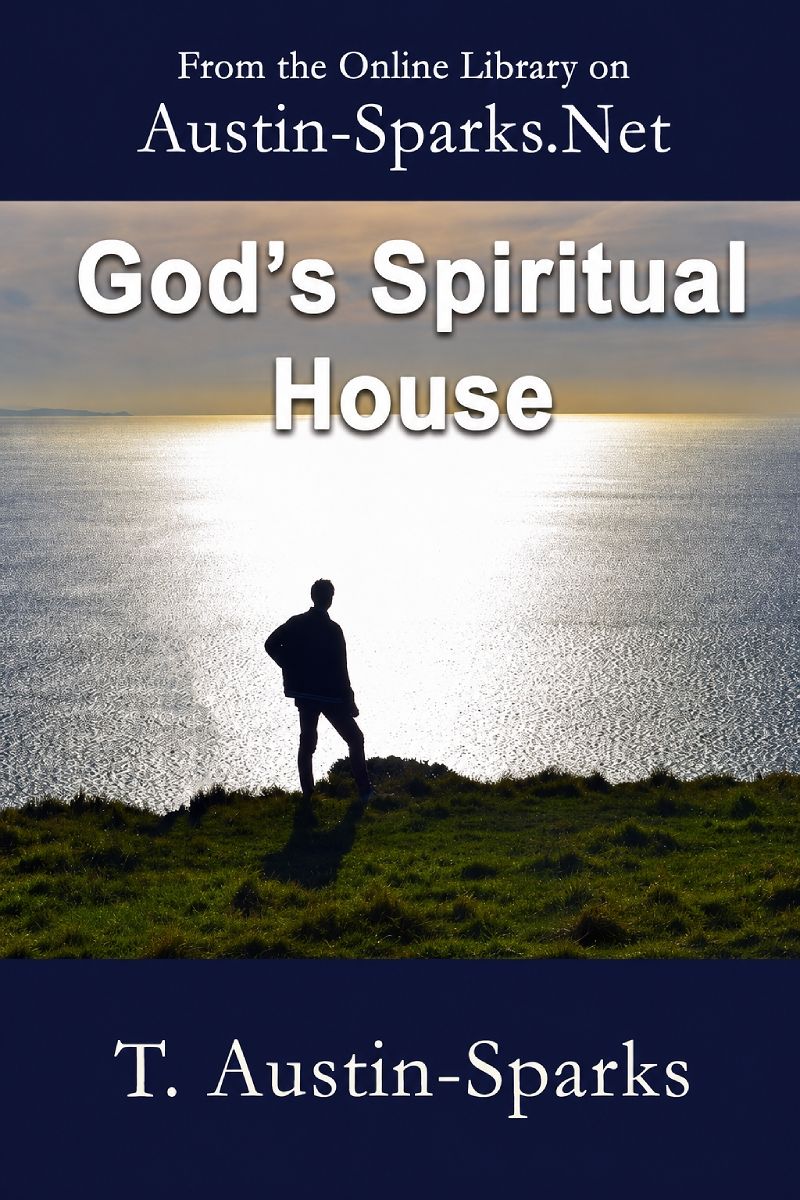
God’s Spiritual House
T. Austin-Sparks presents the Church as God’s spiritual house: living stones built together around the exalted Son and governed by the Holy Spirit. He develops sonship, spiritual maturity, resurrection life, ministry, faith, spiritual conflict, and God’s glory to show what makes Christian community a true corporate expression and dwelling of Christ.
Available Instantly
About This Book
God’s Spiritual House develops the New Testament teaching that the Church is a living dwelling for God rather than merely an organization, meeting place, or religious institution. T. Austin-Sparks begins with 1 Peter 2:4–5, where Christ is the living Stone and believers are living stones being built into a spiritual house. From that image he asks what gives God’s house its true character. His answer is that the house exists to express the exalted Son, is governed by the Holy Spirit, lives by divine and resurrection life, and is formed corporately through sonship, spiritual maturity, faith, ministry, and the glory of God.
The exaltation of Jesus Christ is a governing theme from the opening chapter onward. Using passages in Acts, Ephesians, Hebrews, and the Old Testament background of God’s house, Sparks presents the Church as a testimony that God has raised, enthroned, and given supremacy to His Son. Christ is not merely the founder of the house; He is its measure, content, Head, and reason for existence. God’s satisfaction rests in Christ, so the Church has spiritual value only as it corresponds to Him and makes His lordship and life visible.
The imagery of the house is explicitly corporate. First Peter’s living stones cannot fulfill their meaning in isolation. Sparks also uses the New Testament picture of the Body of Christ to show that local believers are meant to express one undivided Christ in each place. The Church is therefore tested by spiritual life and corporate representation rather than by outward machinery. Christian ministry follows the same principle: genuine ministry communicates something of Christ that has been wrought into the minister by God and supplies life to others.
A major section treats sonship and spiritual maturity as a “school.” Romans 8, Galatians 4, Ephesians 1, and Hebrews are used to distinguish initial sonship from the fuller thought of adoption or placement as mature sons. God’s discipline, circumstances, delays, and inward dealings become means by which His children grow from spiritual infancy toward fuller conformity to His Son and greater capacity for inheritance and responsibility. Hebrews 12 is especially important for this training, while Romans 8 supplies the horizon of mature sonship and the manifestation of the sons of God.
The Holy Spirit is presented as the governing law of the spiritual house. In the chapter built around Ezekiel 47, spirituality means more than religious seriousness or inward feeling; it means government by the Spirit rather than by the natural mind, will, preferences, and judgments. The river flowing from the house becomes a picture of divine life overcoming death and carrying fruitfulness outward. This connects the Church’s spirituality with resurrection life: the house exists not to preserve itself but to minister the life of Christ where spiritual death is operating.
That ministry brings the book into spiritual warfare. Sparks views the Church as standing in a conflict behind visible circumstances, where Satanic forces oppose the testimony, life, and purpose of God. The answer is not natural force but spiritual weapons, corporate prayer, faith, and the practical registration of Christ’s victory and supremacy. Faith therefore receives a full concluding emphasis. Hebrews 10–11 is used to show faith as the principle by which God’s people live in relation to unseen realities, persist when appearances contradict God’s word, and hold their ground concerning Christ’s exaltation and God’s purpose.
The final horizon is the glory of God. Ezekiel 43, Ephesians 3, and related passages are brought together to show God’s desire for glory in His dwelling. The house exists for His pleasure and becomes a vessel in which Christ’s life, character, and presence are manifested.
For readers, the book answers questions such as: What does the Bible mean when it calls believers living stones and God’s house? What makes a church genuinely spiritual? Why must Christ’s exaltation govern church life? How does the Holy Spirit form corporate spiritual life? What is the relationship between sonship, discipline, and maturity? What makes ministry life-giving rather than merely official? How does the Church stand in spiritual conflict? And why are faith and God’s glory essential to the purpose of His dwelling?
Book Details

Reading Fit
STUDY LEVEL
Advanced, Intermediate
STUDY SCOPE
Topical
BOOKS INCLUDED

Edition & Format
PUBLISHED
February 11, 2021
AVAILABLE FORMATS
paperback, kindle
LENGTH
94 pages

Topics Covered
You Might Also Like