

In This Article

Let There Be Light: The Arrival of the King and the War for Creation
The Bible does not begin with Adam. It begins with God, creation, rebellion, judgment, darkness, and then one extraordinary command that sets the direction for everything that follows.
“And God said, Let there be light: and there was light.”
Genesis 1:3
Those words are normally read as though God merely introduced illumination into a dark world. Yet when Genesis is read together with the rest of Scripture, something far greater comes into view.
The Light is a Person. He is Jesus Christ, the Son of God and the King through whom God will answer rebellion and bring creation to its appointed end.
From Genesis 1:3 onward, Scripture follows that King through the conflict until the final enemy is removed and the New Jerusalem descends. At the end of the Bible, created luminaries are no longer required, because the glory of God illuminates the city and the Lamb is its lamp.
Darkness Before the Six Days
Genesis begins with an absolute declaration.
“In the beginning God created the heavens and the earth.”
Genesis 1:1
Then Scripture presents the earth in a very different condition.
“And the earth was waste and void; and darkness was upon the face of the deep: and the Spirit of God moved upon the face of the waters.”
Genesis 1:2
The wider biblical revelation shows that rebellion had already entered the heavenly realm. The creature who exalted himself against God had become the adversary, and judgment followed rebellion.
Genesis 1:2 therefore does not present light entering a neutral creation. Darkness already covers a world lying beneath judgment.
God's purpose, however, did not begin with the rebellion. His purpose in Christ existed before its historical execution within creation.
“Even as he chose us in him before the foundation of the world, that we should be holy and without blemish before him in love.”
Ephesians 1:4
God was not reacting without purpose. His answer was already in Himself, and then that answer appears within the darkness.
“Let there be light.”
The Light Is a Person
A critical detail appears immediately in Genesis. The Light of Day One is present before the sun, moon, and stars are appointed as the luminaries governing day and night on Day Four.
The Light of Genesis 1:3 therefore cannot simply be dismissed as sunlight. Scripture itself distinguishes the appearance of Light from the later appointment of the heavenly luminaries.
Then John opens his Gospel by deliberately taking us back to the beginning.
“In the beginning was the Word, and the Word was with God, and the Word was God. The same was in the beginning with God. All things were made through him; and without him was not anything made that hath been made.”
John 1:1–3
The One John identifies as the Word was already there. He was not part of the creation that came into existence, because all things were made through Him.
John immediately connects this eternal Word with Light.
“In him was life; and the life was the light of men. And the light shineth in the darkness; and the darkness apprehended it not.”
John 1:4–5
Christ does not merely possess light. He identifies Himself as the Light.
“I am the light of the world: he that followeth me shall not walk in the darkness, but shall have the light of life.”
John 8:12
The Light is not simply an attribute associated with Jesus Christ. The Light is the Person of the Son.
Paul Takes Us Back to Genesis
Paul makes the connection to Genesis even more direct.
“Seeing it is God, that said, Light shall shine out of darkness, who shined in our hearts, to give the light of the knowledge of the glory of God in the face of Jesus Christ.”
2 Corinthians 4:6
Paul reaches back to God's command for Light to shine out of darkness and connects that act directly with the revelation of God's glory in Jesus Christ.
Genesis and the gospel are not separate stories. The Light appearing in the darkness at the beginning and the revelation of God's glory in Christ belong to the same unfolding revelation.
“Let There Be Light” Announces the King
Genesis 1:3 is therefore far more than the introduction of an impersonal phenomenon. God brings forth His answer to the darkness.
The Light appears, and the King enters the conflict.
This cannot mean that Christ was created at Genesis 1:3. John has already made that impossible.
“All things were made through him; and without him was not anything made that hath been made.”
John 1:3
Christ existed before creation, and creation came through Him. His appearing as the Light is therefore not His creation, but His coming forth within the created order as the One through whom God's purpose will overcome the darkness.
Theologically, the announcement can therefore be heard in its full biblical significance:
Let there be Christ the King.
Not as a replacement translation of Genesis 1:3, but as the revelation of who the Light is when the entire biblical record is allowed to speak.
The War for Creation Has Begun
The rebellion introduced a rival will into God's creation. Genesis 1:3 reveals God's answer: the King enters the darkness as the Light.
From this point onward, Scripture increasingly reveals a conflict between God's purpose in His Son and the kingdom opposing Him.
The Bible repeatedly describes Christ's mission in the language of conflict:
- He destroys the works of the devil.
- He judges the ruler of this world.
- He triumphs over principalities and powers.
- He prepares a people who overcome.
- He returns openly as King.
- He removes the rebel permanently.
John states the purpose plainly.
“To this end was the Son of God manifested, that he might destroy the works of the devil.”
1 John 3:8
Christ did not merely come to improve human behavior. The Son of God was manifested to destroy the works of the adversary.
The King Will Enter Humanity
The war does not remain only in the heavenly realm. God creates man in His image, and after the serpent attacks mankind, God immediately announces the coming Seed.
“And I will put enmity between thee and the woman, and between thy seed and her seed: he shall bruise thy head, and thou shalt bruise his heel.”
Genesis 3:15
The conflict now has an earthly line. A Seed will come through humanity, and that Seed will crush the serpent.
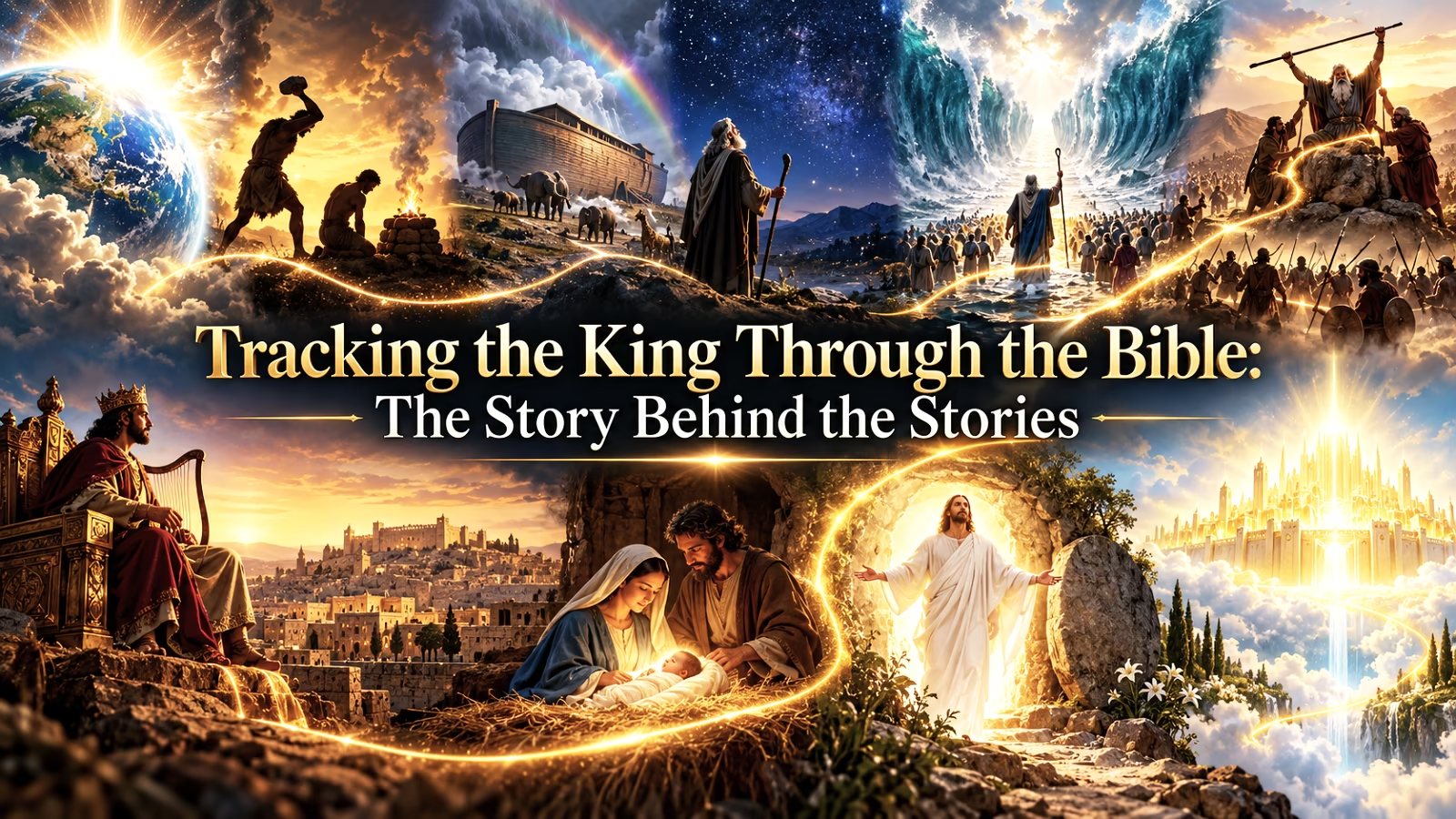
From this point forward, Scripture carefully preserves the line through which the King will enter the human race. The line moves through Abraham, Judah, David, and finally to Mary.
The Bible is tracking the King.
The Light Becomes Flesh
What appears as Light at the beginning eventually enters humanity.
“And the Word became flesh, and dwelt among us (and we beheld his glory, glory as of the only begotten from the Father), full of grace and truth.”
John 1:14
The One through whom creation came now enters that creation as man. The Light takes flesh, and the King enters humanity as the promised Seed.
The New Testament is therefore not beginning a new story. It is revealing the Person toward whom the earlier revelation has been moving.
The Cross Wins the Decisive Victory
The conflict reaches its decisive turning point at the cross. What appears outwardly to be the defeat of Christ becomes the overthrow of the enemy's claims and powers.
Jesus announces the judgment before going to the cross.
“Now is the judgment of this world: now shall the prince of this world be cast out.”
John 12:31
Paul later describes the victory in unmistakably triumphant terms.
“Having despoiled the principalities and the powers, he made a show of them openly, triumphing over them in it.”
Colossians 2:15
The cross does not merely provide forgiveness for individual sinners. It is also the decisive victory of the King over the hostile powers standing behind the rebellion.
The Light has entered the darkness, and the darkness cannot defeat Him.
The Spirit Carries the King's Victory Forward
The cross establishes the victory, but Scripture does not present the created order as immediately cleared of every hostile power. The accomplished victory must now be carried forward.
Before leaving His disciples, Jesus promises the Helper.
“And I will pray the Father, and he shall give you another Comforter, that he may be with you for ever.”
John 14:16
The Holy Spirit comes to work the victory of Christ into His people and carry the King's conquest forward in the spiritual realm.
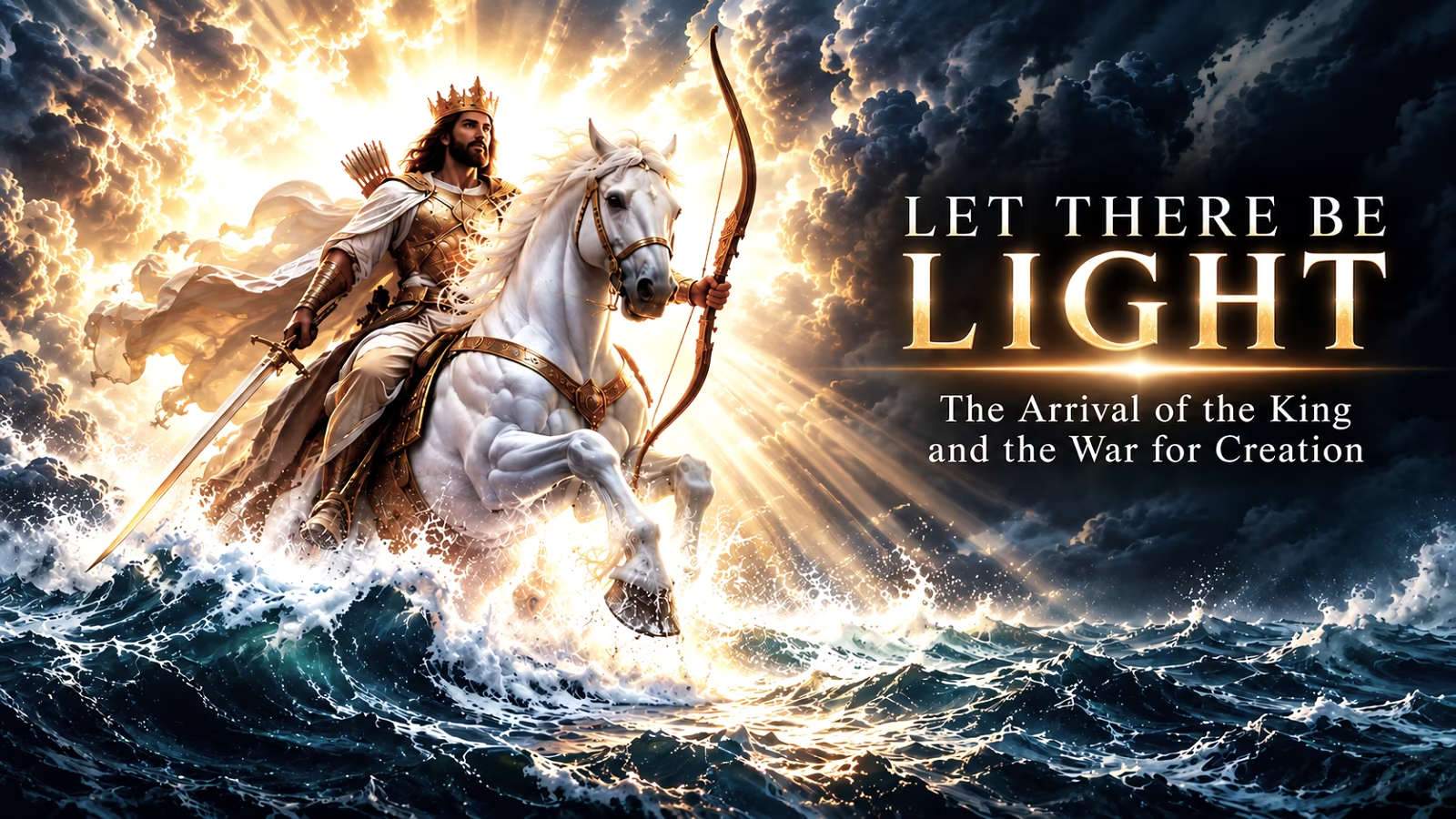
This gives the first rider of Revelation 6 profound significance.
“And I saw, and behold, a white horse, and he that sat thereon had a bow; and there was given unto him a crown: and he came forth conquering, and to conquer.”
Revelation 6:2
The rider proceeds under heavenly authorization, receives a crown, and goes forth conquering. Within the continuous biblical narrative, this is the Holy Spirit carrying forward the victory already accomplished by Christ.
The King has won the decisive battle. The Spirit now applies that victory and prepares a people in whom the life of the victorious King becomes reality.
The King Is Preparing a People
God's purpose is not merely the destruction of Satan. He is also preparing a people united with His Son.
The present age therefore has purpose. The Spirit works within believers so that Christ's victory becomes experiential reality in His Body and a people are prepared to reign with Him.
Paul connects even the future of creation with this work in God's children.
“For the earnest expectation of the creation waiteth for the revealing of the sons of God.”
Romans 8:19
Creation waits because God's answer to rebellion includes more than removing the rebel. God is producing sons who share the life and ultimately the government of His Son.
The details of reward, overcoming, and Kingdom participation deserve their own treatment. Here the central point is simpler: the King's victory is being worked into His people before He openly takes possession of the earth.
The King Returns to Claim What Is His
The spiritual conflict will not continue forever. The same King who entered the darkness as the Light will eventually appear openly before creation.
John sees heaven opened.
“And I saw the heaven opened; and behold, a white horse, and he that sat thereon called Faithful and True; and in righteousness he doth judge and make war.”
Revelation 19:11
The King who conquered through the cross now comes forth visibly. The victory established spiritually moves into open government upon the earth.
Christ reigns, His victorious saints reign with Him, and the earth comes beneath the government of the rightful King.
The story remains the same story that began in Genesis: darkness challenged God's order, and the Light came forth.
The Rebel Is Finally Removed
Even the Kingdom age is not the final destination. After the thousand years, Satan's rebellion reaches its absolute end.
“And the devil that deceived them was cast into the lake of fire and brimstone.”
Revelation 20:10
The adversary who opposed God, corrupted creation, deceived mankind, and resisted the King is permanently removed.
There is no remaining rival kingdom. There is no possibility of another rebellion overturning God's completed purpose.
The King has won completely.
The Light Fills the Final Creation
The Bible now brings us back to where it began.
Genesis opened with darkness.
“Let there be light.”
At the end of Revelation, John sees the New Jerusalem descending from God.
“And I saw the holy city, new Jerusalem, coming down out of heaven from God, made ready as a bride adorned for her husband.”
Revelation 21:2
Then John tells us how the city is illuminated.
“And the city hath no need of the sun, neither of the moon, to shine upon it: for the glory of God did lighten it, and the lamp thereof is the Lamb.”
Revelation 21:23
The Bible began with Light appearing before the appointed luminaries. It ends with a city that once again has no need of the sun or moon to give it light.
The Lamb is there.
The Person who came forth as the Light at the beginning now stands openly revealed at the completion of God's purpose.
From Genesis to Revelation, the Story Is the King
Seen from beginning to end, Scripture is not a collection of disconnected religious episodes. It is one continuous revelation of the King and His victory.
- Rebellion brings judgment and darkness.
- The Light appears.
- The promised Seed is announced.
- The King enters humanity.
- The cross defeats the hostile powers.
- The Holy Spirit carries that victory forward.
- A people are prepared for the King.
- The King appears openly and reigns.
- The rebel is permanently removed.
- The Bride is completed.
- The New Jerusalem descends.
The details become vast as Scripture unfolds, but the central thread remains simple.
The King comes into the darkness, defeats the rebel, prepares His people, claims His creation, and brings everything into the final order intended by God.
“Let There Be Light”
The Bible therefore begins its great conflict with darkness covering a judged creation and God speaking one extraordinary command:
Let there be Light.
That Light is Christ the King, God's answer to the rebellion.
The Seed is tracked because the King is coming. The Word becomes flesh because the King enters humanity, and the cross matters because there the King wins the decisive victory.
The Spirit goes forth because that victory must be carried forward. The King returns because the earth belongs to Him, and Satan is finally removed because rebellion cannot remain within God's completed creation.
Then the New Jerusalem descends, and Scripture brings the reader back to the Light.
“The glory of God did lighten it, and the lamp thereof is the Lamb.”
Revelation 21:23
The Light announced in Genesis 1:3 was never merely about illumination.
It announced the King, and the remainder of Scripture tells the story of His victory.