

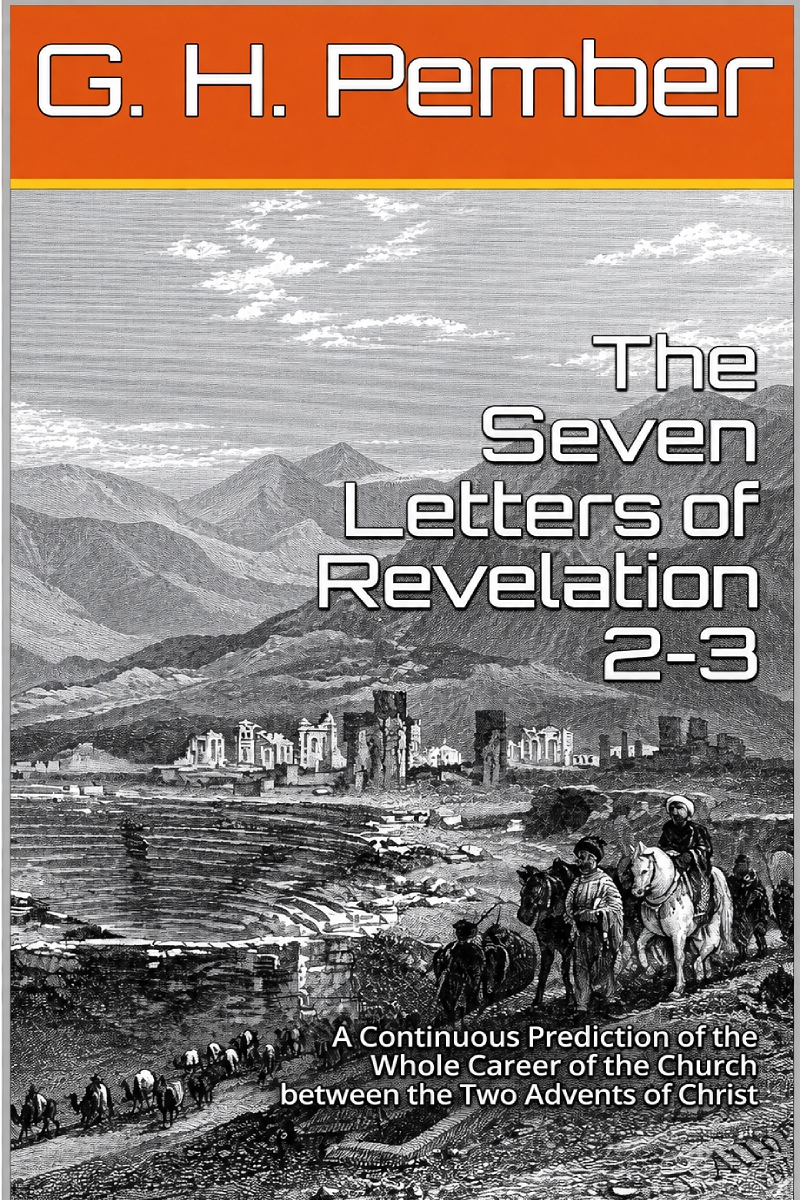
The Seven Letters of Revelation 2 – 3
G. H. Pember reads Christ’s seven messages in Revelation 2–3 as real words to first-century churches and, above all, as a prophetic sequence tracing the visible Church from apostolic decline toward the end of the age. The study follows each church’s condition, Christ’s rebuke or approval, the promises to overcomers, and the approach of His return.
Available Instantly
About This Book
The Seven Letters of Revelation 2–3 is G. H. Pember’s sustained study of Christ’s messages to Ephesus, Smyrna, Pergamum, Thyatira, Sardis, Philadelphia, and Laodicea. Its governing purpose is prophetic. Pember accepts the historical reality of the seven assemblies in Asia Minor, but he argues that their ordered sequence also presents a continuous prophetic history of the visible Church from the close of the apostolic period toward the second advent of Christ. Revelation 2–3 is therefore not treated as seven disconnected devotional messages, but as one coordinated disclosure of changing conditions in Christendom.
Pember begins from the fact that Christ Himself addresses and evaluates the churches. The descriptions of the Lord associated with each message, the repeated declaration that He knows the churches’ works and condition, the calls to hear what the Spirit says, and the promises to the overcomers give the seven letters a common structure. The book consequently combines biblical prophecy with direct church application: Christ measures what is outwardly impressive by inward faithfulness to Himself, exposes spiritual decline, and distinguishes those who overcome from the prevailing condition around them.
Ephesus receives particularly detailed treatment as the first stage in the sequence. Pember relates its loss of first love to the waning of devotion at the close of apostolic times. He contrasts doctrinal vigilance, labor, endurance, and resistance to false apostles with the deeper problem of declining love for Christ. He also develops the Nicolaitans as a prophetic sign of an emerging clerical domination that turns the eyes of believers from Christ as Head toward human religious organization. Acts 20, Matthew 20, and the Ephesian background materially support this part of his argument, while the promise of the tree of life is traced back to Genesis as a promise to the overcomer.
The remaining letters continue the prophetic movement through contrasting forms of church experience. Smyrna represents a faithful church under suffering and persecution. Pergamum introduces the danger of accommodation to the world and corrupt teaching. Thyatira intensifies the problem through the figure of Jezebel and deeper spiritual corruption. Sardis presents a reputation for life that does not correspond to spiritual reality. Philadelphia is marked by little outward strength yet faithfulness to Christ’s word and name. Laodicea brings the sequence to lukewarm self-satisfaction and a final condition in which Christ’s assessment contradicts the church’s estimate of itself. Pember treats Smyrna and Philadelphia as notable exceptions to the wider downward movement he sees in the prophetic history.
The promises attached to the seven messages are not incidental. The tree of life, crown of life, freedom from the second death, hidden manna, white stone, white garments, book of life, open door, pillar, divine names, and the promise of sharing Christ’s throne belong to the repeated appeal to overcome. These images connect present faithfulness with future reward and bring the reader repeatedly back to the question of how Christ regards individual believers within a larger corporate condition.
The book also keeps the second coming in view. The prophetic sequence is presented as moving toward the end of the Church’s earthly course and the return of the Lord. This gives practical force to Pember’s interpretation: prophecy is not merely a chronology of church history but a call to discern spiritual conditions, maintain love and faithfulness to Christ, resist compromise and dead form, hear what the Spirit says, and overcome within one’s own time.
The Seven Letters of Revelation 2–3 is therefore especially relevant to readers asking whether the seven churches represent successive church ages, how Revelation 2–3 can be read prophetically, why the Church declines despite outward orthodoxy or religious success, what Christ commends or condemns in His churches, what the promises to the overcomers mean, and how the seven-letter sequence points toward Christ’s return.
Book Details

Reading Fit
STUDY LEVEL
Intermediate
STUDY SCOPE
New Testament, Topical
BOOKS INCLUDED

Edition & Format
PUBLISHED
April 28, 2017
AVAILABLE FORMATS
kindle
LENGTH
82 pages

Topics Covered
You Might Also Like