
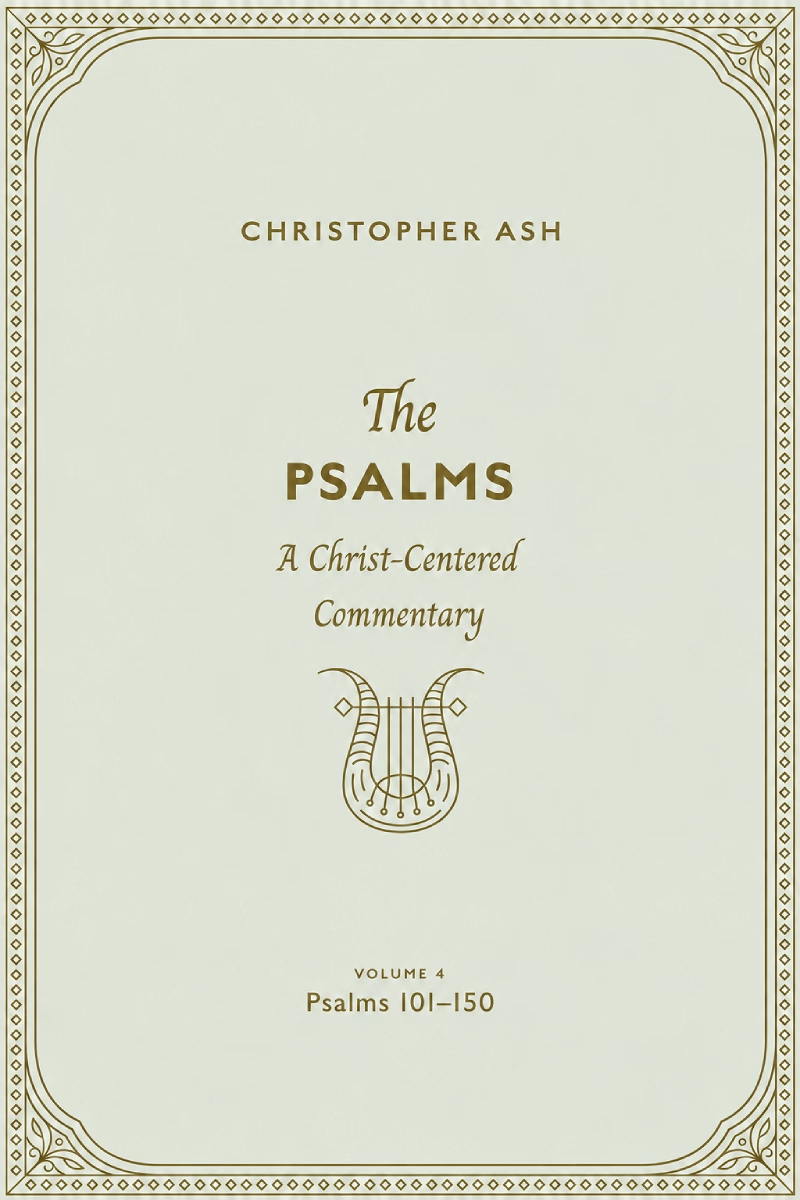
The Psalms: A Christ-Centered Commentary Vol 4
Christopher Ash gives an in-depth Christ-centered exposition of Psalms 101–150, tracing their original setting, literary shape, New Testament fulfillment, and life in the church. The volume moves through exile and hope, messianic kingship, God’s saving works, Psalm 119 and delight in God’s word, the Songs of Ascents, prayer, praise, and the Psalter’s final hallelujahs.
Available Instantly
About This Book
Christopher Ash’s fourth volume gives sustained commentary on Psalms 101–150, completing the verse-by-verse exposition of the Psalter. As throughout the series, Ash attends to each psalm’s literary form, vocabulary, speaker, canonical setting, and Old Testament context while asking how its deepest fulfillment is found in Jesus Christ and how it is then received by the church. The volume therefore combines close exposition with Christ-centered biblical theology, New Testament connections, prayer, worship, and Christian application.
The opening group, Psalms 101–106, stands within the later movement of the Psalter where the experience of sin, divine wrath, exile, forgiveness, and hope has become especially prominent. Psalm 101 presents the aspirations of the righteous Davidic ruler; Psalm 102 joins deep affliction to enduring divine kingship and is taken up in Hebrews in relation to the Son; Psalm 103 celebrates forgiveness and steadfast mercy; and Psalms 104–106 move through creation and Israel’s salvation history, contrasting God’s faithfulness with human sin. These psalms help readers see how praise, confession, history, and messianic expectation work together.
Psalm 110 is one of the volume’s most important points of New Testament connection. Ash treats the psalm’s royal and priestly language in light of its repeated use in the New Testament, where the Messiah is portrayed as David’s Lord, enthroned at God’s right hand and declared a priest forever. The commentary therefore develops messianic kingship, divine rule, and the priesthood of Christ without severing the psalm from its place in the Psalter. Psalm 118 and other royal or Zion-oriented psalms likewise contribute to the volume’s account of the Lord’s anointed king and the kingdom of God.
Psalm 119 receives the sustained attention required by its exceptional length and its concentrated meditation on God’s word. Ash explores the psalmist’s delight in, dependence on, obedience to, and suffering for God’s instruction. The exposition connects love for God’s word with prayer, holiness of life, perseverance, affliction, and hope. For readers asking how Scripture shapes a faithful life, how obedience relates to grace, or how believers can pray when they are suffering for faithfulness, Psalm 119 becomes a major practical and theological center of the volume.
Psalms 120–134, the Songs of Ascents, form another substantial unit. Ash follows their movement through distress, pilgrimage, trust, worship, blessing, Jerusalem, Davidic hope, and the fellowship of God’s people. Rather than treating them merely as historical travel songs, he shows how their themes contribute to the journey and worship of the people of God under Christ. Later psalms continue to develop God’s covenant faithfulness, deliverance, kingship, mercy, creation, providence, and praise.
The final movement toward Psalms 145–150 brings the Psalter to its great crescendo of praise. Ash gives attention to the universal kingship and goodness of God, the summons for all creation to praise him, and the place of these hallelujah psalms within the Psalter’s conclusion. The movement from lament and exile toward hope and praise is not presented as an escape from suffering but as the canonical destination of the Psalter’s faith.
This volume is therefore especially relevant to readers looking for Christ in Psalms 101–150, an explanation of Psalm 110 and its New Testament fulfillment, a serious exposition of Psalm 119, help understanding the Songs of Ascents, or guidance in praying and singing the later Psalms as Christians. Across the volume, Ash connects messianic kingship, the word of God, prayer, worship, suffering, forgiveness, covenant history, pilgrimage, and praise to the person of Christ and the life of the church.
Book Details

Reading Fit
STUDY LEVEL
Advanced, Intermediate
STUDY SCOPE
Individual Book, Old Testament
BOOKS INCLUDED

Edition & Format
PUBLISHED
July 19, 2024
AVAILABLE FORMATS
hardcover, kindle
LENGTH
1074 pages

Topics Covered
You Might Also Like