
The Glorious Church
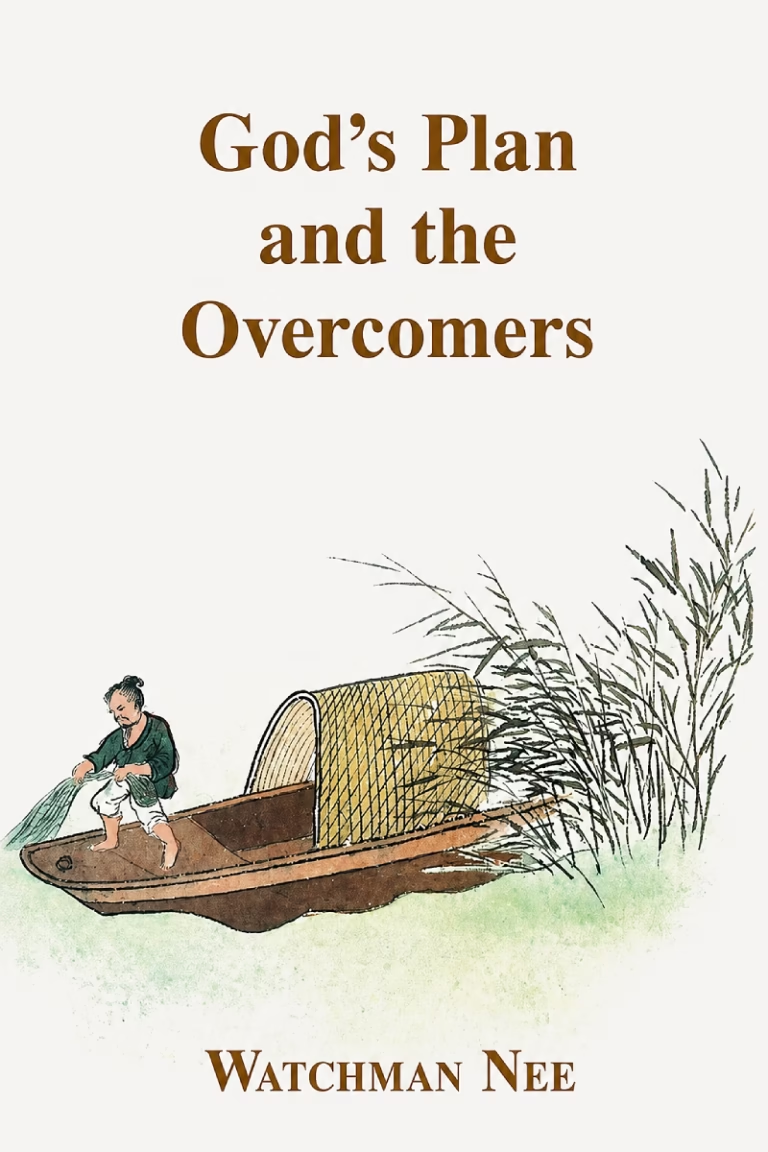
Watchman Nee follows one corporate woman through Scripture—from Eve in Genesis 2 to the Church in Ephesians 5, the woman and man-child of Revelation 12, and the New Jerusalem of Revelation 21–22. The book unfolds God’s eternal purpose, Christ’s Body and bride, the overcomers, spiritual warfare, bride preparation, the kingdom, and God’s final corporate expression.
Available Instantly
About This Book
The Glorious Church develops Watchman Nee’s teaching concerning the Church in God’s eternal purpose through a connected series of biblical pictures: Eve in Genesis 2, the wife in Ephesians 5, the woman and man-child in Revelation 12, and the wife of the Lamb—the New Jerusalem—in Revelation 21–22. These passages are treated as stages of one unfolding revelation. The book begins with God’s purpose in creation and moves to the consummate holy city, asking what God intends to obtain in a corporate people for Christ and how that purpose is brought to completion.
Genesis 1–2 provides the starting point. Nee emphasizes humanity created in God’s image and given dominion, then brings Psalm 8 and Hebrews 2 into the same line to show the original purpose carried forward through Christ. Eve becomes a major type of the Church. As Eve came wholly out of Adam, the Church is presented as coming wholly out of Christ. This typology allows Nee to distinguish God’s original eternal purpose from redemption as the remedy for sin: the Church is not merely an answer to the fall but belongs to God’s intention from creation.
Ephesians 5:22–33 develops the Church as both the Body and the bride of Christ. Christ loves the Church and gives Himself for her; He sanctifies and cleanses her by the washing of water in the word so that He may present to Himself a glorious Church without spot or wrinkle. Nee’s discussion of logos and rhema connects the written Word with God’s present speaking and makes the Word central to bride preparation. Union with Christ, sanctification, and corporate holiness are therefore bound to the Church’s relationship with Christ as her source, life, and counterpart.
Revelation 12 supplies the book’s major teaching on the overcomers, spiritual warfare, and the kingdom. Nee interprets the man-child as the overcoming portion of God’s people who takes the position the whole Church should occupy and acts for the fulfillment of God’s purpose. Revelation 12:11 becomes especially important through the blood of the Lamb, the word of testimony, and not loving the soul-life unto death. The dragon’s defeat, the casting down of Satan, the rapture of the man-child, and the coming of God’s kingdom are developed as connected aspects of the same conflict.
The principle of the overcomers is expanded beyond Revelation 12. Nee traces biblical examples of a smaller group standing for the whole when God’s people corporately fail to fulfill their calling. The overcomers are not presented as an elite pursuing private reward but as those who bear responsibility for God’s purpose on behalf of the Church. This gives the book substantial relevance for questions about who the overcomers are, what their relationship to the Church is, and how overcoming relates to spiritual warfare and the kingdom.
Revelation 21–22 forms the consummating movement. The New Jerusalem is the wife of the Lamb and the final corporate expression of God’s purpose. Nee deliberately places Genesis beside Revelation: the tree of life, river, gold, pearl, precious stones, and the wife at the beginning correspond to the river of life, tree of life, building materials, and bridal city at the end. Gold, pearl, and precious stones are interpreted as spiritual realities involving what is of God, life issuing from Christ’s death, and the transforming work of the Holy Spirit in believers. The city, gates, wall, foundations, temple, light, river, and tree of life are all read within this corporate consummation.
An appended study of Revelation 1:9–20 presents the glorified Christ among the lampstands and applies His priestly, judging, reigning, and resurrection character as a measure of the churches. The Glorious Church therefore addresses readers asking why God created humanity, what Eve signifies, how the Church is both Christ’s Body and bride, how the bride is prepared, who the overcomers are, what Revelation 12 means, how the blood of the Lamb functions in spiritual warfare, what the New Jerusalem represents, and how Genesis and Revelation disclose one continuous divine purpose.
Book Details

Reading Fit
STUDY LEVEL
Advanced, Intermediate
STUDY SCOPE
Entire Bible, Topical
BOOKS INCLUDED

Edition & Format
PUBLISHED
May 6, 2026
AVAILABLE FORMATS
paperback, kindle
LENGTH
217 pages

Topics Covered
You Might Also Like