

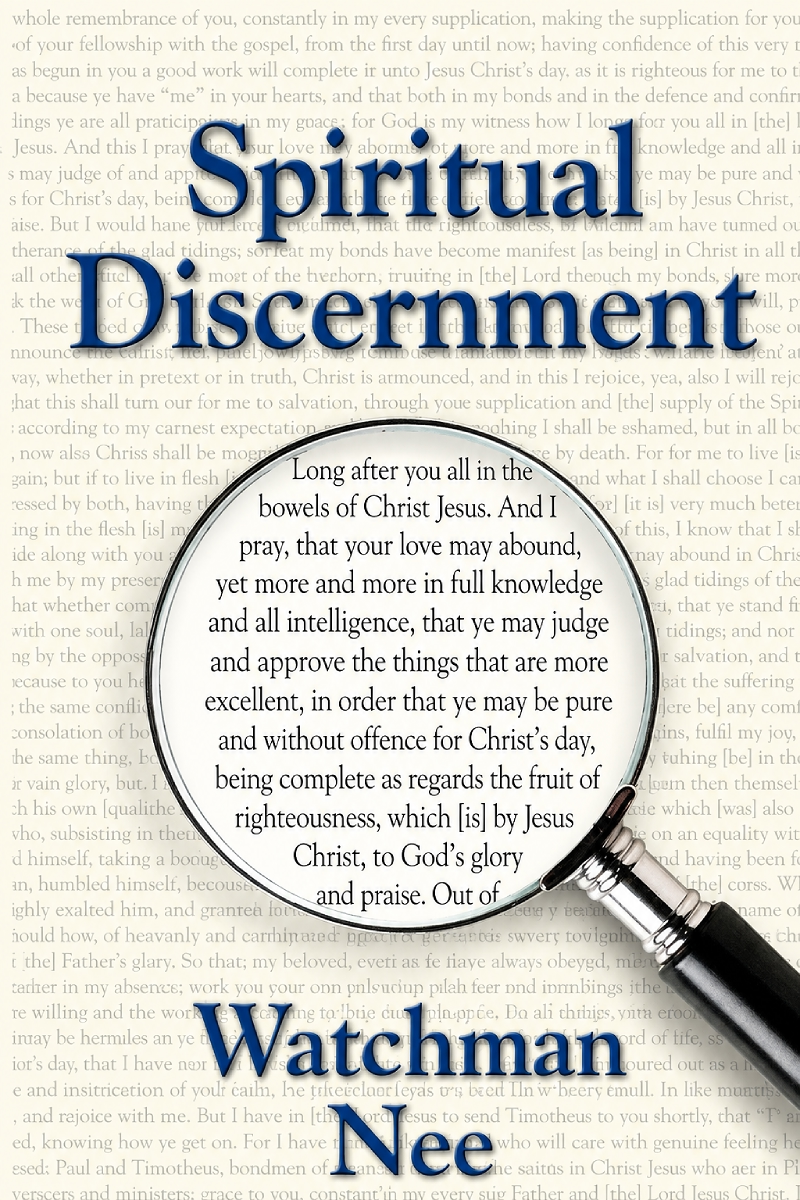
Spiritual Discernment
Watchman Nee develops spiritual discernment as the mature ability to recognize what is truly of God. Beginning with Philippians 1:9–10, he explores the spirit-controlled soul, resurrection and new creation, God’s living Word, the training and exercise of the human spirit, spiritual diagnosis, Christian ministry, the Cross, and the Body of Christ in practical spiritual judgment.
Available Instantly
About This Book
Spiritual Discernment gathers Watchman Nee’s later ministry notes around Paul’s prayer in Philippians 1:9–10 that love would abound in full knowledge and all discernment so that believers might distinguish the things that differ and approve what is excellent. The volume is arranged in three movements—Abound in Knowledge, Abound in Discernment, and Approve the Excellent—and treats discernment as a mark of spiritual maturity rather than as natural analytical ability.
The book begins with the relationship between spirit and soul. Nee describes the soul, including mind, emotion, and will, as needing to come under spiritual government. The problem is not that these faculties exist but that they may act independently and become the basis of Christian judgment. Spiritual discernment therefore depends upon recognizing source: whether a thought, feeling, decision, word, or ministry proceeds from natural life or from a human spirit made responsive to God.
Several chapters relate this distinction to resurrection and new creation. “Risen from among the Dead” and “The New Creation” place spiritual perception on ground that cannot be produced by improving natural ability. Christ is presented as the way, and the believer’s spiritual life must proceed from what God has established in Him. Resurrection life becomes relevant because discernment belongs to a life derived from Christ rather than to the old natural source.
The book places significant emphasis on the condition and training of the human spirit. Chapters on a tender spirit, a usable spirit, and the training of the spirit describe maturity as increased inward responsiveness to God. A hardened, self-confident, or unexercised spirit limits perception, while God’s dealings produce tenderness and spiritual capacity. Discernment is therefore learned through experience with God, not merely through mastering categories.
“What Is God’s Word?” and the chapters on ministry give the Word of God a major place. Nee distinguishes words that are merely correct at the mental level from a living ministry in which God’s Word carries spiritual reality. The Word exposes motives and provides divine light, while the servant of the Word must minister from an exercised spirit rather than from natural knowledge alone. This gives the book direct relevance to readers asking why correct Christian language can still lack spiritual weight.
“How to Diagnose” turns discernment toward the spiritual condition of people. Nee cautions against judging merely from outward behavior or personal impressions. True spiritual diagnosis requires inward perception and a person who has himself been dealt with by God. Natural cleverness can analyze appearances, but spiritual discernment seeks to recognize what lies behind them without allowing personal preference to control judgment.
The final section broadens the subject through the Cross and the Body of Christ. The Cross deals with self as an independent center of judgment, while the Body places discernment in a corporate setting. Spiritual perception is not intended to produce isolated superiority; it serves fellowship, ministry, and the building up of Christ’s Body. The book also stresses the absoluteness of truth: relationships, feelings, and self-interest must not alter what is true.
Philippians 1:9–10 remains the governing search passage because it joins knowledge, discernment, love, and the approval of what is excellent. The book addresses readers asking how a Christian distinguishes spiritual from natural activity, how soul and spirit relate, how the human spirit is trained, what makes ministry spiritually living, how God’s Word exposes reality, how spiritual diagnosis differs from human analysis, and how the Cross and Body of Christ shape mature spiritual judgment.
Book Details

Reading Fit
STUDY LEVEL
Advanced, Intermediate
STUDY SCOPE
Topical
BOOKS INCLUDED

Edition & Format
PUBLISHED
July 29, 2014
AVAILABLE FORMATS
paperback, kindle, audiobook
LENGTH
70 pages
· 1h 43m audio

Topics Covered
You Might Also Like