
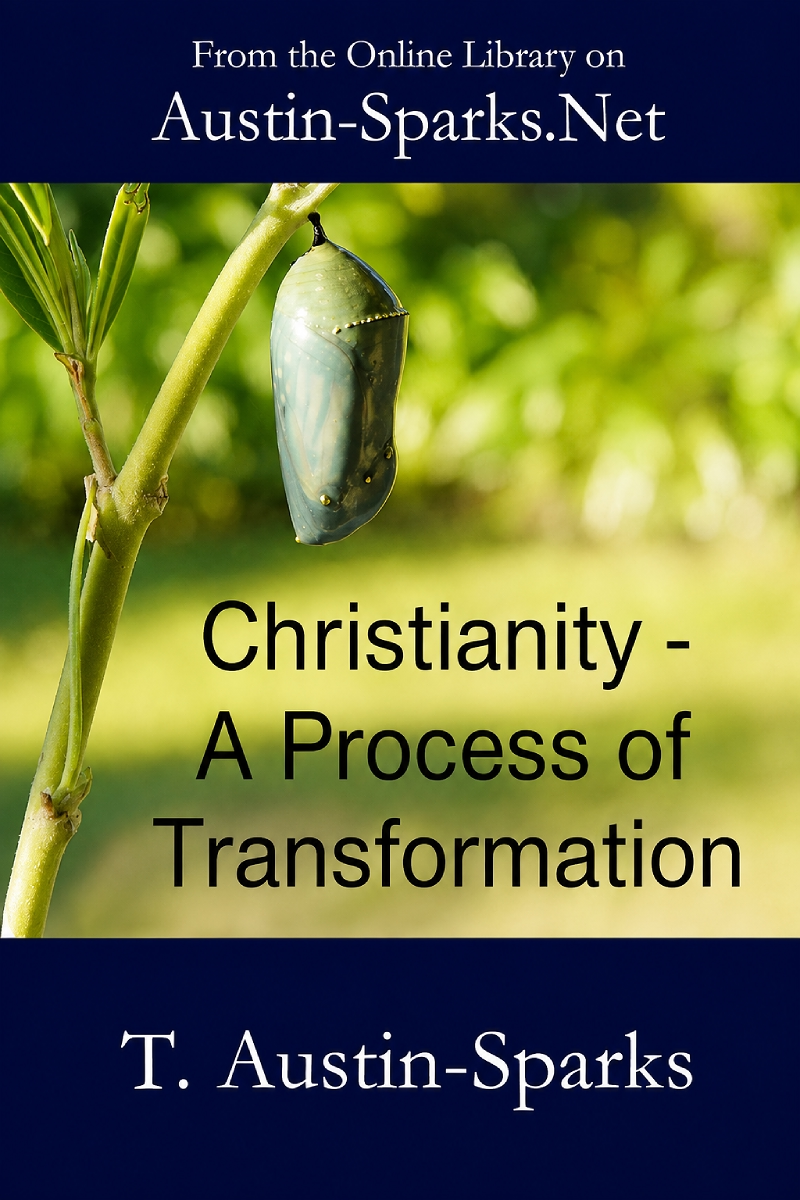
Christianity – A Process of Transformation
T. Austin-Sparks presents Christianity as a supernatural transformation from Adam’s natural, soulish order into the image of Christ. From 1 Corinthians 2 and 2 Corinthians 3:18, he shows how the Cross and Holy Spirit bring believers under spiritual government through new birth, weakness, trial, discernment, resurrection life, and a growing knowledge of Christ.
Available Instantly
About This Book
Christianity – A Process of Transformation asks what Christianity is in its essential spiritual meaning. T. Austin-Sparks answers from 2 Corinthians 3:18 that the Christian life is a continuing transformation into the image of Jesus Christ, a passing from one form of humanity to another. Christianity is therefore not primarily religious activity, doctrine, moral improvement, or the development of natural human ability. It is God’s work of bringing believers increasingly under the government of the Spirit and into conformity to His Son.
First Corinthians 2 supplies the book’s principal contrast: the natural or soulish man and the spiritual man. Sparks applies this distinction to Christians, not merely to unbelievers and believers. The Corinthians belonged to Christ, yet natural reason, emotion, will, and self-strength had regained practical ascendancy. The question is which source governs Christian life and service. A person may possess Christian knowledge, gifts, and activity while still acting from the soul rather than from spiritual life.
The Cross of Christ stands between these two kinds of humanity. Paul’s determination to know Jesus Christ and Him crucified among the Corinthians is treated as God’s decisive judgment on the natural source. Sparks extends the principle into Christian work: what is built on Christ will still be tested according to the kind of person from whom it proceeds. Work produced by natural strength cannot acquire eternal value merely because its outward purpose is Christian. The Cross therefore becomes the dividing line between the old natural basis and the spiritual order God intends.
Sparks identifies intellectualism, powerism, and emotionalism as characteristic expressions of the natural man. Human reasoning cannot penetrate spiritual reality by its own capacity; human force cannot accomplish spiritual ends; emotional pressure cannot manufacture the work of God. Over against these principles he places what Paul calls foolishness and weakness, not as anti-intellectualism or passivity, but as the denial of natural sufficiency. Abraham and Jacob illustrate the painful lesson of letting go of natural tenacity, while Philippians 2 points to Christ’s self-emptying. Spiritual discernment is needed to recognize whether something genuinely proceeds from the Spirit rather than merely appearing clever, forceful, gifted, or emotionally impressive.
The second movement places Jesus Christ Himself at the center of the transformation. Luke 1:26–35 and the virgin birth introduce Christ as the first and representative of another kind of humanity, a humanity produced by God rather than by the fallen Adamic order. Romans 8:29 states the divine purpose: believers are foreordained to be conformed to the image of God’s Son. New birth is therefore not an improvement of the old humanity but a supernatural beginning. Sparks uses the Johannine distinction between what is born of flesh and what is born of the Spirit, and 1 Corinthians 15’s contrast between Adam and Christ, to describe two orders of creation. The language of new creation expresses the same transition from the old Adamic order to life in Christ.
The Holy Spirit governs the whole process. Believers are repeatedly brought into situations where natural resources are insufficient and another source of life is required. Spiritual growth means that the spiritual man increasingly governs the soul rather than the soul controlling spiritual life. This is why divine discipline, weakness, adversity, and suffering have a formative place. Drawing on Hebrews, Sparks treats God’s dealings as a school in which believers learn Christ rather than escape every hard circumstance.
That school leads directly to resurrection life. In the closing movement Sparks speaks of knowing the power of Christ’s resurrection as the answer when believers meet forces of death, limitation, and impossibility. Trials become occasions to discover a life that belongs to the Christ order rather than the Adam order. Transformation is therefore practical: the believer moves from self-resource to dependence on God, from natural government to spiritual government, and from spiritual infancy toward maturity while Christ becomes increasingly expressed.
The book addresses readers asking what Christianity really is, why Christians can still live from soul or natural strength, how the Cross divides the natural and spiritual orders, how to discern spiritual reality from religious intensity, why weakness and trials are used in Christian formation, what new birth and new creation mean, and how the Holy Spirit and resurrection life transform believers into the image of Christ.
Book Details

Reading Fit
STUDY LEVEL
Advanced, Intermediate
STUDY SCOPE
Topical
BOOKS INCLUDED

Edition & Format
PUBLISHED
April 6, 2013
AVAILABLE FORMATS
kindle
LENGTH
21 pages

Topics Covered
You Might Also Like