

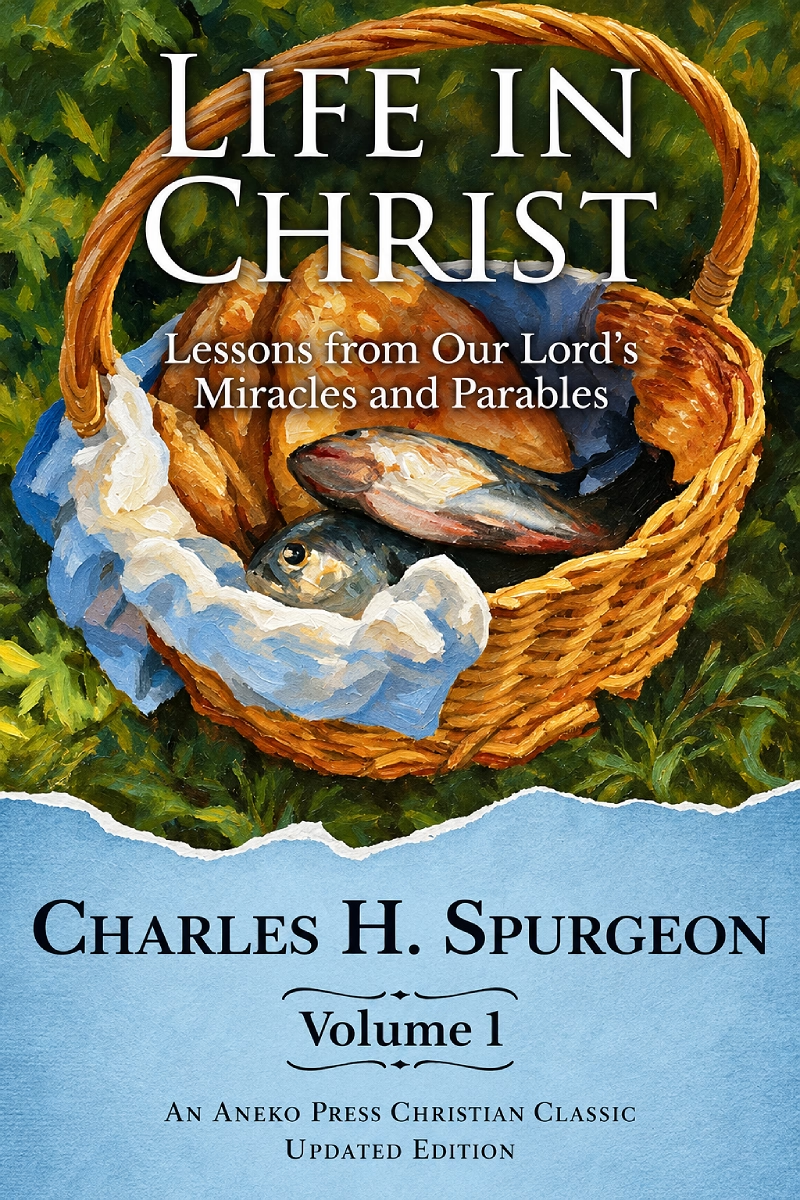
Life in Christ: Lessons from Our Lord’s Miracles and Parables
Across fifteen sermons on eight Gospel miracles, Spurgeon shows what Jesus’ works reveal about His power, compassion, glory, and saving grace. Blindness, sickness, death, bondage, leprosy, Cana, and the nobleman’s son become searching studies of faith, trust, obedience, gratitude, spiritual need, and the sufficiency of Christ for those who come to Him.
Available Instantly
About This Book
Life in Christ: Lessons from Our Lord’s Miracles and Parables is the first Aneko Press volume drawn from Charles Spurgeon’s sermons on the miracles and parables of Jesus. This volume contains fifteen sermons centered on eight Gospel miracles: the healing of two blind men in Matthew 9:27–30, the blind man at Bethsaida in Mark 8:22–25, Christ’s escape from the hostile crowd in Luke 4:28–30, the raising of the widow’s son in Luke 7:11–17, the woman bent over by a spirit of infirmity in Luke 13:10–13, the cleansing of the ten lepers in Luke 17:12–19, the wedding at Cana in John 2:1–11, and the healing of the nobleman’s son in John 4:46–53. Rather than treating miracles merely as displays of supernatural power, Spurgeon uses them to reveal the person of Christ and to press their spiritual meaning into Christian faith and life.
Jesus Christ is therefore at the center of the collection. The miracles display his authority, compassion, wisdom, saving sufficiency, and glory. At Cana, Spurgeon draws attention to the beginning of Christ’s signs and the manifestation of his glory; in the healings he repeatedly directs needy people to trust Christ rather than their own resources. The collection is especially strong for readers asking what the miracles reveal about Jesus, why Christ sometimes works gradually, how faith responds to his word, and what physical acts of healing can teach about deeper spiritual need.
Faith in Jesus Christ recurs throughout the volume. The blind men are confronted with Christ’s question about whether they believe he is able to help them; the nobleman must trust Christ’s word concerning his son; the leper who returns illustrates a response of faith joined with gratitude and worship. Spurgeon distinguishes true reliance on Christ from mere curiosity about miracles. The repeated application is personal: need should lead the hearer to Christ, and faith should rest on who he is and what he says.
The miracle narratives also become windows into salvation by grace. Blindness, leprosy, bondage, helplessness, and death supply vivid pictures of human need and of Christ’s ability to save those who cannot restore themselves. In the raising of the widow’s son, death itself yields to Christ’s word. In the healing of the bowed woman, Spurgeon considers both bodily affliction and spiritual bondage, showing Christ’s compassion toward those weighed down and unable to straighten themselves. These applications make the book relevant to readers wrestling with helplessness, discouragement, bondage, or the question of whether Christ is sufficient for a condition they cannot repair.
Several sermons give sustained attention to the Cana narrative. “Whatever He Says to You, Do It” emphasizes obedience to Christ; “The Beginning of Miracles” treats the sign as a manifestation of Christ’s glory; and other treatments of the wedding contrast Christ’s provision with the world’s deceptive banquet. The volume therefore develops obedience, divine provision, temptation and worldliness, and the glory of Christ as meaningful secondary themes.
The cleansing of the ten lepers receives substantial moral and spiritual application to gratitude. Spurgeon asks why only one returned to give glory to God and presses the reader to consider whether received mercy produces thanksgiving, worship, and devoted service. Across the collection, miracles lead beyond amazement to response.
As a collection of expository Bible studies, Life in Christ gives sustained attention to Matthew, Mark, Luke, and especially John. Its strongest value for search is not merely “miracles” in general, but the relationship Spurgeon develops between particular Gospel signs and the needs they address: faith amid helplessness, obedience to Christ, gratitude for mercy, hope in the face of death, freedom from spiritual bondage, and confidence in the glory and sufficiency of Jesus.
Book Details

Reading Fit
STUDY LEVEL
Fundamental, Intermediate
STUDY SCOPE
New Testament, Topical
BOOKS INCLUDED

Edition & Format
PUBLISHED
August 1, 2017
AVAILABLE FORMATS
paperback, kindle, audiobook
LENGTH
272 pages
· 11h 5m audio

Topics Covered
You Might Also Like