
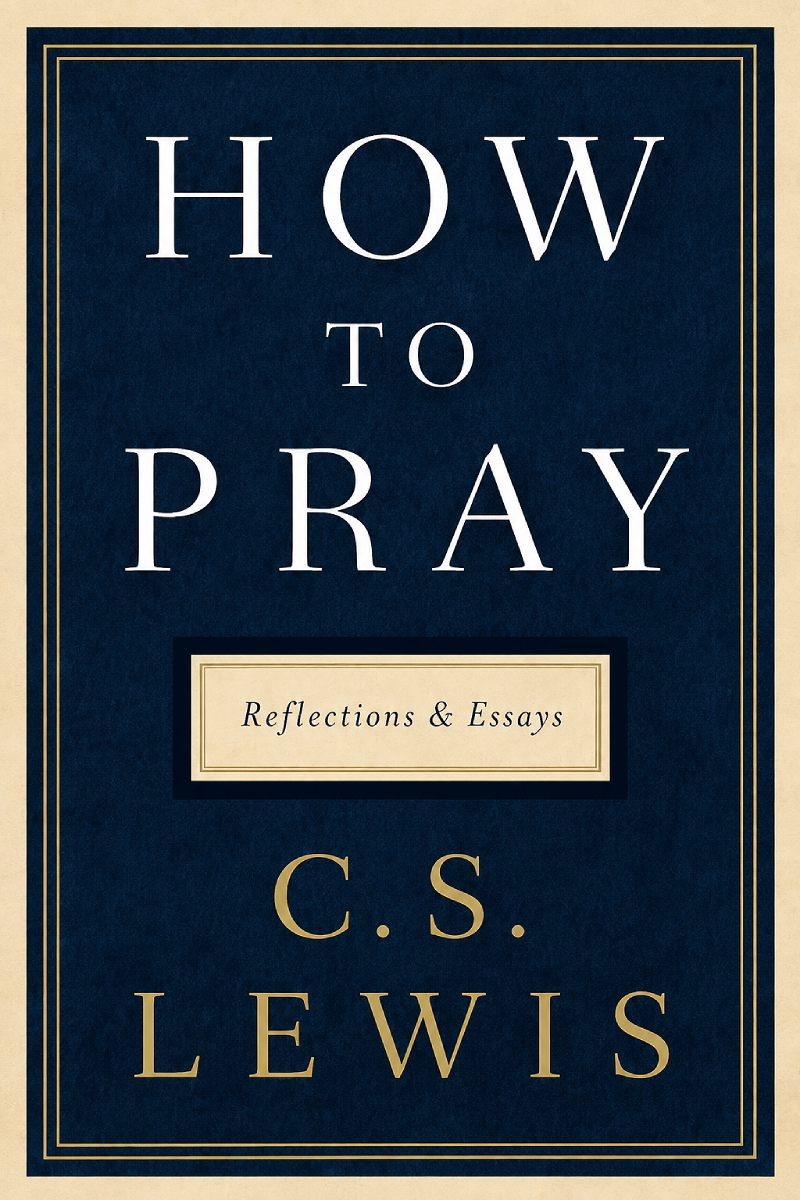
How to Pray: Reflections and Essays
C. S. Lewis gathers essays, letters, memoir, Screwtape excerpts, and later reflections into a practical theology of prayer. He examines whether prayer works, providence and omniscience, feelings, confession, distraction, grief, suffering, unanswered requests, surrender to God’s will, delight in the Psalms, and the challenge of bringing the real self before the real God.
Available Instantly
About This Book
How to Pray: Reflections and Essays gathers C. S. Lewis’s writing on prayer from essays, letters, memoir, devotional reflection, and imaginative works and arranges it around the practical and theological questions Christians commonly ask when they pray. The book is not a single continuous treatise written at one time. Its sixteen question-shaped chapters bring Lewis’s recurring concerns into one place: whether prayer can be shown to work, why an omniscient God asks people to pray, how prayer relates to providence and miracles, what to do with weak feelings or confession, how to form a regular practice, how to pray in grief and suffering, and how faith responds when requests appear to go unanswered.
The opening chapters examine the efficacy of prayer. Lewis distinguishes prayer from an experiment in which identical conditions can be reproduced and results measured mechanically. Petition involves a personal God and personal creatures, so an apparent answer cannot be isolated from providence in the way a laboratory cause can be isolated. Yet he does not conclude that prayer is therefore meaningless. He places prayer among the real actions through which human beings participate in events while God remains free rather than becoming a force controlled by technique.
This leads directly to God’s omniscience and providence. If God already knows every need, prayer is not the transfer of information to Him. Lewis instead treats petition as part of personal fellowship with God: the person willingly brings concerns, desires, fears, and dependence into God’s presence. Prayer may itself be one of the means through which providence includes human action. The book therefore addresses the tension between divine foreknowledge and meaningful human asking without reducing prayer either to determinism or to a method of forcing outcomes.
Lewis also gives sustained attention to the inner difficulties of prayer. Feelings do not determine whether prayer is genuine, and intense emotion is not a prerequisite for being heard. Confession is distinguished from unhealthy self-absorption; honest recognition of sin is meant to bring the person into forgiveness rather than endless introspection. Selections from The Screwtape Letters explore ways prayer can be distorted by excessive concern with one’s own spiritual state, by discouragement, by imagined rather than actual relationship with God, and by the tendency to make prayer artificially “spiritual” while neglecting concrete needs and relationships.
Several chapters are strongly practical. Lewis discusses the development of regular prayer, distraction, dryness, physical tiredness, and the need to adapt prayer without turning it into a rigid technique. Prayer is treated as an art of personal relationship rather than a checklist. A repeated concern is reality: the real person standing before the real God. Images, emotions, and ideas about God may be useful, but they must not replace God Himself. Prayer therefore becomes an exercise in honesty, attention, dependence, and willingness to have false conceptions corrected.
The book also develops delight in prayer through the Psalms. Lewis reflects on David’s appetite for God and on forms of worship in which the material and spiritual are not sharply separated. The Psalms become a picture of prayer that includes joy, praise, embodiment, and desire for God’s presence rather than prayer consisting only of abstract thought or petition.
One of the book’s most substantial biblical problems concerns petitionary prayer in the New Testament. Lewis wrestles with the apparent tension between Mark 11:24, with its strong language of confident asking, and Jesus’ prayer in Gethsemane, where desire is submitted to the Father’s will. He considers whether different situations may involve different measures of assurance while preserving the ordinary Christian posture of genuine petition joined to surrender.
The final chapters bring prayer into grief, suffering, and repeated refusal. Lewis draws on his own bereavement to explore prayer when cherished images of God collapse under pain. Suffering is not treated as something to seek simply because God can use it; believers may pray for relief while remaining open to God’s will. Unanswered prayer therefore becomes a question of faith, hope, submission, and continued relationship rather than evidence that prayer has ceased to matter.
How to Pray addresses readers asking why they should pray if God already knows everything, whether prayer changes events, how to form a consistent prayer life, how to handle distraction and weak feeling, how confession belongs in prayer, what confident faith means, how to reconcile petition with God’s will, and how to continue praying through grief, suffering, and unanswered requests.
Book Details

Reading Fit
STUDY LEVEL
Fundamental, Intermediate
STUDY SCOPE
Topical
BOOKS INCLUDED

Edition & Format
PUBLISHED
June 5, 2018
AVAILABLE FORMATS
hardcover, kindle
LENGTH
101 pages

Topics Covered
You Might Also Like