

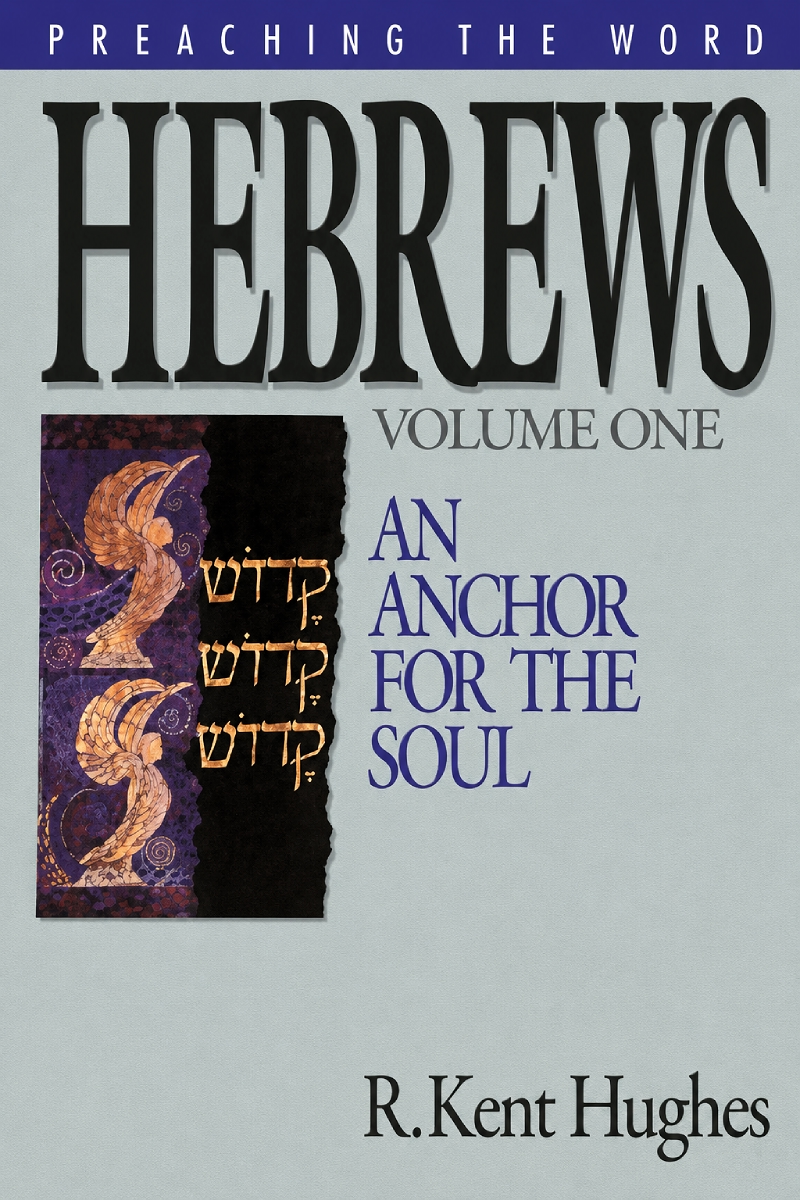
Hebrews (Vol. 1): An Anchor for the Soul
R. Kent Hughes expounds Hebrews 1:1–6:20 around the supremacy of Christ and the call to persevere. He follows Jesus as God’s final revelation, the Son above angels and Moses, the suffering Savior and great High Priest, while pressing Hebrews’ warnings against drifting, unbelief, and immaturity toward faith, rest, hope, and confident access to God.
Available Instantly
About This Book
Hebrews (Vol. 1): An Anchor for the Soul is R. Kent Hughes’s expository treatment of Hebrews 1:1–6:20. The volume follows the opening movement of Hebrews from God’s final revelation in his Son through the first major warnings and the developing doctrine of Christ’s priesthood. Hughes’s governing emphasis is the supremacy and sufficiency of Jesus Christ and the pastoral consequence of that supremacy: believers must not drift backward in unbelief but continue in faith toward maturity, rest, hope, and confident access to God.
Hebrews 1 establishes the greatness of the Son. Hughes begins with God as the speaking God and with the climactic character of his revelation in Christ. Hebrews 1:2–3 presents the Son as heir of all things, agent of creation, radiance of God’s glory, exact representation of his being, sustainer of creation, purifier of sins, and enthroned at God’s right hand. The rest of the chapter demonstrates Christ’s superiority to angels through a chain of Old Testament quotations. The issue is not abstract rank: because the message delivered in the Son is so great, Hebrews 2:1–4 immediately warns against drifting and neglecting salvation.
Hebrews 2 deepens the connection between Christ’s glory and his saving solidarity with humanity. Hughes expounds Jesus’ humiliation, suffering, and death, including the declaration that he tasted death and was made perfect as the pioneer of salvation. Christ identifies with those he saves, calls them brothers and sisters, destroys the power associated with death, and delivers those enslaved by its fear. The chapter ends by introducing Jesus as a merciful and faithful High Priest who understands temptation and helps those who are tempted. The Cross of Christ is thus related to salvation, liberation, and priestly sympathy.
Hebrews 3 compares Jesus with Moses and then turns to the wilderness generation as a warning. Hughes develops the danger of a hardened, unbelieving heart and the necessity of persevering rather than beginning well and then turning away. Psalm 95 becomes the scriptural foundation for the extended treatment of God’s rest across Hebrews 3:7–4:11. The promise of entering God’s rest remains, but it must be received with faith rather than the disobedient unbelief displayed in the wilderness. This section speaks directly to readers who feel pressure to retreat spiritually, asking what it means to finish well and how faith responds to God’s promise.
Hebrews 4:12–13 presents the penetrating Word of God before the discussion returns to Christ’s priesthood. In Hebrews 4:14–5:10, Hughes explains Jesus as the great High Priest who has passed through the heavens, sympathizes with human weakness, and provides confidence to approach the throne of grace. The qualifications of priesthood lead into Christ’s obedient suffering and his appointment according to the order of Melchizedek. Priesthood here is not a detached doctrinal subject; it answers the believer’s need for mercy, grace, help, and access to God.
The closing movement, Hebrews 5:11–6:20, confronts spiritual immaturity. Hughes treats the rebuke against being slow to learn, the call to move toward maturity, the severe warning of Hebrews 6:1–8, and the encouragement that follows. The warning against apostasy is accompanied by a summons to diligence and hope. Hebrews 6:13–20 anchors assurance in God’s promise and oath, culminating in hope as an anchor for the soul and in Jesus entering the heavenly sanctuary as forerunner and High Priest.
Throughout the volume, exposition and pastoral application remain closely connected. Readers encounter questions such as: Why is Christ superior to every previous messenger? What makes his salvation too great to neglect? How should Christians respond to spiritual drift, unbelief, and immaturity? What is God’s rest? Why does Christ’s suffering make him a sympathetic High Priest? How can believers approach God with confidence, and where can hope find an anchor when perseverance is difficult?
By concentrating on Hebrews 1–6, the volume gives sustained treatment to Christ’s supremacy, salvation, warning and perseverance, God’s rest, the Word of God, spiritual maturity, promise, hope, and the High Priesthood of Christ. Hughes presents these not as isolated themes but as one pastoral argument: because God has spoken decisively in his Son and provided a perfect, sympathetic High Priest, believers are called to hold firmly to their confession and press forward in faith.
Book Details

Reading Fit
STUDY LEVEL
Intermediate
STUDY SCOPE
Individual Book, New Testament
BOOKS INCLUDED

Edition & Format
PUBLISHED
May 15, 1993
AVAILABLE FORMATS
hardcover, kindle
LENGTH
364 pages

Topics Covered
You Might Also Like