

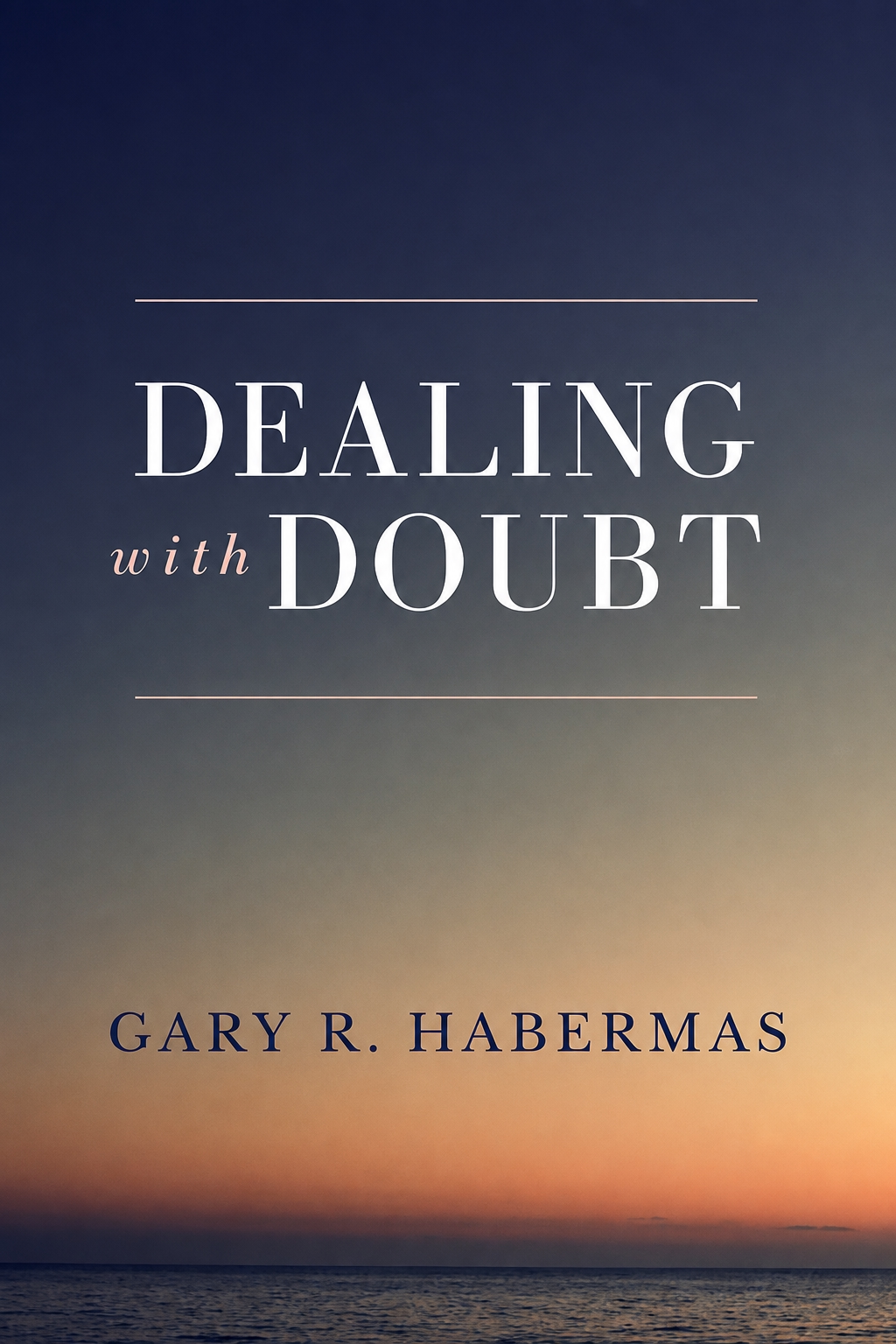
Dealing With Doubt
Gary Habermas distinguishes factual, emotional, and volitional forms of Christian doubt and shows why each needs a different response. He brings evidence, biblical meditation, corrected thinking, faith, unanswered prayer, the living Christ, the Holy Spirit’s witness, and an eternal perspective together to help believers identify the source of uncertainty instead of treating every doubt alike.
Available Instantly
About This Book
Dealing With Doubt is Gary R. Habermas’s practical study of Christian doubt and the different responses required by different kinds of uncertainty. Its organizing distinction is between factual doubt, emotional doubt, and volitional doubt. Habermas argues that doubt is often mishandled because every form is treated as though it were an intellectual objection. The book therefore asks readers first to identify what is actually producing their uncertainty and then apply the kind of help suited to that source.
Factual doubt concerns whether Christianity is true. Habermas addresses questions involving God, Scripture, miracles, and the central historical claims of Christianity, with particular attention to Jesus’ death and resurrection. First Corinthians 15 provides an important biblical framework as he summarizes the historical case for the resurrection and uses it as evidence for Christian belief. Apologetics therefore receives substantial treatment, but it serves the book’s pastoral purpose: evidence is the proper response when the dominant problem is genuinely factual.
Emotional doubt is treated differently. A believer may understand the evidence and still be troubled by fear, anxiety, depression, old wounds, or recurring “what if” thoughts. Habermas develops Philippians 4:6–9 at length as a biblical pattern involving prayer, thanksgiving, disciplined thought, and repeated practice. He then adapts the “Misbelief Therapy” approach of locating false beliefs, removing them, and replacing them with truth. Feelings are not treated as evidence against Christianity. This section answers the common question, “Why do I still feel uncertain when I know the reasons for my faith?”
Volitional doubt concerns the will. Habermas discusses refusal or reluctance to act on known truth, weak faith, repentance, obedience, and the deliberate practice of faith. Biblical meditation becomes a substantial remedy because readers are encouraged to direct attention repeatedly toward God’s truth, character, works, and promises rather than allowing uncertainty to govern thought. Faith grows through practice rather than waiting for every difficult feeling or circumstance to disappear first.
A full chapter addresses doubt arising when God does not answer prayer as expected. Habermas gives sustained attention to Job, especially Job 32–42, to show how limited human perspective, God’s greatness, the problem of evil, and divine silence intersect. Other biblical examples include Abraham’s long wait for the promised son, Jesus in Gethsemane, Paul’s thorn, and delayed or differently answered prayer. This material distinguishes God’s silence from God’s absence and helps readers ask how faith continues when circumstances seem inconsistent with what they expected from God.
The later chapters develop positive grounds for Christian assurance. Jesus is presented as a living person whose resurrection, continuing presence, compassion, and present ministry matter to believers now. Habermas then gives a separate chapter to the testimony of the Holy Spirit, with Romans 8:15–17 and Galatians 4:6–7 receiving detailed treatment as passages concerning the Spirit’s witness to believers that they are God’s children. This is connected with assurance of salvation rather than reduced to a passing emotion.
The final major chapter develops a heavenly or “top-down” perspective on Christian life. Matthew 6:19–34 receives sustained treatment as Habermas applies Jesus’ teaching on treasure, worry, provision, and seeking God’s kingdom to doubt and anxiety. An eternal perspective changes how present suffering, possessions, uncertainty, and unanswered questions are evaluated. The book therefore helps readers diagnose why they doubt, distinguish evidence problems from emotional or volitional ones, respond biblically to anxious thinking and unanswered prayer, grow in practiced faith, and recover assurance through the living Christ, the Holy Spirit’s witness, and the perspective of eternity.
Book Details

Reading Fit
STUDY LEVEL
Fundamental, Intermediate
STUDY SCOPE
Topical
BOOKS INCLUDED

Edition & Format
PUBLISHED
December 21, 2021
AVAILABLE FORMATS
paperback, hardcover, kindle, audiobook
LENGTH
222 pages
· 5h 41m audio

Topics Covered
You Might Also Like