
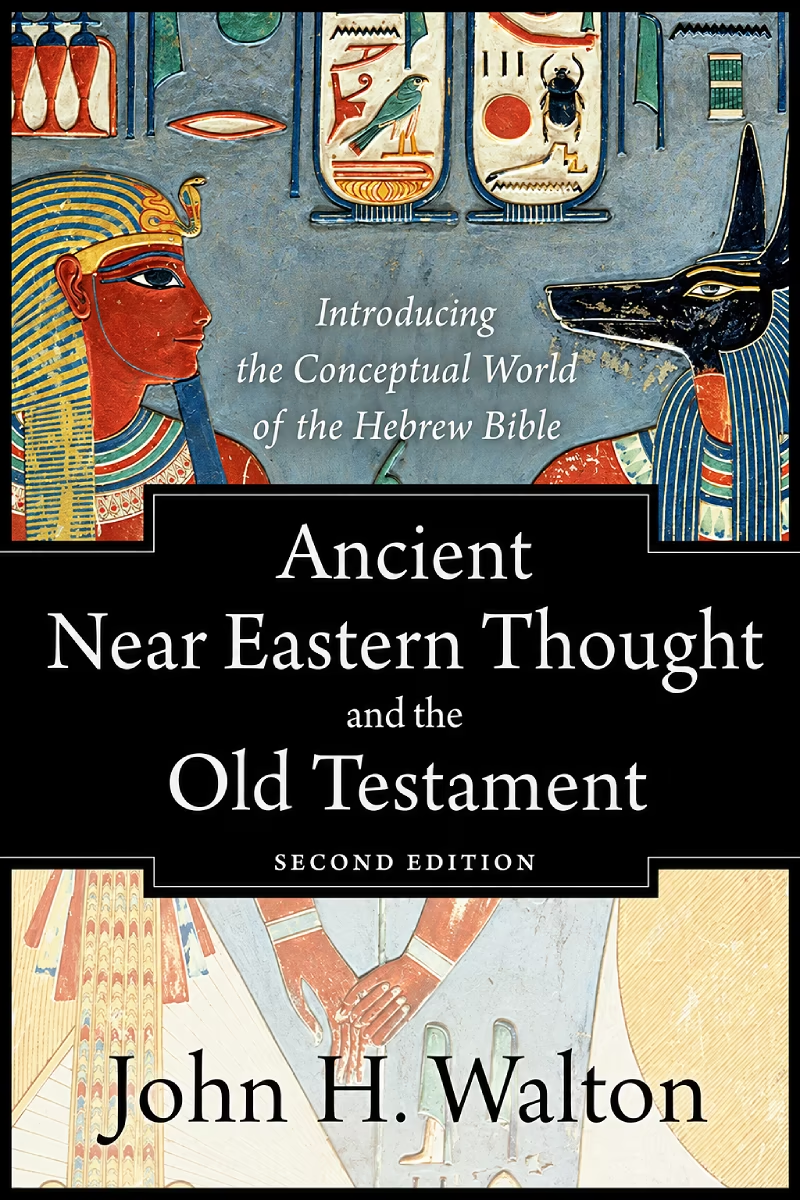
Ancient Near Eastern Thought and the Old Testament: Introducing the Conceptual World of the Hebrew Bible
John H. Walton reconstructs the conceptual world shared by Israel and its ancient Near Eastern neighbors so readers can interpret the Old Testament within its original cultural setting. Comparing gods, temples, cosmology, human origins, kingship, law, wisdom, divination, history, and the afterlife, he shows both deep cultural continuities and crucial biblical distinctives.
Available Instantly
About This Book
Ancient Near Eastern Thought and the Old Testament is a broad comparative study of the conceptual environment in which the Hebrew Bible emerged. John H. Walton’s central purpose is to help readers understand the Old Testament within the intellectual and cultural world of the ancient Near East rather than unconsciously importing modern Western assumptions into ancient texts. The book therefore functions both as an introduction to ancient Near Eastern thought and as a methodological guide to using comparative material responsibly in biblical interpretation.
Walton begins by explaining comparative studies, including their history, value, limitations, and theological implications. He emphasizes that comparison must account for both similarities and differences and that shared cultural concepts do not by themselves prove literary borrowing. Israel participated in the ancient cultural world around it, yet biblical writers could use, reshape, reject, or transform concepts that were widespread in surrounding societies. This comparative method governs the rest of the book.
The work then surveys major bodies of ancient Near Eastern literature before turning to three large conceptual areas: religion, cosmos, and people. In the section on religion, Walton examines the gods, divine councils and hierarchies, temples, rituals, state religion, family religion, images, sacred space, and the ways ancient people understood divine presence and human service to deity. These comparisons illuminate Old Testament discussions of Yahweh, worship, temple, ritual, and Israel’s distinctive relationship to its God.
The section on the cosmos treats cosmic geography, cosmology, cosmogony, order, function, and ancient ideas about how the world was structured. Genesis receives particular attention in questions of creation and human origins, but Walton’s concern is wider than Genesis alone: he is reconstructing the conceptual assumptions that ancient Israelites shared with their neighbors so readers can understand biblical language on its own terms.
The final major section addresses humanity and social life. Walton compares ancient views of human origins and human role, the writing and use of history, divination and omens, cities and kingship, law and wisdom, and expectations concerning the future and the afterlife. These chapters bring texts from Genesis, Exodus, Leviticus, Deuteronomy, Joshua, Samuel, Kings, Psalms, Job, and Proverbs into conversation with Egyptian, Mesopotamian, Hittite, Ugaritic, and other ancient materials. The comparisons help explain why some Old Testament practices resemble those of surrounding cultures while other biblical claims are strikingly different.
Several reader questions lie at the heart of the book: How should ancient Near Eastern texts affect interpretation of the Bible? What did Israelites assume about gods, temples, creation, humanity, kingship, law, wisdom, omens, and death? When a biblical text resembles an ancient parallel, what does that similarity actually mean? And how can modern readers avoid reading contemporary scientific, philosophical, or social categories back into the Old Testament?
The book is especially strong for searches on ancient Near Eastern background, Old Testament cultural context, comparative biblical studies, ancient cosmology, temple and ritual, human origins, biblical law and wisdom, kingship, divination, and historiography. Its contribution is not primarily archaeological in the narrow sense and it is not structured as an apologetic argument. Rather, it is an advanced interpretive resource that synthesizes ancient literature and cultural concepts to improve exegesis.
For readers studying the Old Testament, the practical value is a more historically informed framework for interpretation. Walton repeatedly shows that understanding the “cultural river” of the ancient world can clarify what biblical authors assumed, what they contested, and what was distinctive about Israel’s theology. The book therefore helps bridge the distance between modern readers and the ancient conceptual world of Scripture without flattening either the similarities or the differences.
Book Details

Reading Fit
STUDY LEVEL
Advanced
STUDY SCOPE
Old Testament, Topical
BOOKS INCLUDED

Edition & Format
PUBLISHED
May 15, 2018
AVAILABLE FORMATS
paperback, kindle
LENGTH
574 pages

Topics Covered
You Might Also Like