

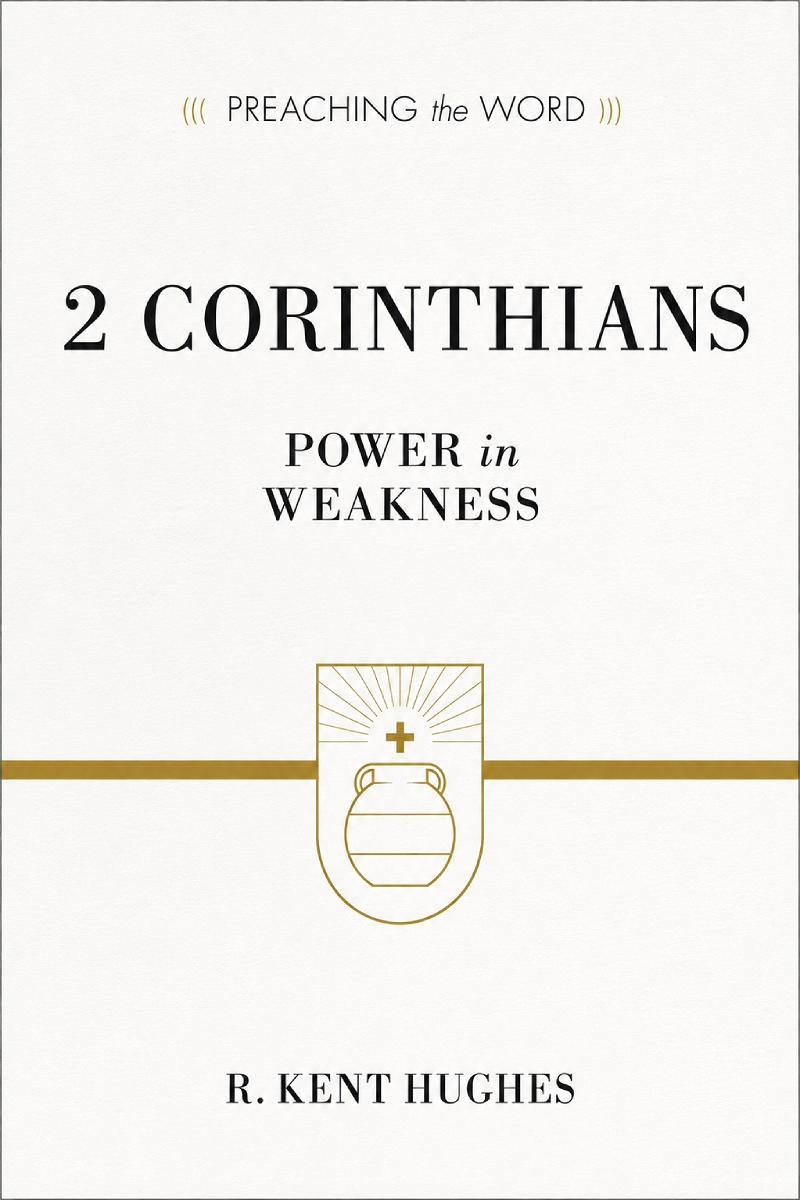
2 Corinthians: Power in Weakness
R. Kent Hughes expounds 2 Corinthians around Paul’s startling claim that God’s power is displayed through weakness. The commentary connects the cross, grace, suffering, comfort, new-covenant ministry, reconciliation, generosity, apostolic integrity, and the thorn in the flesh, showing how Christian ministry and discipleship are reshaped when self-sufficiency gives way to dependence on God.
Available Instantly
About This Book
R. Kent Hughes’s 2 Corinthians: Power in Weakness is a pastoral exposition of Paul’s second canonical letter to Corinth, organized around the reversal at the heart of the letter: God’s power is made known through human weakness. Hughes reads 2 Corinthians against a culture that prized status, strength, wealth, public impressiveness, and self-assertion, and he repeatedly shows how Paul’s theology overturns those values through the cross of Christ, the grace of God, and a form of ministry that looks weak by worldly standards.
The early chapters establish suffering and comfort as marks of authentic Christian ministry rather than evidence that God has abandoned his servants. Hughes emphasizes Paul’s response to critics who treated hardship as proof that his apostleship lacked credibility. In 2 Corinthians 1, suffering and divine comfort equip believers to comfort others. In chapters 2–4, Hughes traces Paul’s understanding of ministry as service under God rather than self-promotion. The contrast between the old and new covenants in 2 Corinthians 3, the ministry of the Spirit, unveiled beholding of the Lord’s glory, and transformation into Christ’s image all contribute to a picture of ministry whose sufficiency comes from God.
Second Corinthians 4 is especially important to the book’s theme. The treasure of the gospel is carried in jars of clay so that the surpassing power belongs to God and not to the messenger. Affliction, perplexity, persecution, and bodily weakness do not cancel gospel ministry; they become the setting in which the life of Jesus is displayed. Hughes connects this cross-shaped pattern to Christian endurance, refusing to measure faithfulness by comfort, prominence, or visible success.
The commentary also develops Paul’s ministry of reconciliation in 2 Corinthians 5. Christ’s death changes the way believers regard themselves and others, and the declaration that anyone in Christ is a new creation stands within Paul’s appeal to be reconciled to God. Hughes treats 2 Corinthians 5:11–21 as a central statement of gospel ministry: God reconciles through Christ and entrusts the message of reconciliation to his servants. This gives Christian ministry both its content and its urgency.
In 2 Corinthians 8–9, Hughes gives sustained attention to the grace of giving. The collection for needy believers is not reduced to fundraising technique; generosity is treated as an expression of grace, integrity, willing sacrifice, and concern for God’s glory. Paul’s care in handling the gift also provides a practical model for financial accountability in ministry.
The theme of weakness reaches its clearest expression in 2 Corinthians 12:7–10. Hughes explores Paul’s thorn in the flesh, his repeated prayer for its removal, and the Lord’s answer that divine grace is sufficient and divine power is perfected in weakness. The point is not admiration of weakness for its own sake. Weakness becomes an invitation to dependence on Christ rather than reliance on human competence. Hughes extends that principle to Christian calling, leadership, suffering, and service.
Across the letter, Hughes also addresses apostolic integrity, false standards of ministry, boasting, spiritual authority, holiness, repentance, generosity, and perseverance. Readers searching for help with suffering in ministry, feeling inadequate for Christian service, the meaning of “power in weakness,” the thorn in the flesh, new-covenant ministry, reconciliation, Christian giving, or why faithful service can include deep affliction will find these questions connected to Paul’s larger theology. The commentary’s practical aim is to form believers and leaders who serve through grace, boast in Christ rather than themselves, and trust God’s power precisely where their own resources prove insufficient.
Book Details

Reading Fit
STUDY LEVEL
Fundamental, Intermediate
STUDY SCOPE
Individual Book, New Testament
BOOKS INCLUDED

Edition & Format
PUBLISHED
November 30, 2012
AVAILABLE FORMATS
hardcover, kindle
LENGTH
272 pages

Topics Covered
You Might Also Like