
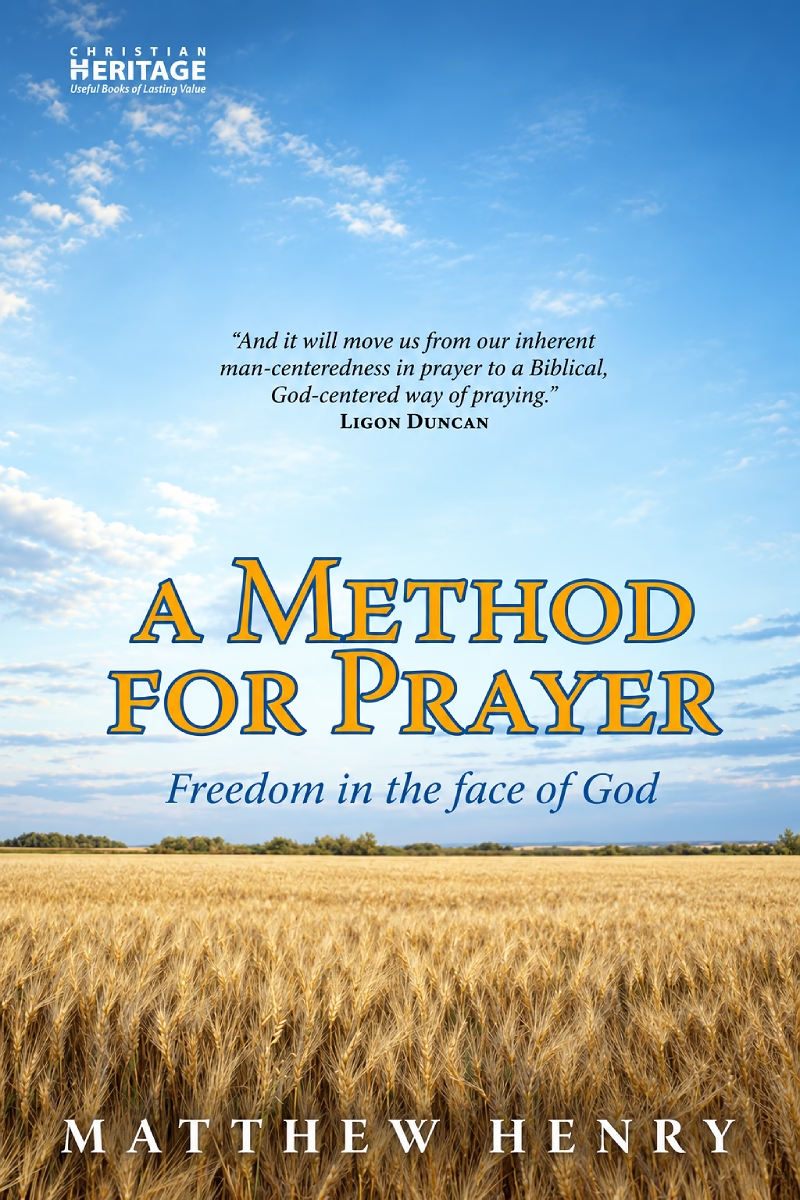
A Method for Prayer: Freedom in the Face of God
Matthew Henry turns Scripture itself into a practical school of prayer, guiding readers through adoration, confession, petition, thanksgiving, intercession, and the Lord’s Prayer. This edition also includes his counsel for beginning, spending, and ending each day with God, joining biblical prayer with the practice of daily communion in ordinary Christian life.
Available Instantly
About This Book
A Method for Prayer is Matthew Henry’s practical guide to learning how to pray from the language, priorities, and patterns of Scripture. Rather than offering a theory of prayer alone, Henry assembles biblical expressions into an ordered method that helps believers give shape and substance to prayer. The governing purpose is to teach prayer that is both disciplined and scriptural: prayer that approaches God with reverence, confesses sin honestly, brings needs before him, gives thanks, intercedes for others, and rests its access to God upon Jesus Christ.
The central structure follows major movements of prayer. Henry begins with adoration, directing attention to God’s being, greatness, wisdom, holiness, sovereignty, mercy, and other divine attributes. He then develops confession of sin, helping the worshiper acknowledge personal and corporate guilt before God. Petition addresses spiritual and temporal needs; thanksgiving trains the believer to recognize God’s mercies; and intercession expands prayer outward to other people, the church, rulers, nations, and wider needs. A section on particular occasions supplies biblical language for special circumstances, while concluding forms show how these elements may be gathered into complete prayer.
A major feature of the work is Henry’s treatment of the Lord’s Prayer. Matthew 6 and Luke 11 provide a biblical pattern whose petitions are expanded through related Scripture, showing how “Our Father,” God’s name, kingdom, will, daily bread, forgiveness, temptation, and deliverance can open into fuller prayer. The book therefore answers a practical question many readers bring to devotional life: What should I actually say when I pray, and how can Scripture teach me to pray more fully? Henry’s answer is not to multiply techniques but to let biblical truth furnish both the matter and language of prayer.
Prayer through Jesus Christ is also important to the method. Henry repeatedly treats Christ as the believer’s mediator and ground of acceptance before God, drawing on passages such as Hebrews 4 and 7, John 14–16, Ephesians 1, and Revelation 8. He also acknowledges the Holy Spirit’s help in prayer, especially through Romans 8, while maintaining a strongly God-centered pattern of reverence, dependence, confidence, and worship. Psalms supplies a particularly rich reservoir of prayer language, while Isaiah, Matthew, Luke, John, Romans, Ephesians, Philippians, Hebrews, and Revelation materially contribute to the biblical framework.
The Christian Heritage edition, Freedom in the Face of God, broadens the volume by including Henry’s three discourses on daily communion with God. These studies move from Psalm 5:3 to beginning the day with God, from Psalm 25:5 to waiting on God through the course of the day, and from Psalm 4:8 to closing the day in peaceful dependence. This makes the edition more than a collection of prayer forms: it connects the content of prayer with a daily pattern of communion, showing how morning prayer, ongoing dependence, and evening reflection can orient ordinary life toward God.
For readers who struggle with wandering prayer, uncertainty about what to pray, shallow repetition, or the separation of prayer from daily life, the book offers a Scripture-saturated framework. It is especially useful for learning biblical priorities in private or public prayer, developing a fuller vocabulary of worship and intercession, and linking stated times of prayer with a day lived consciously before God. Its distinctive strength is the union of method and material: Henry does not merely recommend prayer, but places the language of Scripture into the reader’s hands as the substance from which prayer can grow.
Book Details

Reading Fit
STUDY LEVEL
Fundamental, Intermediate
STUDY SCOPE
Topical
BOOKS INCLUDED

Edition & Format
PUBLISHED
July 20, 2015
AVAILABLE FORMATS
paperback
LENGTH
304 pages

Topics Covered
You Might Also Like