
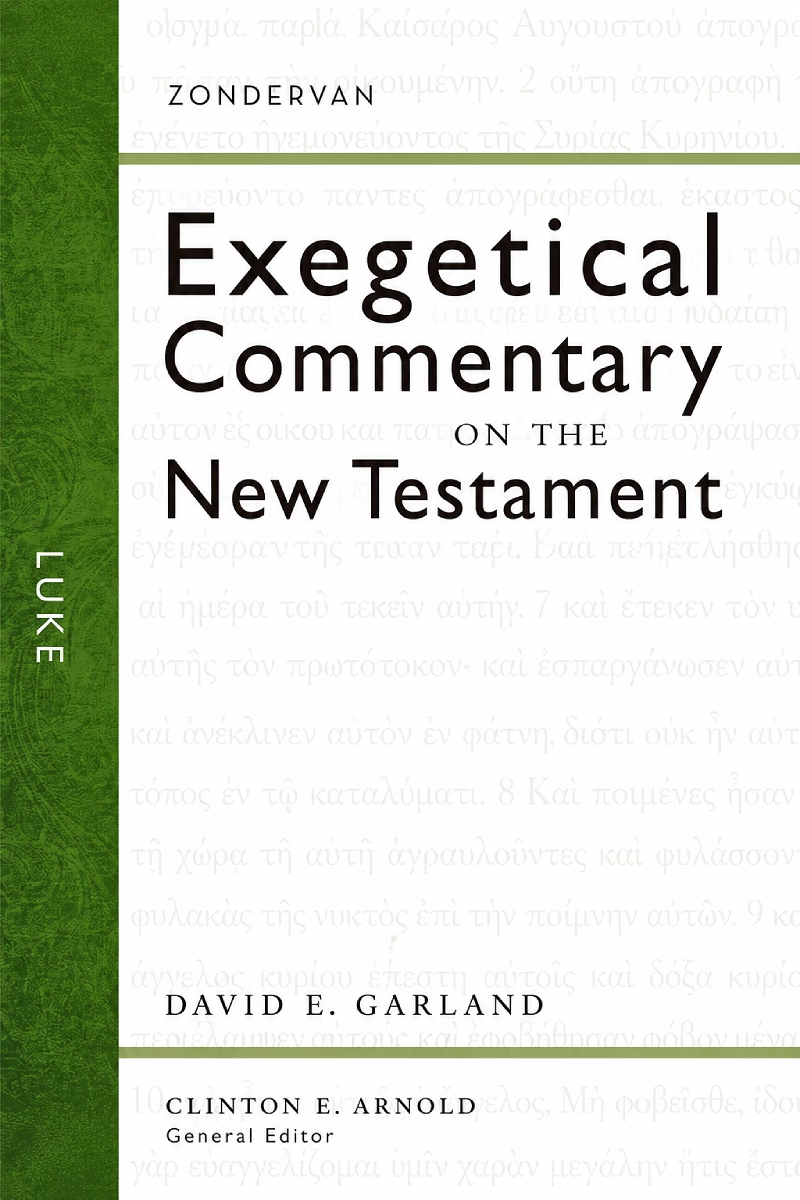
Luke
David Garland’s detailed commentary follows Luke passage by passage, explaining its Greek text, literary flow, historical setting, and theology. He shows how Luke grounds certainty in the story of Jesus—his ministry, teaching, death, and resurrection—and traces salvation, discipleship, prayer, grace, the Holy Spirit, wealth, and faithful life before God.
Available Instantly
About This Book
David E. Garland’s Luke in the Zondervan Exegetical Commentary on the New Testament is a detailed, passage-by-passage exposition of the Gospel of Luke for pastors, teachers, students, and serious Bible readers. The commentary works from the Greek text and gives each unit literary context, its main idea, an original translation, an exegetical outline, verse-by-verse explanation, and theology in application. Its purpose is not only to resolve textual details but to follow Luke’s message as a historian, theologian, and pastor.
Garland takes Luke 1:1–4 as an important statement of purpose. Luke writes so that believers may have certainty concerning what they have been taught. The Gospel presents the events surrounding Jesus as fulfilled acts of God, and Garland pays attention to Luke’s extensive use of Israel’s Scriptures to explain their meaning. The infancy narratives, Jesus’ ministry, the journey to Jerusalem, the passion, and the resurrection are therefore read within a story of God’s saving action and the fulfillment of Scripture.
Jesus Christ is the center of that story. Garland explains his teaching, miracles, parables, conflicts, compassion, authority, death, and resurrection while also asking what each passage reveals about God’s ways. Salvation is a major theological concern in Luke, especially as Jesus seeks the lost, receives sinners, calls for repentance, and extends God’s grace to people who cannot save themselves. Luke’s emphasis on forgiveness, reversal, outsiders, the poor, and the socially marginal helps Garland show the breadth of that saving mission.
Discipleship receives sustained attention, especially in the long journey toward Jerusalem. Garland treats the demands of following Jesus, humility, dependence, repentance, service, use of possessions, and the danger of allowing wealth to become a rival power. The parables in Luke 12–18 receive substantial interpretation, including their teaching on grace, lostness, repentance, prayer, wealth, judgment, and readiness. The rich ruler and Zacchaeus in Luke 18–19 provide contrasting pictures of how possessions relate to discipleship and salvation.
Prayer is another important Lukan emphasis. Garland treats Jesus’ own prayer, his instruction to the disciples, the Lord’s Prayer in Luke 11, persistence in prayer, and the relationship between prayer, faith, and dependence on God. The Holy Spirit also appears throughout Luke’s narrative, from the opening chapters through Jesus’ ministry and the promise of power from on high at the conclusion. The kingdom of God supplies a recurring framework for Jesus’ proclamation, parables, authority, and future expectation.
The passion and resurrection form the Gospel’s climax. Garland explains the events leading to the cross, Jesus’ death, and Luke 24’s resurrection appearances, including the Emmaus scene in which Jesus interprets Moses and the Prophets in relation to the Messiah’s suffering and glory. This final chapter reinforces the commentary’s concern with fulfillment, salvation, witness, repentance, and forgiveness. It also shows why Luke’s Gospel cannot be reduced to biography: its history is written to establish theological certainty and shape faithful response.
Readers may come to this commentary asking what a difficult Greek expression means, how a passage fits Luke’s literary structure, what historical or cultural background clarifies a scene, how a parable should be interpreted, or how Luke’s theology should be preached and applied. They may also be asking broader questions: Why does Luke emphasize prayer? What does Jesus teach about money? How does grace reach sinners and outsiders? What does discipleship cost? How do the cross and resurrection fulfill Scripture? How does Luke give confidence in the truth of the gospel?
Garland’s volume is therefore strongest as an advanced study of Luke and Jesus Christ, with substantial treatment of salvation by grace, discipleship, prayer, the kingdom of God, the Holy Spirit, the cross, resurrection, repentance, forgiveness, parables, wealth and possessions, and the fulfillment of Old Testament Scripture in Jesus.
Book Details

Reading Fit
STUDY LEVEL
Advanced
STUDY SCOPE
Individual Book, New Testament
BOOKS INCLUDED

Edition & Format
PUBLISHED
January 3, 2012
AVAILABLE FORMATS
hardcover, kindle
LENGTH
1918 pages

Topics Covered
You Might Also Like