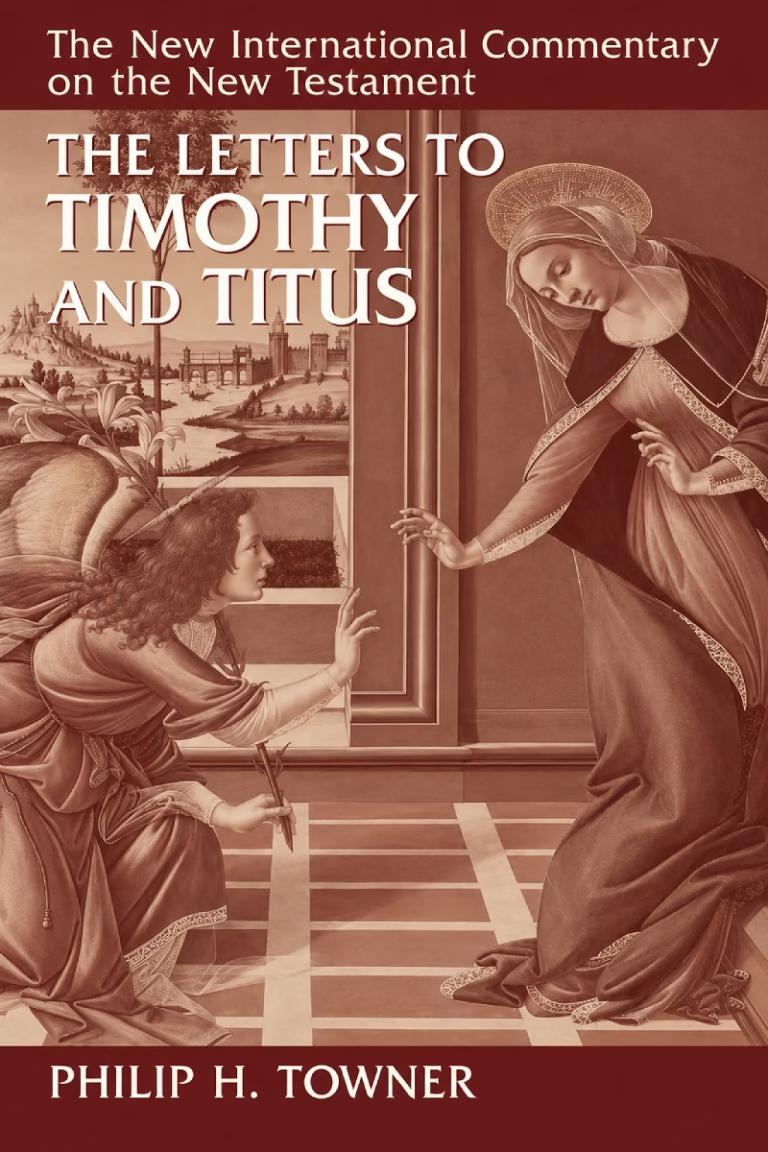

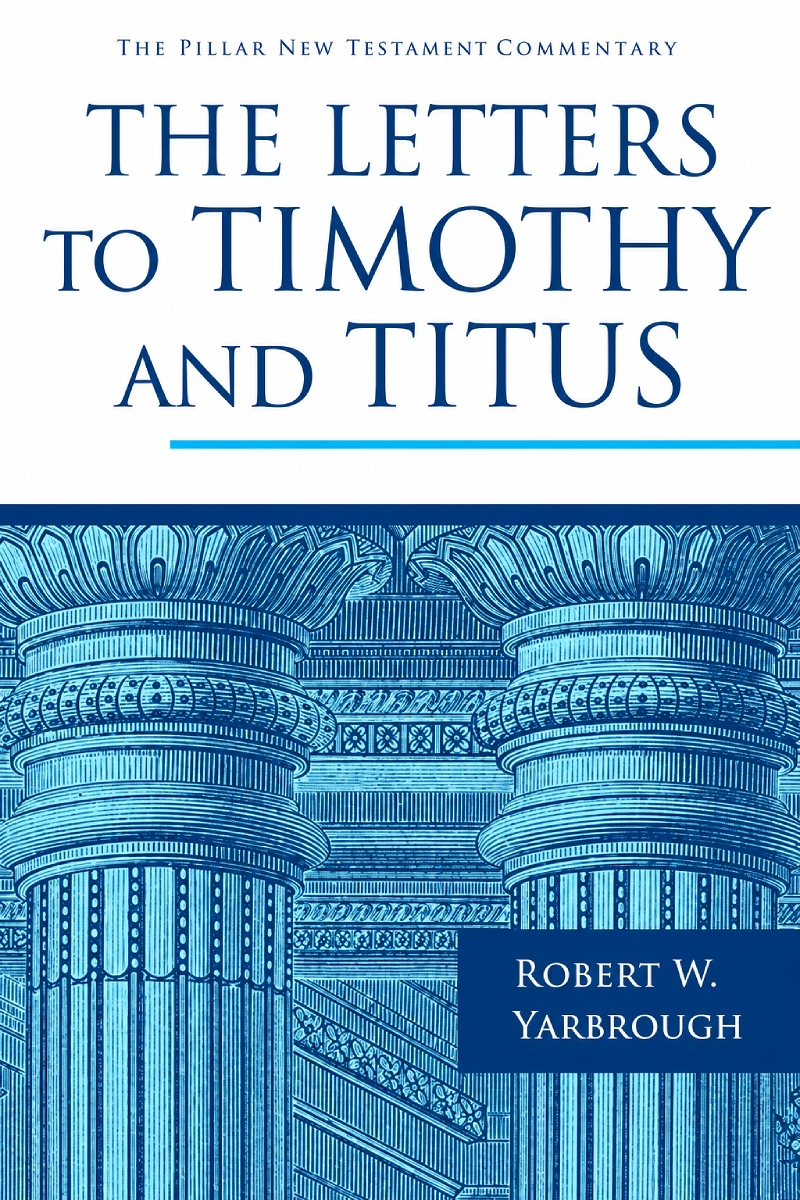
The Letters to Timothy and Titus
Robert W. Yarbrough’s commentary on 1 Timothy, 2 Timothy, and Titus reads the Pastoral Epistles as God-centered instruction for faithful ministry and church life. It explores pastoral leadership, sound teaching, salvation, Scripture, false teaching, godliness, suffering, preaching, care of God’s household, and the character required of Christian leaders.
Available Instantly
About This Book
Robert W. Yarbrough’s Pillar commentary offers a close exposition of 1 Timothy, 2 Timothy, and Titus with sustained attention to their theological and pastoral force for the church. While the letters are often approached mainly for their teaching on church offices, Yarbrough argues that their overarching reality is God himself. References to the Father, Son, and Holy Spirit shape the letters’ understanding of salvation, Scripture, Christian duty, leadership, worship, and ministry. The result is a commentary in which pastoral practice grows out of knowing God in Christ rather than out of administrative technique.
The pastoral task is one of the volume’s strongest emphases. Yarbrough treats Timothy and Titus as servants entrusted with apostolic teaching and responsible to communicate that message, care for God’s people, oppose destructive error, and cultivate ordered church life. In 1 Timothy he gives detailed attention to public prayer and worship, the conduct of men and women, the qualifications of overseers and deacons, care for widows, the treatment and discipline of elders, and the dangers of greed and misuse of wealth. The qualifications in 1 Timothy 3 are presented as a demanding pattern of godly character suited to the gravity of pastoral labor.
Yarbrough repeatedly connects teaching with character. Sound doctrine is not merely correct information; it should produce a life that accords with godliness. False teaching, by contrast, damages worship, relationships, conscience, conduct, and the health of the church. His exposition therefore helps readers ask not only whether a teaching is technically correct but what kind of life and community it produces. The letters’ warnings against speculative controversy, unhealthy teaching, greed, quarrelsomeness, and moral disorder are set beside the positive calling to faith, love, holiness, self-control, patience, and good works.
Second Timothy brings the cost and continuity of ministry into focus. Yarbrough follows Paul’s call to Timothy to guard the entrusted message, endure hardship, teach others faithfully, handle the word of truth accurately, and remain steady amid opposition. Paul’s own suffering and perseverance function as a model of ministry under pressure. The commentary’s treatment of 2 Timothy 3:14–17 highlights the role of Scripture in making God’s servant wise, correcting error, forming righteous character, and equipping believers for good work. Preaching and teaching are therefore integral to pastoral care, not detached academic tasks.
In Titus, Yarbrough explores the appointment of qualified elders, the rebuke of false teachers, conduct appropriate to sound doctrine, and the public credibility of Christian life. The great salvation passages of Titus 2:11–14 and 3:3–7 show that grace does more than pardon: God’s saving action trains and renews his people so that they live self-controlled, upright, godly, and useful lives. Good works are not presented as the basis of salvation but as its fitting fruit and public expression.
Across the commentary, salvation in Jesus Christ, the knowledge of God, the authority of Scripture, pastoral responsibility, church leadership, and Christian living remain tightly connected. Yarbrough also addresses difficult questions about women and teaching, prayer, wealth, slavery, elder discipline, suffering, succession in ministry, and the relation between household life and church leadership.
This volume is especially suited to readers asking what faithful pastoral ministry requires, how churches should recognize leaders, how doctrine and character belong together, how to respond to false teaching without abandoning patience and care, how Scripture equips Christian workers, why ministry must be passed on faithfully, and how God’s saving grace produces a credible life in the church and before the world.
Book Details

Reading Fit
STUDY LEVEL
Advanced, Intermediate
STUDY SCOPE
Individual Book, New Testament
BOOKS INCLUDED

Edition & Format
PUBLISHED
September 25, 2018
AVAILABLE FORMATS
hardcover, kindle
LENGTH
1059 pages

Topics Covered
You Might Also Like