
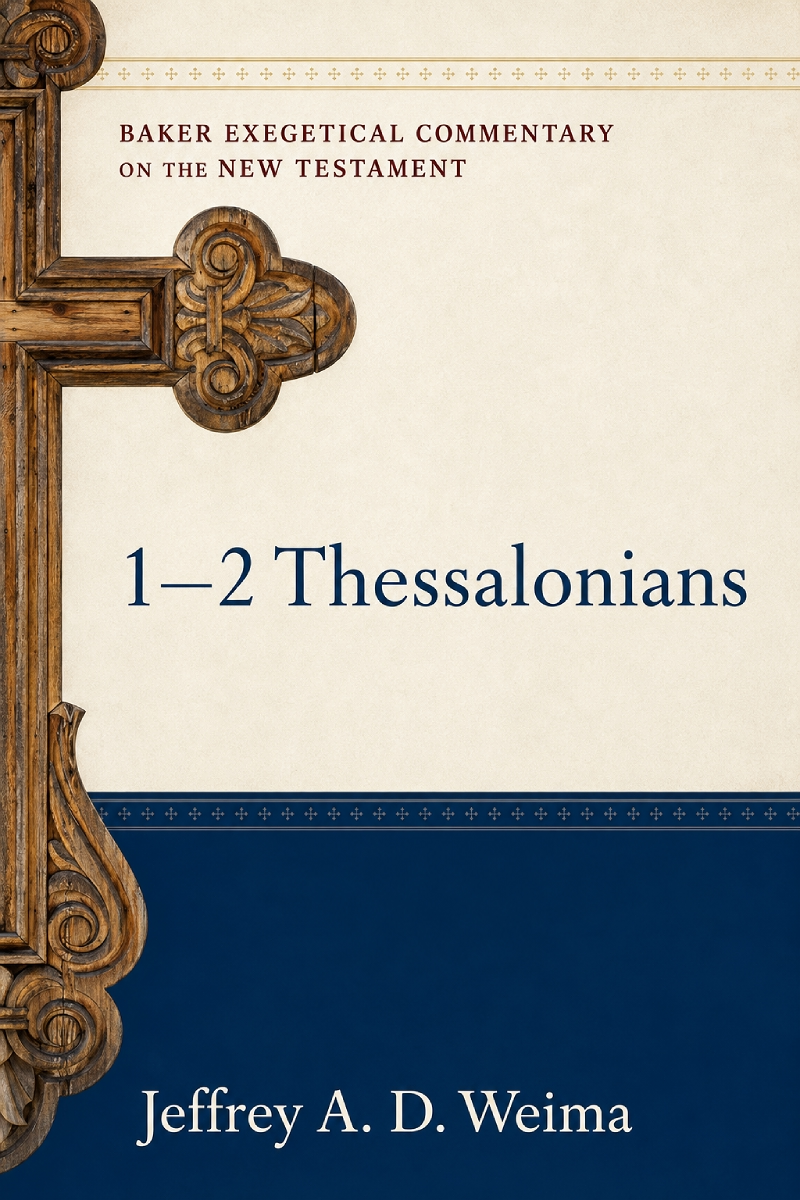
1-2 Thessalonians
Weima’s detailed commentary opens the Thessalonian letters in their first-century setting and follows Paul’s concerns from mission and persecution to holiness, work, and congregational life. Special attention falls on Christ’s return, the resurrection of believers, the day of the Lord, and how Christians live steady, holy lives while they wait.
Available Instantly
About This Book
Jeffrey A. D. Weima’s commentary provides sustained exegetical and theological treatment of both 1 Thessalonians and 2 Thessalonians, with close attention to the Greek text, ancient letter structure, historical setting, and the pastoral situation of the Thessalonian church. The volume follows Paul’s argument through each section of both letters and repeatedly connects detailed interpretation with the questions facing a young congregation living under pressure and waiting for the return of Jesus Christ.
In 1 Thessalonians, Weima examines the opening thanksgiving and Paul’s account of the Thessalonians’ reception of the gospel, their turning to God, their endurance under affliction, and their hope in Christ’s return. The long defense of Paul’s apostolic conduct and absence in 1 Thessalonians 2–3 receives substantial attention. These chapters illuminate the character of apostolic ministry, Paul’s self-supporting labor, his pastoral affection, his concern for the congregation’s perseverance, and the way suffering and opposition shaped both mission and church life.
The exhortations of 1 Thessalonians 4–5 form another major portion of the commentary. Weima treats sanctification as a concrete calling that includes sexual holiness, conduct that pleases God, love within the Christian community, and responsible work. The discussion of idleness and work in 1 Thessalonians 4 is later reinforced by the more extensive treatment of disorderly and idle believers in 2 Thessalonians 3, making ordinary work and responsible conduct a recurring pastoral concern rather than an isolated remark.
The most prominent theological issue is Christian hope at the return of Christ. In 1 Thessalonians 4:13–5:11, Paul answers the anxiety of believers who feared that Christians who had died might somehow be disadvantaged when the Lord returns. Weima carefully explains the resurrection of the dead in Christ, the gathering of living believers to the Lord, the comfort this teaching gives the grieving church, and the transition to the day of the Lord. The day comes suddenly for the unprepared, but believers are called to live as children of light, awake, sober, and steady in hope.
Second Thessalonians develops these eschatological concerns further. The opening chapter places persecution and endurance in the setting of God’s righteous judgment and Christ’s future revelation. Second Thessalonians 2:1–17 receives extended treatment because some believers had been unsettled by the claim that the day of the Lord had already arrived. Weima examines the rebellion, the man of lawlessness, the restraining figure, deception, judgment, and the congregation’s election and salvation, while stressing Paul’s pastoral purpose: believers are not to be shaken or frightened but to stand firm. The commentary therefore helps readers distinguish what Paul actually says about Christ’s return from speculative schemes built beyond the text.
Weima also treats Paul’s instructions for congregational life, prayer, leadership, worship, prophecy, mutual encouragement, and care for troubled members. Across both letters, eschatology and Christian living remain closely connected: expectation of Christ’s return is meant to produce holiness, perseverance, responsible work, comfort in bereavement, and stability rather than panic or disengagement.
The volume answers questions such as: What happens to believers who die before Jesus returns? How should Christians understand the day of the Lord? What does Paul teach about the man of lawlessness? How should believers prepare for Christ’s return? How do holiness, sexual conduct, work, persecution, and congregational responsibility fit with Christian hope? Its detailed exegesis is especially useful for readers seeking a careful study of the Thessalonian letters and their teaching on the second coming.
Book Details

Reading Fit
STUDY LEVEL
Advanced, Intermediate
STUDY SCOPE
Individual Book, New Testament
BOOKS INCLUDED

Edition & Format
PUBLISHED
November 11, 2014
AVAILABLE FORMATS
hardcover, kindle
LENGTH
730 pages

Topics Covered
You Might Also Like