
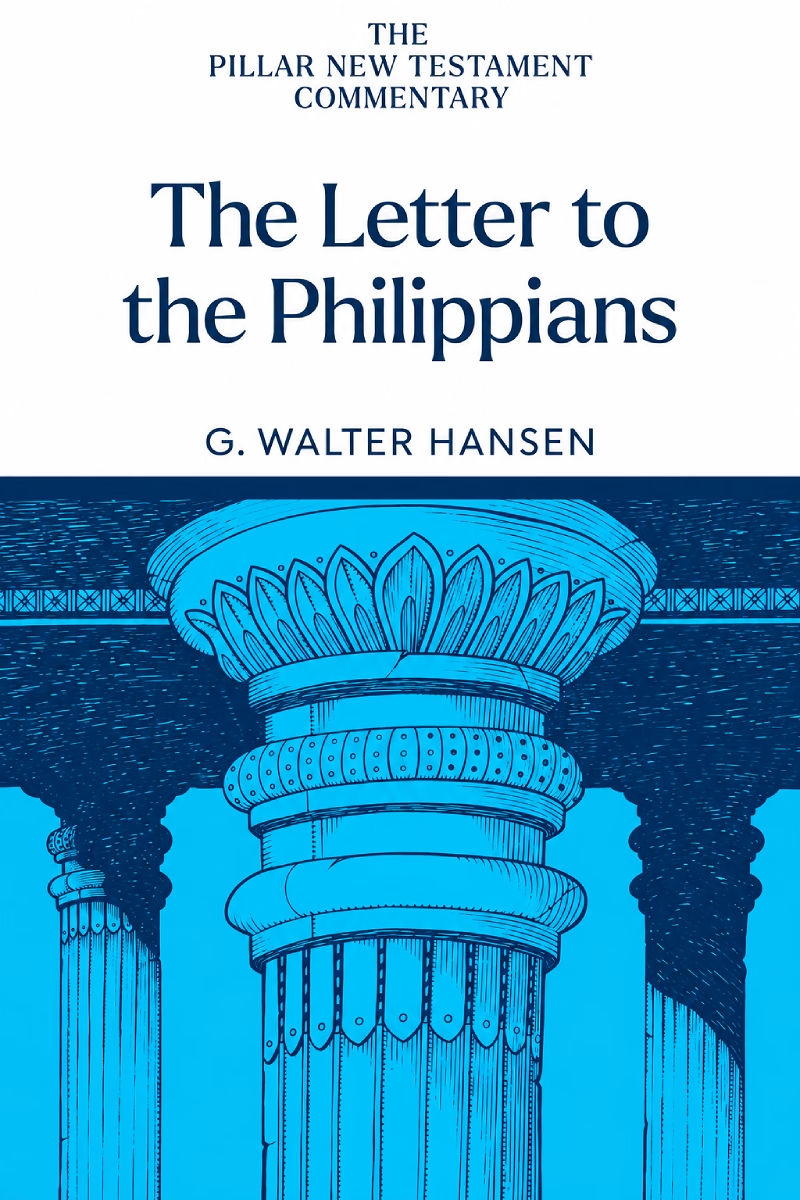
The Letter to the Philippian
G. Walter Hansen reads Philippians through two governing themes: the gospel of Christ and the community in Christ. His commentary shows how partnership, citizenship, friendship, unity, suffering, humility, joy, and faithful service shape a church worthy of the gospel, with close attention to Christ’s self-emptying, Paul’s pursuit of Christ, and practical life together.
Available Instantly
About This Book
G. Walter Hansen’s The Letter to the Philippians is an exegetical commentary that reads Paul’s letter around two governing themes: the gospel of Christ and the community in Christ. Hansen’s distinctive emphasis is the corporate dimension of Philippians. He repeatedly shows how partnership, citizenship, friendship, mutual service, and shared suffering belong to the progress of the gospel and to the identity of a Christian community shaped by Christ.
The introduction examines the historical setting of Philippi, the character and occasion of the letter, Paul’s imprisonment, pressures facing the church, disunity, suffering, opponents, and the letter’s friendship setting. Hansen then follows the text section by section. Philippians 1:1–11 introduces grace, thanksgiving, prayer, and partnership in the gospel. Philippians 1:12–26 interprets Paul’s imprisonment through the advance of the gospel, competing motives in preaching, courage, and Paul’s desire to honor Christ whether by life or death.
Philippians 1:27–2:18 is a major center of the commentary. Hansen treats Paul’s command to live as citizens worthy of the gospel, to stand firm together in suffering, and to seek the interests of others. Philippians 2:5–11 receives sustained attention as the Christ-centered pattern for the community: Christ’s humility, self-giving obedience, death, and exaltation become decisive for how believers think and live together. The following command to work out salvation and to live faithfully in a difficult world continues that corporate and ethical emphasis.
Hansen’s treatment of Timothy and Epaphroditus in Philippians 2:19–30 presents them as concrete examples of Christlike service. Philippians 3 then turns to Paul’s own experience: former religious privileges are counted as loss for the sake of knowing Christ, sharing in his sufferings, knowing the power of his resurrection, and pressing toward the goal. Hansen connects this personal testimony with the responsibility to imitate faithful examples and to reject ways of life opposed to the cross of Christ. The contrast between earthly patterns and heavenly citizenship leads into hope for Christ’s ultimate victory and the transformation associated with his return.
Philippians 4 develops the practical life of the community. Hansen addresses reconciliation between believers, rejoicing in the Lord, gentleness, freedom from anxiety through prayer, disciplined thought, imitation, contentment, generosity, and Paul’s gratitude for the Philippians’ material partnership. These themes answer practical questions about how a church maintains unity, how Christians respond to suffering and conflict, what Christlike humility looks like, how joy can coexist with hardship, how believers deal with anxiety, and how giving becomes participation in gospel ministry.
The commentary therefore presents Philippians not merely as a collection of inspirational sayings but as a unified pastoral letter about a community whose life is ordered by the gospel of Christ. Readers receive sustained exposition of partnership in the gospel, life together in Christ, Christian citizenship, suffering, humility, service, knowing Christ, perseverance, joy, reconciliation, prayer, contentment, and generosity. Hansen’s clear exegesis and application-oriented theological reflection make the volume particularly useful for readers studying how the theology of Philippians shapes the actual practices and relationships of Christian community. Throughout, the emphasis remains on how Paul’s theology forms a faithful, mutually responsible, gospel-serving people.
Book Details

Reading Fit
STUDY LEVEL
Intermediate
STUDY SCOPE
Individual Book, New Testament
BOOKS INCLUDED

Edition & Format
PUBLISHED
October 5, 2009
AVAILABLE FORMATS
hardcover, kindle
LENGTH
390 pages

Topics Covered
You Might Also Like