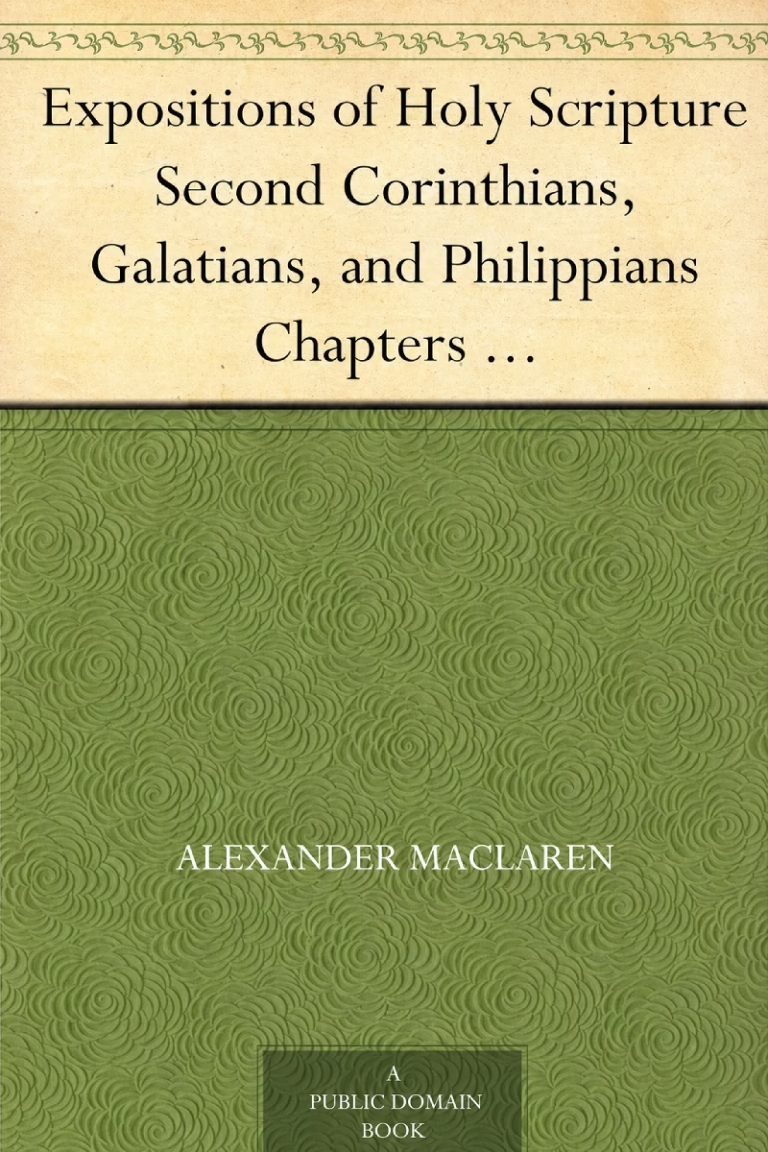
2nd Corinthians, Galatians, Philippians, Colossians, Thessalonians, and 1st Timothy.
Alexander Maclaren
4.6(92)


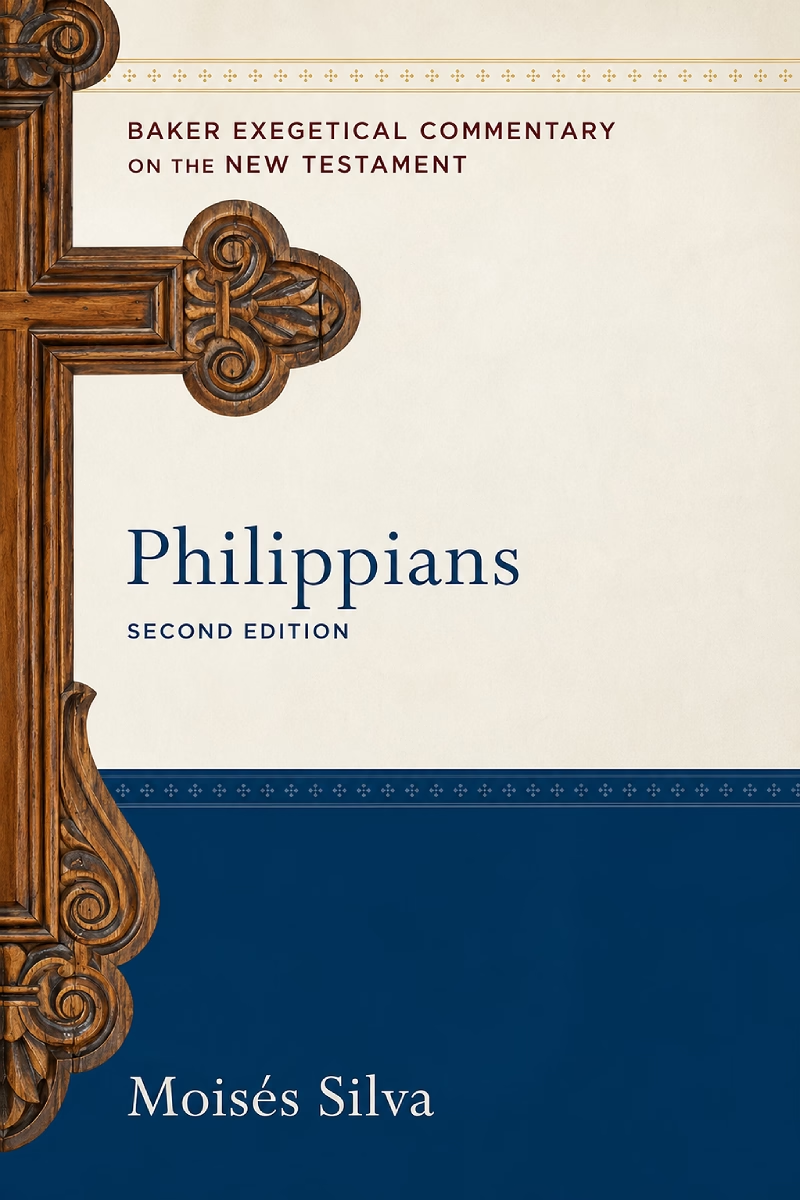
Moisés Silva’s detailed commentary follows Philippians as a coherent argument, combining close Greek exegesis with theological and pastoral insight. He gives special attention to sanctification, Christ’s humility and exaltation, Christian unity and obedience, opposition to false teaching, knowing Christ, righteousness by faith, perseverance, joy, and life worthy of the gospel.
Available Instantly
Moisés Silva’s Philippians, second edition, is a detailed exegetical commentary on the whole letter that repeatedly asks how each passage contributes to Paul’s overall argument. Silva works closely with the Greek text, textual questions, grammar, and theological context while still aiming to help pastors, students, teachers, and serious readers understand the letter as a unified message. Rather than treating Philippians as a collection of devotional sayings, he follows Paul’s movement from opening prayer and missionary report through a major call to sanctification, doctrinal polemics, and final pastoral concerns.
The opening section, Philippians 1:1–11, establishes Paul’s affection for the church, his thanksgiving, partnership in the gospel, and prayer that their love may abound with knowledge and discernment. In 1:12–26 Silva examines Paul’s imprisonment and missionary circumstances, showing how the advance of the gospel and Paul’s Christ-centered outlook shape his response to suffering, life, and death. These sections help answer how Christians can understand hardship when the gospel appears hindered and why Paul can speak with confidence and joy while imprisoned.
Silva treats Philippians 1:27–2:30 as a major “call to sanctification.” He develops Christian citizenship, unity, humility, obedience, and conduct worthy of the gospel. Philippians 2:5–11 receives especially close attention as Paul presents Christ’s self-humbling obedience unto death and subsequent exaltation. Silva’s exegesis relates this Christological passage directly to the life of the church: Christ’s mind and pattern confront selfish ambition and provide the governing model for humble service. Philippians 2:12–18 then brings divine working and human obedience together in the practical outworking of salvation. Timothy and Epaphroditus provide concrete examples of the kind of self-giving service Paul commends.
The commentary’s next major movement, Philippians 3:1–4:1, is treated as doctrinal polemics and practical theology. Silva examines the Judaizing threat, Paul’s former grounds for religious confidence, and the radical revaluation that occurs when everything is compared with knowing Christ. Philippians 3:7–11 is described as expressing the essence of Pauline theology: righteousness is not grounded in Paul’s own law-keeping but comes through faith in Christ, while the believer’s great aim is to know Christ, the power of his resurrection, and the fellowship of his sufferings. Silva then follows Paul’s forward-looking pursuit of maturity, heavenly citizenship, perseverance, and hope.
In Philippians 4 Silva addresses church conflict, steadfastness, joy, prayer, disciplined thought, contentment, and the Philippians’ material partnership with Paul. Philippians 4:2–9 shows how unity, prayer, and God’s peace belong together in a congregation facing both internal tensions and external pressure. Philippians 4:10–20 explores Paul’s learned contentment and the church’s generosity without reducing the passage to a formula for personal success.
For readers asking how the Christian life is actually lived, Silva connects doctrinal precision with sanctification: believers are to stand firm together, adopt the humility of Christ, obey while trusting God’s work within them, reject confidence in religious achievement, pursue Christ, and practice gospel-shaped unity. The commentary is especially strong for close study of Philippians 2:5–11 and 3:7–11, for understanding the relationship between Christology and Christian conduct, and for readers who want rigorous exegesis that still leads toward preaching, teaching, and spiritual application.

STUDY LEVEL
Advanced, Intermediate
STUDY SCOPE
Individual Book, New Testament
BOOKS INCLUDED

PUBLISHED
March 1, 2005
AVAILABLE FORMATS
hardcover, kindle
LENGTH
273 pages