
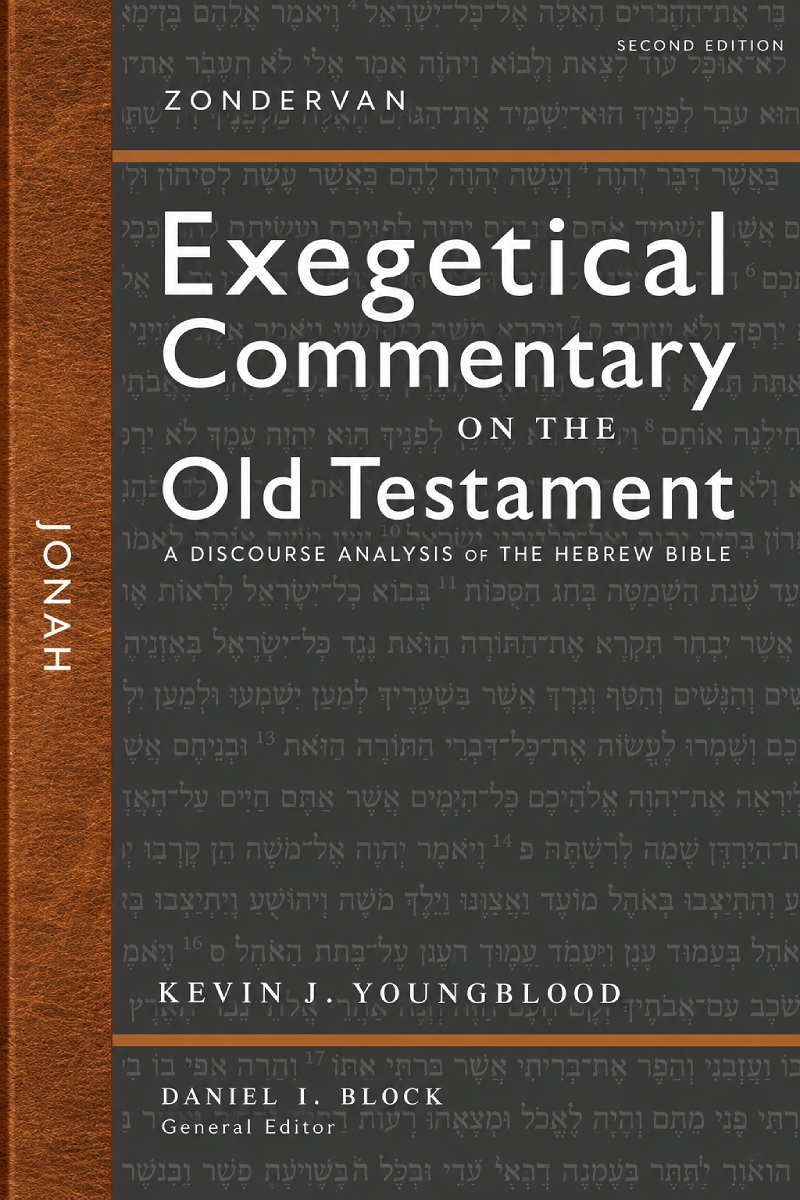
Jonah, Second Edition: A Discourse Analysis of the Hebrew Bible
Kevin J. Youngblood follows the Hebrew text of Jonah clause by clause to show how its literary design exposes the prophet’s struggle with God’s mercy. The commentary traces Jonah’s flight, prayer, reluctant mission, Nineveh’s repentance, and final anger to explore how divine justice, mercy, sovereignty, and Israel’s election fit together.
Available Instantly
About This Book
Kevin J. Youngblood’s second-edition commentary on Jonah is a sustained exposition of the entire biblical book built around discourse analysis of the Hebrew text. Rather than treating individual verses in isolation, Youngblood studies clause relationships, repetition, narrative pacing, parallel scenes, rhetorical development, and the larger literary structure to show how each unit advances Jonah’s message. The commentary therefore serves readers who want to understand not only what Jonah says but how the narrative’s form guides interpretation.
At the theological center of Youngblood’s reading are two intertwined questions. First, how do God’s mercy and justice relate without one cancelling the other? Second, how does God’s universal sovereignty and concern for hostile nations relate to his particular covenant relationship with Israel? Jonah’s resistance to Nineveh is interpreted through these tensions. His flight is not merely fear or disobedience in the abstract; it reflects his unwillingness to participate in a mission that might result in mercy for Israel’s enemy. Nineveh’s Assyrian identity therefore matters to the argument, because the city represents a powerful and threatening nation that Jonah does not want spared.
The commentary follows the narrative through Jonah’s commission and flight in chapter 1, the storm and the mariners, his descent and rescue, and his prayer in chapter 2. Youngblood gives special attention to the contrast between Jonah’s thankful response to mercy when he receives it and his anger when the same divine mercy reaches Nineveh. Jonah 3 develops the prophet’s renewed commission, his reluctant proclamation, Nineveh’s response, and God’s relenting from announced disaster. Repentance, judgment, deliverance, prophetic responsibility, and the reach of God’s compassion all contribute to the book’s central argument.
Jonah 4 receives especially important treatment because it exposes the prophet’s governing conflict with God. Youngblood reads Jonah’s complaint against the backdrop of God’s self-revelation in Exodus 32–34 and the language echoed in Joel 2:12–17. Jonah knows that YHWH is gracious, compassionate, slow to anger, and ready to relent from disaster; what troubles him is that these qualities are being extended beyond Israel. The plant episode becomes God’s final enacted lesson, confronting Jonah with the inconsistency of valuing his own comfort while resenting divine compassion for a great city.
Youngblood also attends to Jonah’s historical and canonical setting, including the prophet’s association with 2 Kings 14:25, while keeping the literary and theological message of Jonah itself primary. His treatment helps readers consider why God sends his word to outsiders, what genuine repentance looks like, how divine judgment and mercy belong together, why receiving mercy should reshape one’s attitude toward others, and how distorted ideas of election or justice can produce resistance to God’s mission.
Because the commentary repeatedly explains Hebrew discourse features, original translation choices, literary form, canonical connections, and practical significance, it is especially useful for pastors, teachers, seminary students, and serious Bible readers studying Jonah in depth. Its governing contribution is to connect detailed Hebrew and literary analysis with the book’s enduring challenge: whether God’s people will recognize his sovereign freedom to show mercy, accept his justice as well as his compassion, and participate willingly in his concern for people beyond their preferred boundaries.
Book Details

Reading Fit
STUDY LEVEL
Advanced, Intermediate
STUDY SCOPE
Individual Book, Old Testament
BOOKS INCLUDED

Edition & Format
PUBLISHED
November 26, 2019
AVAILABLE FORMATS
hardcover
LENGTH
208 pages

Topics Covered
You Might Also Like