
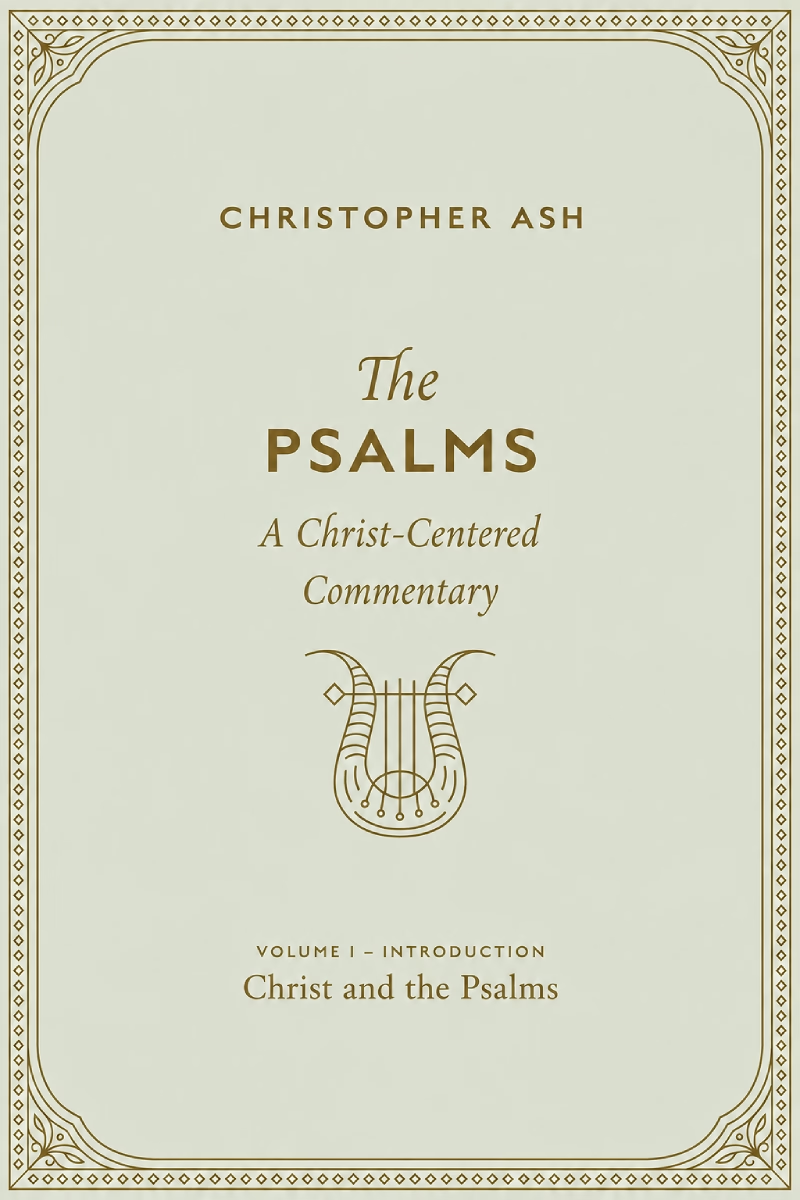
The Psalms: A Christ-Centered Commentary Vol 1
Christopher Ash builds a detailed case for reading the Psalms with Christ at the center, showing how the Psalter points forward to Jesus and how the New Testament reads it. He connects the Psalms with worship, prayer, prophecy, the Spirit, Christ’s humanity, righteousness, repentance, imprecation, and the history of Christian interpretation.
Available Instantly
About This Book
Christopher Ash’s first volume in The Psalms: A Christ-Centered Commentary is not a verse-by-verse commentary on a numbered range of psalms. It is an extended introduction and theological handbook for reading the entire Psalter as Christian Scripture. Its governing question is how the Psalms belong to Jesus Christ and, because they belong to him, how they become the prayers, praises, and songs of his people. Ash argues in two directions: forward from the Psalter itself toward Christ and backward from the New Testament’s quotations and echoes of the Psalms toward a Christ-centered understanding of the Old Testament text.
The opening part establishes this interpretive method. Ash asks readers to take the Psalms seriously in their own literary and canonical setting while also recognizing the patterns by which Jesus and the New Testament writers receive them. The Psalter is therefore neither detached from its original speakers and circumstances nor treated as though Christian interpretation were an afterthought. The book explores how royal, Davidic, righteous-sufferer, and other psalmic patterns reach their fullness in Christ. Its sustained attention to New Testament quotations and echoes makes biblical continuity a major concern: the reader is shown how the two Testaments belong together without collapsing their historical distinctions.
A large doctrinal section then asks what this Christ-centered reading means for Christian belief and practice. Ash treats interpretation and worship, the Psalms as prophecy spoken by the Spirit of Christ, and Christian prayer and praise as offered to the Father through Christ and by the Spirit. This Trinitarian shape helps answer a practical question that often troubles Christian readers: when a psalm uses words that seem to belong to another person or circumstance, how can believers truthfully pray or sing them? The answer is developed through Christ’s relation to the Psalms and the church’s relation to Christ.
The volume also examines the incarnation and the emotions expressed in the Psalms, considering what the psalmic language of grief, desire, anguish, confidence, anger, and joy contributes to understanding the true humanity of Jesus. Separate treatment is given to righteousness, repentance, and imprecation. These discussions address difficult questions such as how Christians should understand claims of innocence, how repentance functions when the Psalms are read in relation to the sinless Christ, and how severe prayers for judgment can be prayed within Christian discipleship rather than ignored or domesticated.
Ash additionally traces major stages in the Christian history of Psalm interpretation, including patristic, medieval, Reformation, and later approaches. This historical material shows that Christ-centered reading is not merely a modern technique but belongs to a long and varied interpretive tradition. The concluding attention to Christian singing returns the discussion to the church’s worship, while appendices on psalm superscriptions and New Testament quotations and echoes provide reference material for further study.
The book therefore serves readers asking how to read the Psalms as a Christian, how the Psalms point to Jesus, how the New Testament uses the Psalter, why Christians should continue to pray and sing these ancient texts, and how to handle their most difficult theological features. Ephesians 5:19 and Colossians 3:16 help frame the ecclesial importance of psalms in Christian worship, but the central biblical object of study remains the Psalter itself. The result is a sustained study of Christ in the Psalms that connects hermeneutics, prophecy, the Holy Spirit, prayer, worship, Christology, the church, and the long history of Christian interpretation.
Book Details

Reading Fit
STUDY LEVEL
Advanced, Intermediate
STUDY SCOPE
Individual Book, Old Testament, Topical
BOOKS INCLUDED

Edition & Format
PUBLISHED
June 24, 2024
AVAILABLE FORMATS
hardcover, kindle
LENGTH
532 pages

Topics Covered
You Might Also Like