
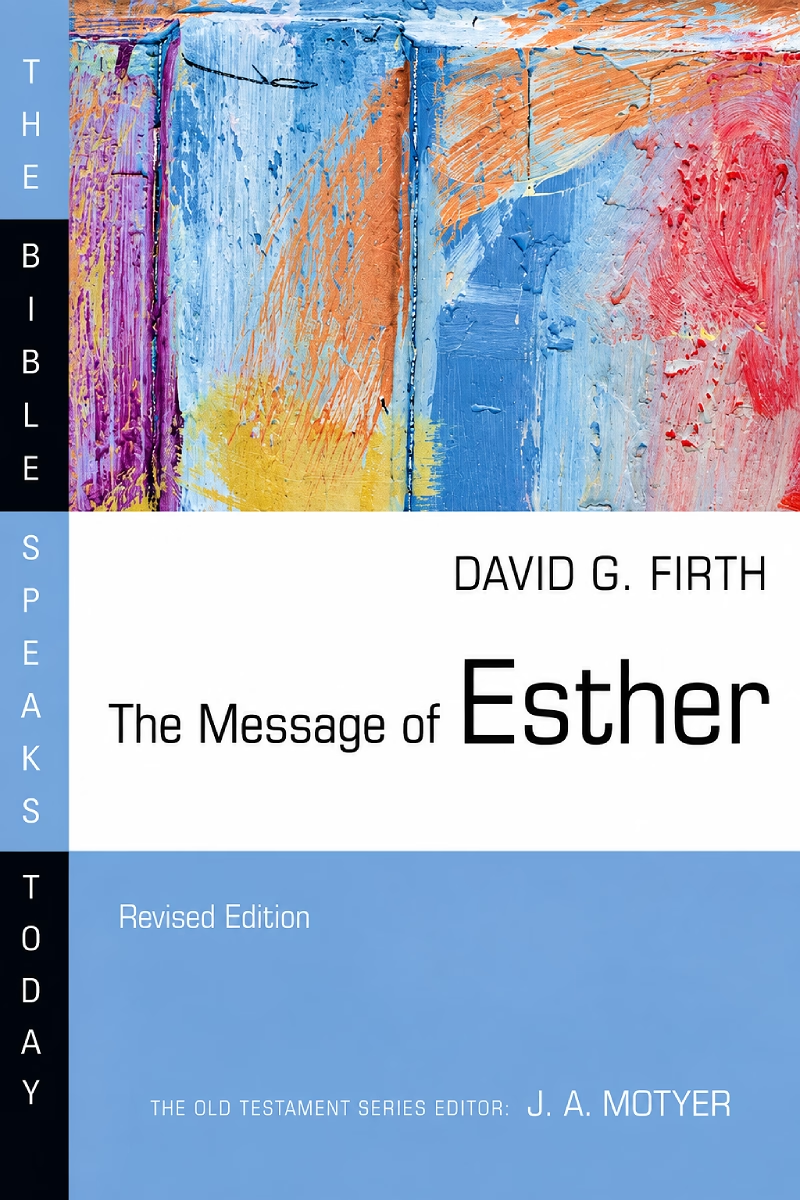
The Message of Esther
David Firth opens Esther’s theology of God present but unseen: providence working through ordinary events, courage in a hostile court, corrupt power confronted, and a threatened people delivered. The book shows how believers can act wisely and justly when God seems silent, trusting that his purposes are still at work even when his presence is not obvious.
Available Instantly
About This Book
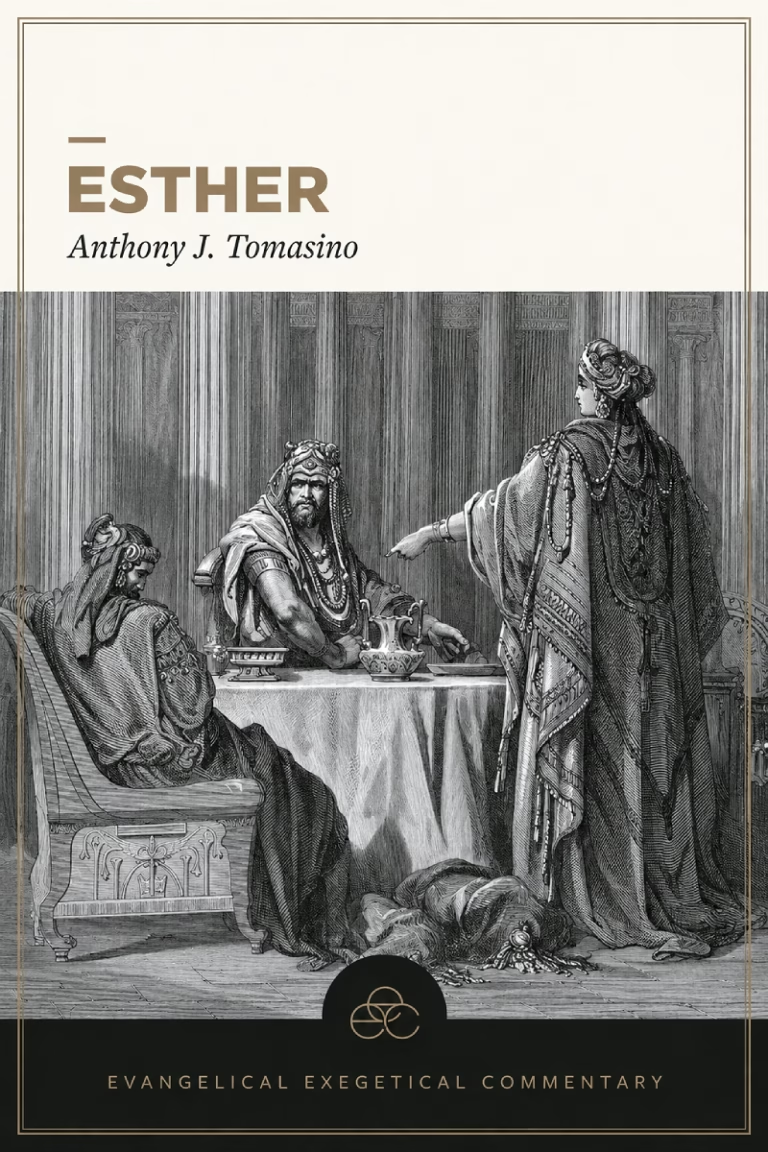
David G. Firth’s The Message of Esther is a sustained exposition of Esther that focuses on the book’s unusual theology of God present but unseen. Esther never names God and is set entirely outside the promised land, yet Firth shows that this absence of explicit religious language does not mean theological emptiness. The narrative invites readers to recognize divine providence working through timing, reversal, human decisions, apparent coincidence, and the preservation of a threatened people. The result is a study of how faith understands God’s activity when his presence is real but not obvious.
Firth follows the story through the Persian court, where power is displayed, misused, and repeatedly overturned. Esther 1 exposes the instability beneath royal magnificence. Esther 2 introduces Esther and Mordecai within a setting where their identity as Jews is not immediately public, while the chapter’s movement toward Mordecai’s unrewarded service becomes part of the book’s providential pattern. Esther 3 brings the danger into focus as Haman turns personal resentment into a decree aimed at the destruction of the Jews. The commentary treats the court as a world of political power, corruption, fear, status, and vulnerability rather than as a neutral backdrop.
Esther 4 is a major turning point. Esther must decide whether to risk her position and life for her people, and Firth draws out the courage, wisdom, responsibility, and costly action required when evil must be confronted. The book therefore speaks directly to readers asking how to remain faithful when they are a minority voice, how to act when silence would protect them personally, and how to pursue justice without pretending that outcomes are under human control. Esther’s response is neither passivity nor reckless activism; she acts carefully within the opportunities available to her while the larger pattern of deliverance unfolds beyond what any one character can manage.
The central chapters develop Esther’s use of banquets, satire, delay, and reversal. Haman’s apparent success collapses, Mordecai’s forgotten loyalty is remembered, and the king’s power is redirected in ways no human planner could have guaranteed. Firth treats these developments as the narrative form of providence: God is not named as an actor, yet the timing and reversals disclose a theological claim that his purposes are not absent simply because his action is hidden. This makes Esther especially relevant to believers who wonder where God is when circumstances seem secular, hostile, politically unstable, or spiritually silent.
Esther 8–10 moves from threat to deliverance and then to remembrance. The counter-decree, the survival of the Jews, and the establishment of Purim show that deliverance is not merely experienced but remembered communally. Firth also keeps the moral and political dimensions of the story in view, including the responsibility to stand against destructive power and the need to interpret victory soberly rather than as a license for triumphalism.
Throughout, the commentary connects Esther’s literary subtlety with contemporary Christian living. Its governing questions include: How should believers live when God seems absent? How can Christians engage a culture in which they are not the dominant voice? When should personal safety be risked for justice? How does faith recognize providence without claiming to control events? Esther’s answer is a pattern of courageous, wise, responsible action joined to trust in the God who is at work even when he remains unnamed.
Book Details

Reading Fit
STUDY LEVEL
Fundamental, Intermediate
STUDY SCOPE
Individual Book, Old Testament
BOOKS INCLUDED

Edition & Format
PUBLISHED
July 12, 2022
AVAILABLE FORMATS
paperback, kindle
LENGTH
195 pages

Topics Covered
You Might Also Like