
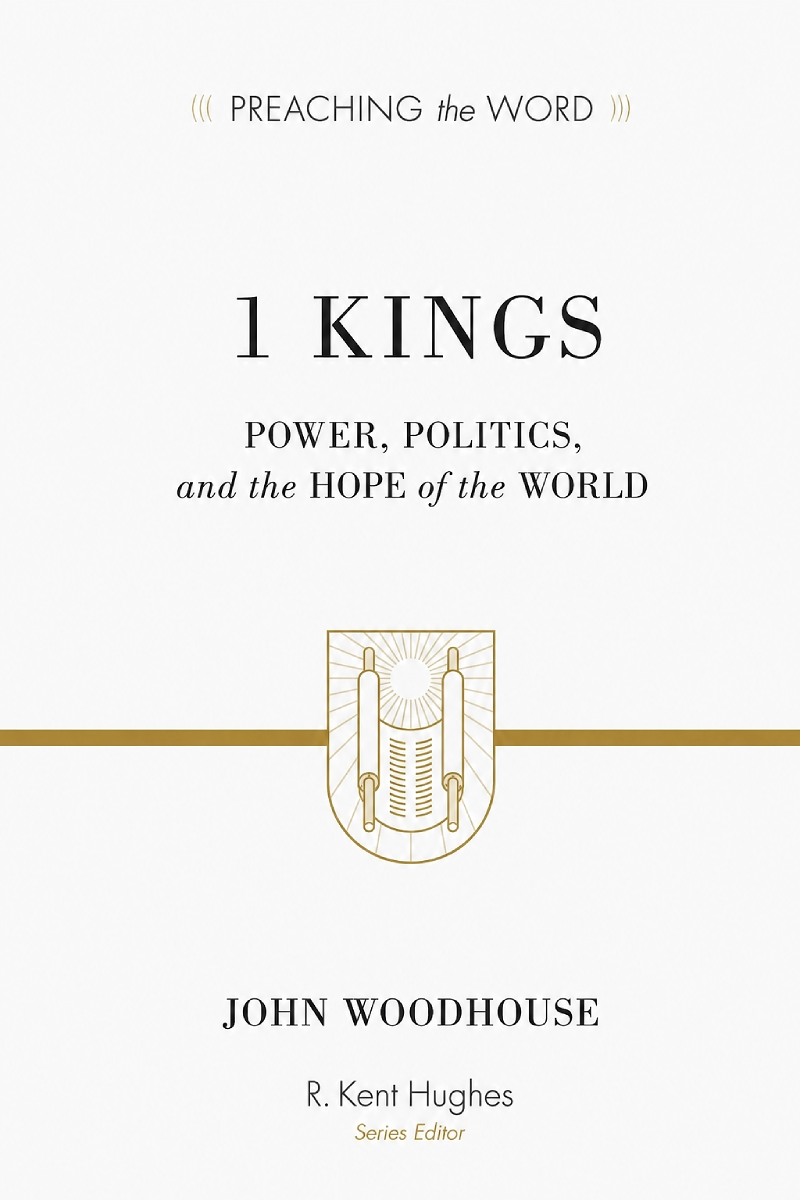
1 Kings: Power, Politics, and the Hope of the World
John Woodhouse walks through 1 Kings as a story of power, promise, worship, and failed human kingship that points beyond Israel’s rulers to Jesus Christ, the lasting King. From Solomon’s wisdom and temple to Elijah’s confrontation with idolatry and Ahab’s collapse, the commentary asks where true hope and authority are found.
Available Instantly
About This Book
John Woodhouse’s exposition of 1 Kings reads the book as a sustained confrontation between human power and the purposes of God. Moving passage by passage through the reigns of fourteen kings, he shows how political strength, wisdom, wealth, religious achievement, and royal ambition repeatedly fail to establish a kingdom that can last. The larger biblical hope lies not in the competence of Israel’s rulers but in God’s promise and in the King to whom their story ultimately bears witness, Jesus Christ, the King of kings and the hope of the world.
The opening chapters of 1 Kings raise the problem of succession as David grows weak and rival claims to the throne emerge. Woodhouse frames the establishment of Solomon’s kingdom through the contrast between politics and promise. Questions of authority, justice, government, and the use of power are therefore theological questions: which king will serve God’s purpose, and what kind of rule can truly put things right? In 1 Kings 3–4 Solomon’s request for wisdom and his exercise of judgment display the gift of divine wisdom and give a glimpse of the order and blessing a good kingdom can bring.
A major section on 1 Kings 5–8 treats the building and dedication of the temple as central to the biblical story. Woodhouse connects Solomon’s building work, God’s dwelling among his people, worship, prayer, blessing, and the purpose of history. The temple is interpreted within the larger movement of Scripture, and the dedication prayer in 1 Kings 8 becomes a major exploration of how sinful people may approach the living God, seek forgiveness, and depend on his covenant faithfulness. Yet even Solomon’s achievements remain provisional; the commentary repeatedly presses beyond the building and the king toward the fulfillment of God’s purpose in Christ and his people.
The promise of Solomon’s reign quickly gives way to failure. In 1 Kings 9–12 Woodhouse traces the dangers of prosperity, compromise, idolatry, divided loyalty, and the misuse of royal power. Solomon’s fall and the division of the kingdom expose the inability of even the wisest human ruler to secure lasting hope. Jeroboam’s alternative worship reveals the terrifying consequences of refusing to trust God’s word and attempting to preserve power through humanly constructed religion.
The prophetic word becomes especially prominent in 1 Kings 13 and throughout the later narratives. Woodhouse emphasizes the conflict between the word of the Lord and human religion, deception, political calculation, and royal resistance. What God says proves more decisive than what kings plan. This prepares for the Elijah narratives of 1 Kings 17–19, where the ultimate question is “Who is God?” The drought, the widow at Zarephath, the raising of her son, the confrontation with Baal on Mount Carmel, answered prayer, and Elijah’s flight all display the Lord’s sovereignty over rain, life, death, worship, and the future of his purpose.
The final chapters expose the moral and spiritual bankruptcy of Ahab’s rule. War, injustice in the seizure of Naboth’s vineyard, hatred of prophetic truth, and refusal to listen culminate in the king’s death. Political power cannot defeat God’s word or create the righteous kingdom humanity needs.
This commentary therefore serves readers who want to understand the theology of kingship in 1 Kings, the relationship between political power and God’s kingdom, Solomon’s wisdom and failure, the temple and prayer, the authority of God’s word, the nature of idolatry, Elijah’s ministry, and the significance of Ahab’s reign. Its persistent Christ-centered reading also helps readers see how the failures and partial successes of Israel’s kings intensify the biblical longing for the true King and the kingdom that will endure.
Book Details

Reading Fit
STUDY LEVEL
Intermediate
STUDY SCOPE
Individual Book, Old Testament
BOOKS INCLUDED

Edition & Format
PUBLISHED
November 30, 2018
AVAILABLE FORMATS
hardcover, kindle
LENGTH
802 pages

Topics Covered
You Might Also Like