
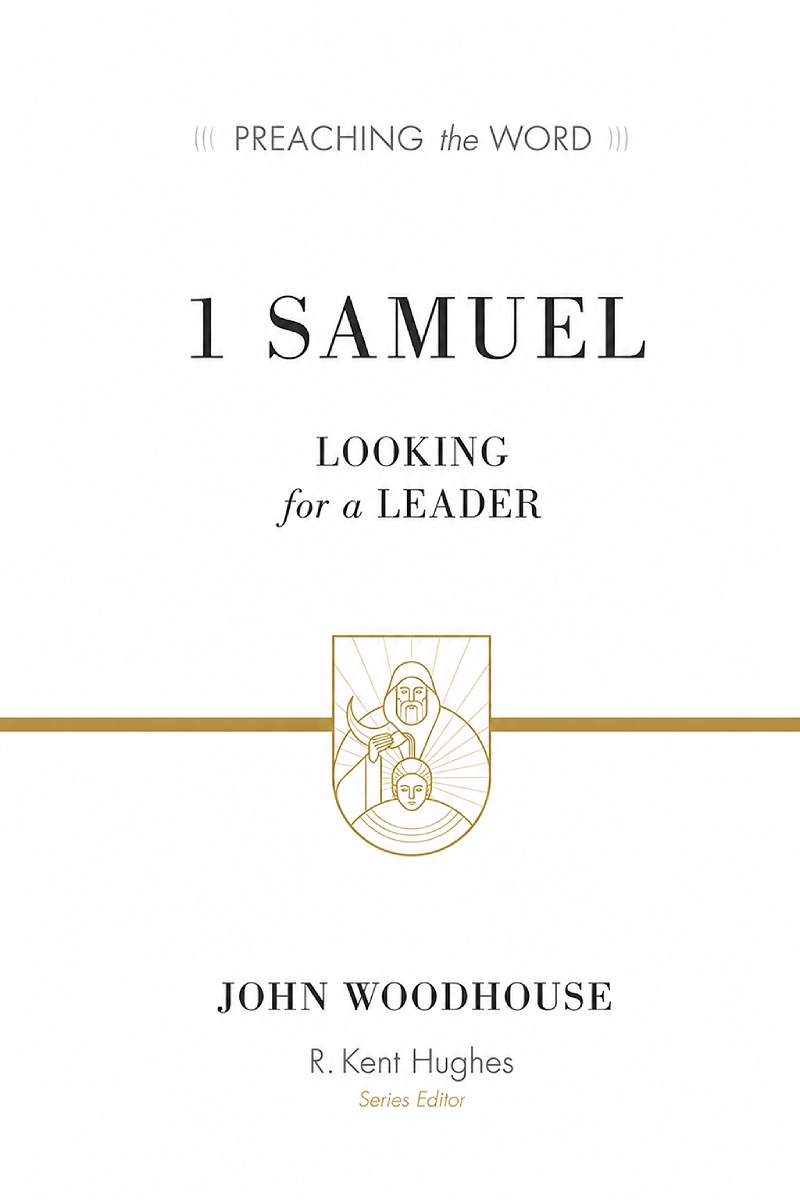
1 Samuel: Looking for a Leader
John Woodhouse traces 1 Samuel’s search for faithful leadership through Samuel, Saul, and David, showing why human leaders fail, what godly leadership looks like, and how Israel’s need for a true king points beyond David to Jesus Christ. The exposition joins close attention to the text with pastoral application for following, serving, and trusting God.
Available Instantly
About This Book
John Woodhouse’s exposition of 1 Samuel treats the book as a sustained biblical study of the crisis and provision of leadership among God’s people. Following the narrative from Samuel’s birth through Saul’s death, Woodhouse organizes the material around three leaders—Samuel, Saul, and David—and repeatedly asks what kind of leader God’s people need, why human leaders fail, and how leadership must remain under God’s own rule. The commentary therefore reads 1 Samuel not merely as the history of Israel’s transition to monarchy but as a theological account of God providing, testing, rejecting, and establishing leaders.
The opening chapters expose a leadership crisis in Israel. Hannah’s prayer and the birth of Samuel stand against the corruption of Eli’s sons, while Samuel’s call in 1 Samuel 3 establishes the importance of hearing and faithfully speaking the word of God. The ark narratives in 1 Samuel 4–7 demonstrate that God’s power and glory cannot be manipulated by religious leaders or national presumption. Samuel’s ministry shows leadership rooted in God’s word, prayer, repentance, and dependence on the Lord rather than institutional position.
In 1 Samuel 8–15 the focus shifts to Israel’s demand for a king and the rise and rejection of Saul. Woodhouse examines the tension between Israel’s desire to be like the nations and God’s purpose for kingship, asking what it means for a human king to rule under the true King. Saul’s story becomes an extended study of failed leadership: impatience, fear, self-protection, selective obedience, and refusal to listen to God culminate in his rejection. The treatment of 1 Samuel 15 gives particular weight to obedience to God and the seriousness of substituting religious action for faithful submission to God’s command.
The David narratives in 1 Samuel 16–31 develop the contrast between the king chosen according to outward appearance and the leader God chooses. David’s anointing, the coming of the Spirit, and the confrontation with Goliath in 1 Samuel 17 emphasize seeing circumstances from God’s perspective and trusting the Lord rather than being ruled by fear. As David becomes a fugitive from Saul, the exposition repeatedly considers suffering, restraint, righteousness, and the refusal to seize the kingdom by violence. David’s treatment of Saul as the Lord’s anointed, his refusal to take personal vengeance, and his willingness to wait for God’s timing become important tests of character and leadership.
Woodhouse also traces the theological movement from Israel’s imperfect leaders to Jesus Christ. Samuel, Saul, and David each expose the need for a leader who will perfectly hear, obey, and accomplish God’s will. David’s anointed kingship and suffering point beyond him to the promised King, while the failures of Israel’s leaders prevent the reader from treating any human leader as the final answer. In this way the book connects biblical kingship with the kingship of Christ without losing the historical and literary force of 1 Samuel itself.
The commentary addresses practical questions that arise naturally from the narrative: What makes a leader godly? Why do gifted leaders fail? How should a believer respond when leadership is corrupt or unjust? What is the difference between fear-driven action and faith in God? What does obedience look like when waiting for God’s promise is costly? How should power, ambition, vengeance, and suffering be handled? Its applications are therefore relevant both to those who lead and to those learning how to follow God faithfully while living under imperfect human leadership.
Book Details

Reading Fit
STUDY LEVEL
Fundamental, Intermediate
STUDY SCOPE
Individual Book, Old Testament
BOOKS INCLUDED

Edition & Format
PUBLISHED
June 1, 2022
AVAILABLE FORMATS
hardcover, kindle
LENGTH
931 pages

Topics Covered
You Might Also Like