
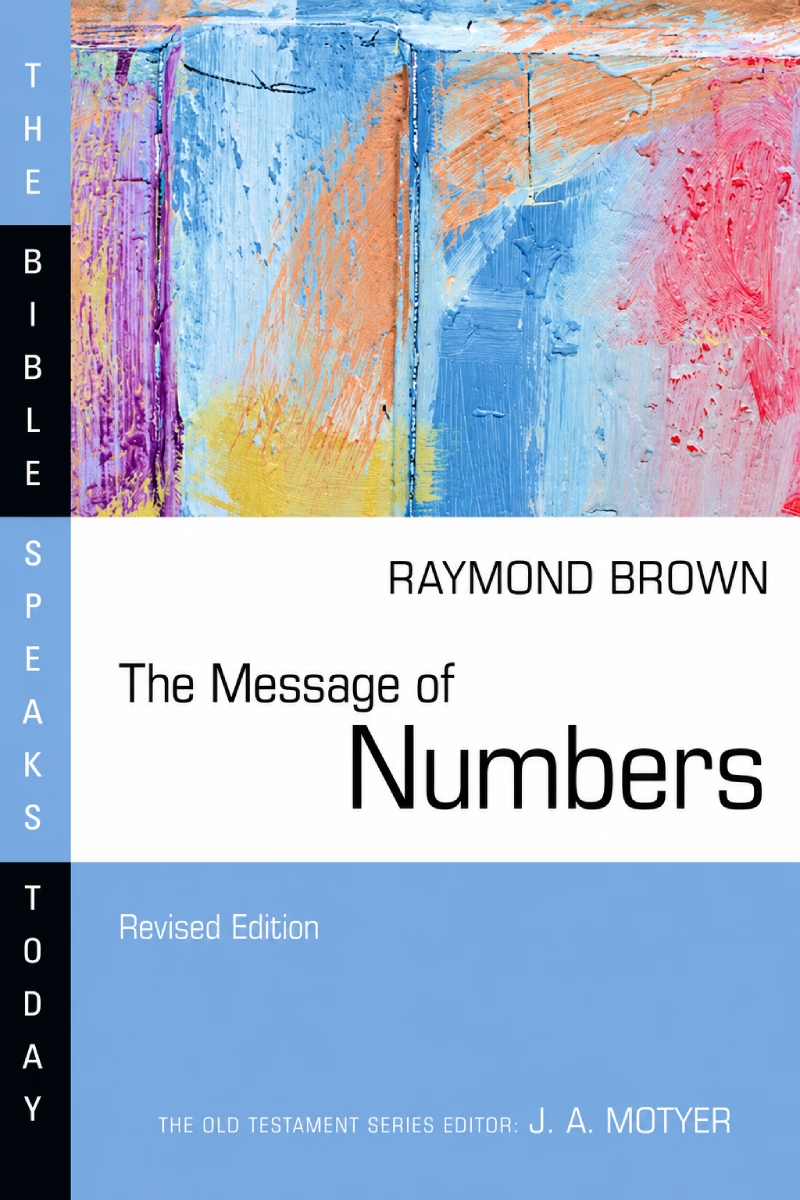
The Message of Numbers
Raymond Brown turns Numbers from a neglected wilderness book into a vivid study of God’s pilgrim people learning to trust him on the way to the promised land. Through preparation, rebellion, leadership crises, priestly service, judgment, provision, and renewed advance, he shows how life with God becomes an accompanied journey rather than a meaningless maze.
Available Instantly
About This Book
Raymond Brown’s The Message of Numbers: Journey to the Promised Land is a sustained exposition of Numbers as the story of a pilgrim people learning to trust God on an accompanied journey. Rather than treating Numbers as a disconnected collection of censuses, laws, rituals, travel notes, and narratives, Brown emphasizes its careful movement from preparation at Sinai, through failure and delay in the wilderness, to renewed advance toward the land of promise. The book asks what it means to live as God’s people in a confusing world and what kind of life becomes possible when God himself accompanies the journey.
Numbers 1:1–10:10 forms the long opening section, “Getting ready.” Israel is a redeemed community being ordered for worship, service, purity, and movement. Brown treats the censuses and camp arrangements as part of a people organized around God’s presence. The Levites and priestly responsibilities in Numbers 3–4 and 8, the purity concerns of Numbers 5, the Nazirite vow and priestly blessing of Numbers 6, the offerings of Numbers 7, and the Passover and guidance traditions of Numbers 9–10 all contribute to the identity of a people prepared to travel with God.
When Israel sets out in Numbers 10:11–12:16, the journey quickly exposes weaknesses within the community. Complaining, craving, leadership pressure, and the conflict involving Miriam and Aaron show that pilgrimage tests trust and character. Brown repeatedly applies these narratives to the realities of leadership, shared service, discontent, loyalty, and dependence on God.
The central tragedy comes in Numbers 13–14. The spies see the same land but interpret it through radically different attitudes toward God’s promise. Israel draws back in fear and unbelief, refuses to enter the land, and even proposes returning to Egypt. Brown treats this as the decisive turning point of the book: a generation delivered from slavery fails to trust the God who brought them out. Numbers therefore addresses the reader’s recurring question of whether God’s promises can be trusted when obstacles appear larger than the promise.
The long period of “marking time” in Numbers 15–25 contains repeated lessons in holiness, rebellion, leadership, judgment, and grace. The revolt of Korah in Numbers 16 and the confirmation of priestly service in Numbers 17–18 raise questions of authority and vocation. Numbers 19 addresses cleansing from defilement. Moses’ crisis in Numbers 20, the bronze serpent in Numbers 21:4–9, Israel’s victories east of the Jordan, Balaam’s oracles in Numbers 22–24, and the apostasy at Peor in Numbers 25 show both the seriousness of sin and God’s determination to preserve his people and purpose.
The closing section, Numbers 26–36, turns toward a new generation and a different future. A second census marks continuity and change. The daughters of Zelophehad in Numbers 27:1–11, Joshua’s commissioning in Numbers 27:12–23, instructions for worship, vows, warfare, Transjordan settlement, Israel’s journey review, and the final land boundaries all prepare the people to press on. The narrative therefore moves from failed trust to renewed readiness without minimizing the consequences of rebellion.
Brown’s governing image is pilgrimage. Israel’s wilderness experience becomes a framework for readers asking how to live faithfully between redemption and promised destination, how to respond when faith falters, how God guides and provides, how spiritual leadership should function, and why holiness matters within a community that belongs to God. The book also gives substantial attention to priestly service, purity, blessing, worship, guidance, rebellion, judgment, and God’s patient faithfulness.
The result is a coherent reading of Numbers as a book about trust, belonging, freedom, certainty, and the presence of God. Brown shows that the Christian life is not a meaningless maze but a journey in which God calls his people to move forward in faith, learn through failure, receive his provision, respect his holiness, and continue toward what he has promised.
Book Details

Reading Fit
STUDY LEVEL
Intermediate
STUDY SCOPE
Individual Book, Old Testament
BOOKS INCLUDED

Edition & Format
PUBLISHED
February 1, 2022
AVAILABLE FORMATS
paperback, kindle
LENGTH
337 pages

Topics Covered
You Might Also Like