
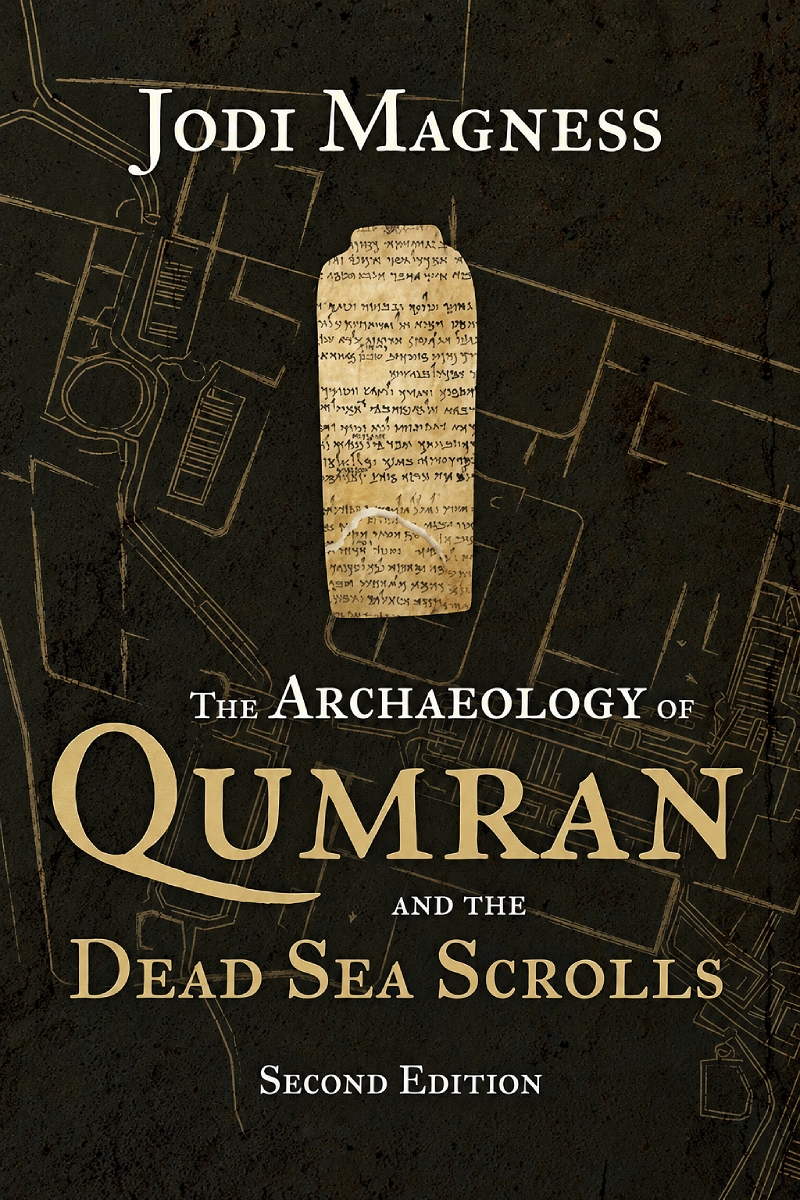
The Archaeology of Qumran and the Dead Sea Scrolls
Jodi Magness reconstructs Qumran through archaeology and the Dead Sea Scrolls, arguing that the site was a sectarian settlement associated with the Essenes. Architecture, pottery, scroll caves, meals, miqva’ot, toilets, sacred space, graves, women, clothing, temple tax, and neighboring settlements reveal the community’s chronology, purity practices, and distinctive way of life.
Available Instantly
About This Book
The Archaeology of Qumran and the Dead Sea Scrolls, second edition, is Jodi Magness’s archaeological reconstruction of the settlement at Qumran and its relationship to the scrolls found in nearby caves. The governing questions are who lived at Qumran, when the site was occupied, how its buildings and artifacts should be interpreted, and whether the material evidence supports a connection among the settlement, the Dead Sea Scrolls, and the Jewish sect known from ancient sources. Magness argues that Qumran was a sectarian settlement whose inhabitants should be identified with the Essenes.
The opening chapters explain archaeological method, dating, the discovery of the Dead Sea Scrolls, and the history of exploration at Qumran. Magness reviews the first finds in Cave 1, the discovery of additional scroll caves, Roland de Vaux’s excavations, and later work that has changed the evidentiary picture. The second edition incorporates the publication of all the Dead Sea Scrolls, additional excavation data, and more recent archaeological investigations, making chronology and interpretation central rather than incidental concerns.
The Dead Sea Scrolls and the Qumran community receive sustained treatment together. Magness asks what the scrolls are, what they reveal about the sect, whether the inhabitants were Essenes, and how closely the caves and settlement are connected. Ancient descriptions of the Essenes are compared with archaeological features and sectarian texts. Shared meals, intensive purity practice, community organization, material simplicity, and the settlement’s location all contribute to the Essene identification.
Buildings, occupation phases, architecture, and pottery form the archaeological backbone of the book. Magness reconstructs the site’s periods of occupation and revises parts of de Vaux’s chronology. Pottery is used to evaluate local production, storage, dining, and connections between Qumran and the caves. Cylindrical and ovoid jars receive focused attention because similar forms appear both at the settlement and in nearby caves. The evidence is also used to test and reject competing interpretations of Qumran as a villa, fort, pottery-production center, or ordinary manor rather than a sectarian settlement.
A major chapter combines communal meals, toilet practice, animal-bone deposits, and sacred space. Literary descriptions of Essene meals are compared with the dining room, pantry, and large assemblage of dishes. The toilet is examined both archaeologically and against ancient accounts of Essene toilet habits and the impurity of excrement. In the revised edition, Magness gives special weight to the animal-bone deposits, arguing that the sect’s observance of biblical wilderness-camp laws may have included animal sacrifice. This contributes to her larger interpretation of Qumran as a sacred precinct whose community sought to live with the Tabernacle or wilderness-camp pattern in view.
Miqva’ot receive an entire chapter. Their number, scale, and distribution provide material evidence for unusually intensive ritual purification and help distinguish Qumran from ordinary domestic settlements. The cemetery and the question of women and children are then examined through graves, skeletal evidence, gendered artifacts, and settlement patterns. Magness weighs what the evidence can and cannot establish about family life and the composition of the community.
The later chapters treat the temple tax, clothing, and the sect’s anti-Hellenizing tendencies as expressions of religious identity visible in coins, textiles, and material choices. The book closes with the nearby settlements of Ein Feshkha and Ein el-Ghuweir, asking whether their archaeology supports a direct relationship with Qumran.
The book therefore addresses readers asking whether the Dead Sea Scrolls belonged to the Qumran community, whether Qumran was an Essene settlement, what the site’s caves and scroll jars reveal, why it contains so many miqva’ot, how communal meals and toilets fit sectarian purity practice, whether sacrifices occurred there, whether women and children lived at the site, how the cemetery should be interpreted, and why alternative villa, military, industrial, or commercial explanations fit the evidence less well than the sectarian-settlement model.
Book Details

Reading Fit
STUDY LEVEL
Advanced, Intermediate
STUDY SCOPE
Topical
BOOKS INCLUDED

Edition & Format
PUBLISHED
June 29, 2021
AVAILABLE FORMATS
paperback, kindle
LENGTH
479 pages

Topics Covered
You Might Also Like